Islamic Republic of Pakistan: Country Profile, History and Facts
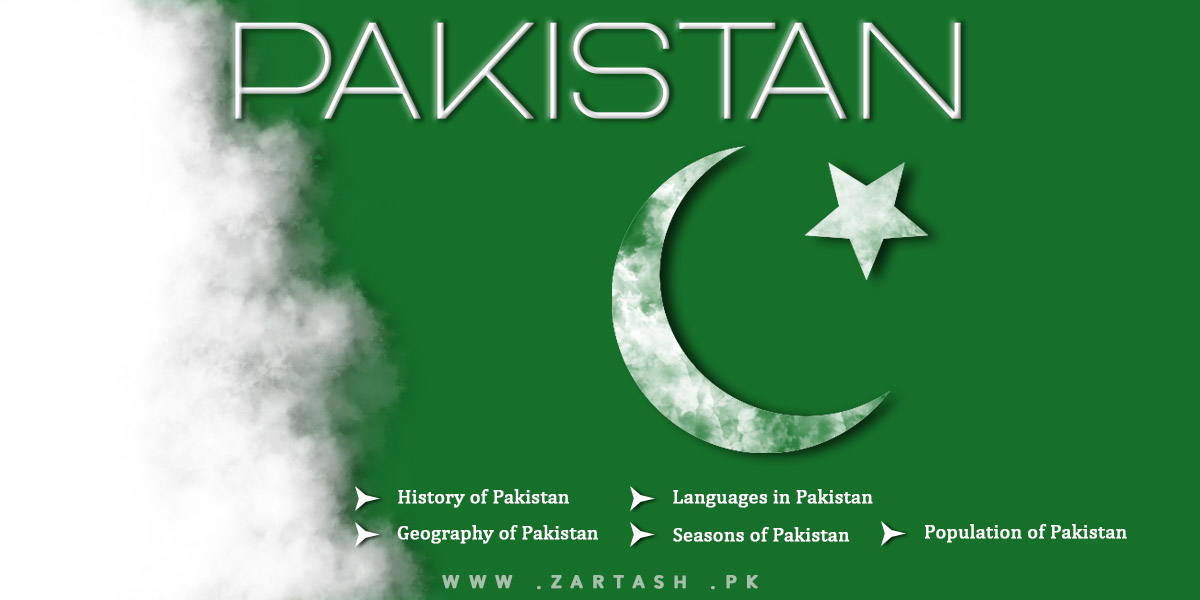
Pakistan, officially the Islamic Republic of Pakistan اسلامی جمہوریہ پاکستان, is a South Asian country of about 259 million people. It became independent on 14 August 1947, and its capital is Islamabad.
This page is a factual profile of Pakistan: where it is, how it was created, how it is governed, who lives in it, what its economy rests on, and what it is known for. Population, literacy and provincial figures come from the 7th Population and Housing Census of 2023, published by the Pakistan Bureau of Statistics. Economic figures come from the Pakistan Economic Survey and the State Bank of Pakistan. Every figure below carries its source and its year, because most of what circulates about Pakistan online is a decade out of date.
Where a figure is genuinely disputed, such as the country’s land area or the size of the Senate, this page gives both numbers and explains why they differ rather than quietly picking one.
Pakistan at a Glance
| Fact | Detail | Source and year |
|---|---|---|
| Official name | Islamic Republic of Pakistan, اسلامی جمہوریہ پاکستان | Constitution of 1973 |
| Independence | 14 August 1947, from British India | 79 years as of 2026 |
| Capital | Islamabad اسلام آباد | Purpose-built, replaced Karachi in the 1960s |
| Largest city | Karachi, 20.38 million | 2023 census |
| Population | 241,499,431 | 2023 census |
| Population, current estimate | About 259 million | 2026 estimate |
| World population rank | 5th | 2026 |
| Area | 796,095 sq km excluding disputed territory; 881,913 sq km including Pakistani-administered Kashmir | See the note below |
| Provinces | Four, plus Islamabad Capital Territory, Gilgit-Baltistan and Azad Jammu and Kashmir | 2023 census |
| National language | Urdu اردو | Constitution, Article 251 |
| Official languages | Urdu and English | Constitution, Article 251 |
| Literacy | 60.7 percent | 2023 census |
| Religion | 96.35 percent Muslim | 2023 census |
| Currency | Pakistani rupee, PKR روپیہ | State Bank of Pakistan |
| Government | Federal parliamentary republic | Constitution of 1973 |
| Legislature | Majlis-e-Shoora: National Assembly of 336 seats, Senate of 96 | 2024 |
| Time zone | Pakistan Standard Time, UTC+5 | No daylight saving |
| Calling code | +92 | ITU |
| ISO codes | PK, PAK | ISO 3166 |
| Internet domain | .pk | PKNIC |
| Driving side | Left | Inherited from British rule |
| UNESCO World Heritage Sites | Six, all cultural | UNESCO |
Why the area has two numbers. The four provinces plus Islamabad Capital Territory cover 796,095 sq km: Punjab 205,344, Balochistan 347,190, Sindh 140,914, Khyber Pakhtunkhwa 101,741 and Islamabad 906. Those add up exactly. The larger figure of 881,913 sq km adds Gilgit-Baltistan and Azad Jammu and Kashmir, which Pakistan administers but which are part of the disputed Kashmir region. Most international sources quote one figure without explaining the other. Both are correct; they are measuring different things.
Where Is Pakistan and What Are Its Borders?
Pakistan sits in South Asia, at the point where South Asia, Central Asia and the Middle East meet. That position is the single most important fact about the country’s strategic history.
It shares land borders with four countries. India lies to the east. Afghanistan lies to the west and north west, along the Durand Line. Iran lies to the south west, along the Balochistan frontier. China lies to the north east, across the Karakoram, reached by the Khunjerab Pass. A narrow strip of Afghan territory, the Wakhan Corridor, separates Pakistan from Tajikistan by only a few dozen kilometres.
The Arabian Sea forms the entire southern coastline, running roughly 1,046 km from the Indian border near Sir Creek westwards past Karachi to Gwadar and on to the Iranian border. Pakistan is not landlocked, and the coast is in the south, not the north. Karachi, the largest city, sits on that coast; Islamabad, the capital, sits nearly 1,400 km north of it in the Himalayan foothills below the Margalla Hills.
What Is the Geography of Pakistan Like?
Few countries of comparable size contain as much physical variety. Pakistan holds coastline, desert, irrigated plain, plateau, and some of the highest mountains on earth, within a single national boundary.
The mountains. Three of the world’s great ranges meet in northern Pakistan: the Karakoram, the Himalaya and the Hindu Kush. K2, at 8,611 metres, is the second highest mountain on earth and the highest in Pakistan. Five of the world’s fourteen peaks above 8,000 metres stand in Pakistan: K2, Nanga Parbat, Gasherbrum I, Broad Peak and Gasherbrum II. The country also holds some of the largest glaciers outside the polar regions, among them Siachen, Biafo and Baltoro.
The rivers. The Indus runs the length of the country from the north to the Arabian Sea and gives Pakistan its agricultural existence. Five rivers give Punjab its name, meaning five waters: the Jhelum, Chenab, Ravi, Sutlej and Beas, of which the first four flow through Pakistan today. The Indus basin feeds what is described as the largest contiguous irrigation network in the world.
The deserts and plateaus. The Thar desert straddles the Indian border in south eastern Sindh. The Cholistan desert lies in southern Punjab, and the Kharan desert in Balochistan. The Potohar plateau occupies the north of Punjab, and the Balochistan plateau covers most of the country’s largest province. The Makran coast, along the south west, is arid and sparsely settled.
The site covers this landscape in detail across its guide to beautiful places in Pakistan and its list of the most beautiful lakes in Pakistan.
How Old Is the History of This Region?
Much older than the country. This is the part of Pakistan’s story that most short profiles skip, and it is the part that makes the region distinctive.
Mehrgarh, in what is now Balochistan, was a farming settlement from roughly 7000 BCE, among the earliest known anywhere in South Asia. From it, or alongside it, grew the Indus Valley Civilisation, which flourished from about 2600 BCE to 1900 BCE across the Indus basin. Its two greatest excavated cities, Mohenjo-daro in Sindh and Harappa in Punjab, both lie inside modern Pakistan. They had grid-planned streets, covered drainage, standardised baked bricks and a script that has still not been deciphered. Urban sanitation of that quality would not be matched in the region for thousands of years.
After the Indus cities declined, the region passed through a long sequence of powers. The Achaemenid Persians held Gandhara from the sixth century BCE. Alexander of Macedon reached the Jhelum in 326 BCE and fought Porus there. The Mauryan empire followed, and under Ashoka the region became a centre of Buddhism. Taxila, near modern Islamabad, was one of the ancient world’s great centres of learning, and the Gandhara school produced the sculptural tradition that first gave the Buddha a human face. Greeks, Scythians, Parthians and Kushans each ruled parts of the area.
Muslim rule arrived in stages. In 712 CE, the Umayyad commander Muhammad bin Qasim took Sindh, and many Pakistanis regard that date as the foundation of the country’s Muslim identity. From the twelfth century, a succession of sultanates ruled from Delhi, and from 1526 the Mughal Empire governed most of the subcontinent until its long decline in the eighteenth and nineteenth centuries. Muslim political dominance in the subcontinent therefore spans roughly eleven centuries in total, and Mughal paramountcy about two and a half, not the thousands of years sometimes claimed.
British rule displaced the Mughals gradually. The East India Company expanded from Bengal after 1757, annexed Sindh in 1843 and Punjab in 1849. In 1857 a large uprising against Company rule, known in Pakistan and India as the War of Independence and in British accounts as the Indian Mutiny, was defeated. Its failure led directly to the abolition of Company rule and the transfer of India to direct Crown administration in 1858. The uprising did not bring independence; its defeat brought tighter imperial control, and that is why the ninety years which followed were the years of organised political struggle.
What Are Pakistan’s UNESCO World Heritage Sites?
Pakistan has six World Heritage Sites, all of them cultural. Three were inscribed in the first year the country was represented on the list.
| Site | Province | Inscribed | What it is |
|---|---|---|---|
| Archaeological Ruins at Moenjodaro | Sindh | 1980 | The largest excavated city of the Indus Valley Civilisation |
| Taxila | Punjab | 1980 | Buddhist and Gandharan city and centre of learning |
| Buddhist Ruins of Takht-i-Bahi and Sahr-i-Bahlol | Khyber Pakhtunkhwa | 1980 | Hilltop Buddhist monastery complex |
| Fort and Shalamar Gardens, Lahore | Punjab | 1981 | Mughal fort and terraced garden |
| Historical Monuments at Makli, Thatta | Sindh | 1981 | One of the largest funerary sites in the world |
| Rohtas Fort | Punjab | 1997 | Sixteenth century garrison fort built by Sher Shah Suri |
How Was Pakistan Created?
The demand for a separate Muslim state grew out of nearly a century of political organisation after 1857.
Sir Syed Ahmad Khan argued after the 1857 defeat that the Muslims of the subcontinent could only recover their position through modern and scientific education, and founded the institution at Aligarh to that end. He is also associated with the early articulation of the idea that the subcontinent’s Muslims and Hindus formed two distinct nations by religion, culture and history, a concept later known as the Two Nation Theory.
Allama Muhammad Iqbal, the poet and philosopher, gave the idea its most influential expression. In his 1930 address at Allahabad he proposed the consolidation of the Muslim majority areas of the north west into a single state. The site marks his contribution each year on Iqbal Day.
The All India Muslim League, founded in 1906, became the vehicle for that demand under Muhammad Ali Jinnah, the Quaid-e-Azam. Jinnah began his political life as a constitutional nationalist and an advocate of Hindu Muslim unity, and was described as the ambassador of that unity. He left the Congress over its methods and its treatment of Muslim political claims, and by the late 1930s had concluded that constitutional safeguards alone would not protect Muslim political representation in a united India.
On 23 March 1940, at its annual session at Minto Park in Lahore, the All India Muslim League passed the resolution demanding that the Muslim majority regions of the north west and east be constituted as independent states. It became known as the Lahore Resolution, and later as the Pakistan Resolution. Pakistan marks the anniversary as Pakistan Day on 23 March.
Seven years later, the Indian Independence Act divided British India along the lines of Muslim and non-Muslim majority districts, with the boundaries drawn by a commission under Sir Cyril Radcliffe. Pakistan came into being on 14 August 1947, and India on 15 August. Partition triggered one of the largest and most violent migrations in recorded history, with millions crossing in both directions. Jinnah’s cause was carried by figures from every region, among them Sardar Abdur Rab Nishtar, Nawab Iftikhar Hussain Mamdot and Mian Mumtaz Daultana from Punjab, Sir Abdullah Haroon from Sindh, and Qazi Muhammad Isa from Balochistan. The country marks the date as Independence Day.
What Happened After 1947?
Pakistan’s first years were spent building a state from an administration that had been divided in weeks. Jinnah died in September 1948, thirteen months after independence, and the first prime minister, Liaquat Ali Khan, was assassinated in 1951.
The country has had three constitutions. The first, in 1956, declared Pakistan an Islamic republic. It was abrogated in 1958 and replaced by a presidential constitution in 1962. The 1973 constitution, passed unanimously by the National Assembly, established the federal parliamentary system that remains in force, and it is the constitution referred to throughout this page.
In 1971, after a political crisis over the results of the 1970 general election and a civil war in the eastern wing, followed by war with India, East Pakistan separated and became Bangladesh. It was the largest single change to the country’s shape since 1947. Bangladesh today has a population of around 175 million and is approximately 90 percent Muslim.
Civilian and military rule have alternated across the period since. Elected governments held office in the 1950s, the 1970s, the 1990s and continuously since 2008; periods of military government ran from 1958 to 1971, from 1977 to 1988 and from 1999 to 2008. Pakistan’s list of prime ministers records the full sequence.
Kashmir has been disputed since 1947 and remains the central issue between Pakistan and India. Pakistan administers Azad Jammu and Kashmir and Gilgit-Baltistan; India administers Jammu and Kashmir and Ladakh; China administers Aksai Chin. The two countries have fought over it more than once, and the United Nations has passed resolutions on it that remain unimplemented. Pakistan’s position has been argued at the United Nations, including in the address to the General Assembly in 2019. Accounts of the accession of 1947 differ sharply between the parties, and this page does not attempt to settle a dispute that neither government has settled.
How Is Pakistan Governed?
Pakistan is a federal parliamentary republic under the constitution of 1973. Power is divided between a federal government and the provinces, and between three branches at federal level.
The President is head of state, elected by an electoral college of the two houses of parliament and the four provincial assemblies. The role is largely ceremonial under the 1973 constitution as amended. The Prime Minister is head of government, is the leader who commands a majority in the National Assembly, and exercises executive authority.
Parliament, the Majlis-e-Shoora مجلس شوریٰ, has two houses:
- The National Assembly, the lower house, has 336 seats: 266 filled by direct election on a first past the post system, 60 reserved for women and 10 reserved for non-Muslims, both allocated proportionally. Members serve five year terms.
- The Senate, the upper house, gives the provinces equal representation regardless of population. Senators serve six year terms, with half the house elected every three years.
The Senate’s size is a figure worth getting right, because most sources have it wrong. The Senate had 104 members until the 25th Amendment merged the Federally Administered Tribal Areas into Khyber Pakhtunkhwa in 2018 and abolished FATA’s eight Senate seats. Four lapsed in 2021, taking the house to 100, and the remaining four lapsed in 2024, taking it to 96, which is the correct current figure. The Senate’s own website still describes a house of 100, because that page has not been updated since the 2002 expansion.
The judiciary is headed by the Supreme Court of Pakistan, below which sit the five High Courts, one for each province and one for Islamabad, along with the Federal Shariat Court. The Election Commission of Pakistan is a constitutional body responsible for conducting elections.
Each province has its own provincial assembly and chief minister. The 18th Amendment of 2010 devolved substantial powers from the federation to the provinces, including education, health and agriculture, and abolished the concurrent legislative list. It is the most significant constitutional change since 1973 and it is why provincial governments now carry far more of the responsibility for services than they did before.
What Are the Provinces of Pakistan?
Pakistan has four provinces, one federal capital territory, and two territories in the Pakistani-administered part of Kashmir. The provincial figures below are from the 2023 census and add up exactly to the national total.
| Province or territory | Capital | Area, sq km | Population, 2023 census | Share of national population |
|---|---|---|---|---|
| Punjab پنجاب | Lahore | 205,344 | 127,688,922 | 52.9 percent |
| Sindh سندھ | Karachi | 140,914 | 55,696,147 | 23.1 percent |
| Khyber Pakhtunkhwa خیبر پختونخوا | Peshawar | 101,741 | 40,856,097 | 16.9 percent |
| Balochistan بلوچستان | Quetta | 347,190 | 14,894,402 | 6.2 percent |
| Islamabad Capital Territory | Islamabad | 906 | 2,363,863 | 1.0 percent |
| Total | 796,095 | 241,499,431 | 100 percent | |
| Azad Jammu and Kashmir | Muzaffarabad | 13,297 | Counted separately | Disputed territory |
| Gilgit-Baltistan | Gilgit | 72,521 | Counted separately | Disputed territory |
Two things in that table are worth pausing on. Balochistan is by far the largest province by area and by far the smallest by population: 44 percent of the country’s land holds 6 percent of its people. And Punjab alone holds more than half the population, which shapes every national election, because seats in the National Assembly are allocated by population.
Azad Jammu and Kashmir and Gilgit-Baltistan have their own assemblies and are administered separately. They are not provinces, and their populations are not included in the national census total, which is why the provincial figures above sum precisely to 241,499,431.
Below the provinces, the administrative structure runs division, district, tehsil (called taluka in Sindh), and union council. The site covers each province and its distinct culture in its guide to the provinces of Pakistan and their cultures.
What Are the Largest Cities in Pakistan?
Pakistan is urbanising quickly, and its urban population is heavily concentrated. Karachi and Lahore together account for roughly a third of the national urban population.
| City | Province | Population, 2023 census | Known for |
|---|---|---|---|
| Karachi کراچی | Sindh | 20.38 million | Largest city, main port, financial centre |
| Lahore لاہور | Punjab | 13.00 million | Cultural capital, Mughal architecture |
| Faisalabad فیصل آباد | Punjab | 9.08 million | Textile manufacturing |
| Rawalpindi راولپنڈی | Punjab | Major city | Garrison city, twin of Islamabad |
| Gujranwala گوجرانوالہ | Punjab | Major city | Light engineering and industry |
| Peshawar پشاور | Khyber Pakhtunkhwa | Major city | Historic frontier city |
| Multan ملتان | Punjab | Major city | City of saints, mangoes, blue pottery |
| Islamabad اسلام آباد | Capital Territory | 2.36 million | Purpose-built federal capital |
| Quetta کوئٹہ | Balochistan | Major city | Provincial capital, fruit trade |
Note that census city figures depend on whether the district or the city proper is being counted, which is why published rankings differ. The figures above are district level from the 2023 census where stated. Several of these cities have their own culinary identity, covered in the guide to Pakistani cities and their famous foods.
What Is the Climate of Pakistan?
Pakistan lies mostly north of the Tropic of Cancer, between roughly 24 and 37 degrees north. Its climate is continental, which means wide swings in temperature both between seasons and within a single day.
The country has four seasons: a cool, dry winter from December to February; a hot, dry spring from March to May; the southwest monsoon from June to September, which brings most of the year’s rain; and a retreating monsoon period through October and November.
Regional variation is extreme. Summer temperatures on the plains average around 38 degrees Celsius in June and can exceed 47. Jacobabad and Sibi are among the hottest inhabited places on earth. In the northern mountains, elevation makes summers mild and winters severe. Coastal Sindh and Balochistan are moderated by sea breezes. Rainfall is unreliable: the same region can flood one year and face drought the next.
Pakistan is among the countries most exposed to climate change, despite contributing a very small share of global emissions. The 2022 floods submerged roughly a third of the country at their peak, affected more than 30 million people and caused damage running into tens of billions of dollars. Glacial melt in the north, heat waves in the south and shifting monsoon patterns are now standing risks to agriculture and to the irrigation system the economy depends on.
How Many People Live in Pakistan?
The 2023 census counted 241,499,431 people. Current estimates for 2026 put the figure at about 259 million, which makes Pakistan the fifth most populous country in the world, behind India, China, the United States and Indonesia, and the fourth most populous in Asia.
Growth remains rapid, at roughly 1.6 percent a year, which adds several million people annually. Pakistan is a young country: a large share of the population is under 30, and that youth bulge is simultaneously the country’s greatest economic asset and its greatest policy problem, because it requires school places and jobs at a pace that has not yet been matched.
The site’s dedicated article covers the population of Pakistan in more detail, including the historical series. For context, the population at partition in 1947 was roughly 32 million; it has increased more than sevenfold since.
Which Ethnic Groups Live in Pakistan?
Pakistan is ethnically plural, and ethnicity maps closely onto language and province. The largest groups are Punjabis, concentrated in Punjab; Pashtuns, in Khyber Pakhtunkhwa and northern Balochistan; Sindhis, in Sindh; Saraikis, in southern Punjab; Muhajirs, the Urdu speaking communities that migrated from India in 1947 and settled largely in urban Sindh; and Baloch, in Balochistan. Smaller communities include Hazaras, Brahuis, Kashmiris, Chitralis, Baltis, Shina speakers and the Kalash of Chitral.
The site covers this diversity through its writing on the people of Pakistan and on regional celebrations such as Baloch Culture Day.
What Languages Are Spoken in Pakistan?
Urdu is the national language and, together with English, one of the two official languages under Article 251 of the constitution. That distinction matters and is often reported incorrectly: Urdu is the language of national identity and the lingua franca, while English remains the working language of the higher courts, the federal bureaucracy and much of higher education.
Urdu is the mother tongue of a minority. The 2023 census records mother tongues roughly as follows.
| Language | Share of population | Mainly spoken in |
|---|---|---|
| Punjabi پنجابی | About 37 percent | Punjab |
| Pashto پشتو | About 18 percent | Khyber Pakhtunkhwa, northern Balochistan |
| Sindhi سندھی | About 14 percent | Sindh |
| Saraiki سرائیکی | About 12 percent | Southern Punjab |
| Urdu اردو | About 9 percent | Urban Sindh and nationwide as a second language |
| Balochi بلوچی | About 3 percent | Balochistan |
Dozens of smaller languages are spoken, including Brahui, Hindko, Shina, Balti, Khowar, Wakhi and Burushaski, the last of which has no known relatives anywhere. The site’s article on the languages of Pakistan goes through them individually.
What Is the Religion of Pakistan?
Pakistan is an Islamic republic, and the 2023 census records 96.35 percent of the population as Muslim. Pakistan has one of the largest Muslim populations of any country in the world.
Within Islam, the majority follow Sunni schools, with a substantial Shia minority. Published estimates of the Shia share vary widely because the census does not record sectarian affiliation, so any specific percentage should be treated as an estimate rather than a count.
The census records religious minorities at roughly 1.61 percent Hindu and 1.37 percent Christian, with smaller numbers of Ahmadis, Sikhs, Parsis, Baháʼís and Kalash. Hindus are concentrated in Sindh, particularly Tharparkar. The white stripe on the national flag represents these minorities, and the green represents the Muslim majority.
What Is the Economy of Pakistan Based On?
Pakistan is a lower middle income economy of roughly 452 billion dollars in nominal terms as of mid 2026, which makes it about the fortieth largest economy in the world. Measured at purchasing power parity it is far larger, around 2.17 trillion dollars, placing it near twentieth. Those two rankings, twenty places apart, describe the same economy and are a useful reminder to check which measure a figure uses.
The Pakistan Economic Survey for 2025-26 recorded GDP growth of 3.7 percent, the fastest in four years, though short of the 4.2 percent target and above the previous year’s 3.18 percent.
| Indicator | Figure | Source and period |
|---|---|---|
| GDP, nominal | About 452 billion dollars | Mid 2026 |
| GDP, purchasing power parity | About 2.17 trillion dollars | Mid 2026 |
| GDP growth | 3.7 percent | Economic Survey, FY 2025-26 |
| Remittances from overseas Pakistanis | 38 billion dollars | First 11 months, FY 2026 |
| IT and telecom exports | 4.6 billion dollars, a record | FY 2025-26, up 20.6 percent |
| Freelancer export earnings | 856.3 million dollars | July to March FY 2026, up 51 percent |
Three pillars carry the economy.
Agriculture employs a large share of the workforce and underpins the largest export sector. Cotton feeds the textile industry, and wheat, rice, sugarcane and maize are the major crops. Pakistan is among the world’s significant producers of cotton, wheat, sugarcane, rice and mangoes. The site treats this in depth in its article on Pakistan as an agricultural country.
Textiles are the largest merchandise export category by a wide margin, spanning raw cotton, yarn, fabric, garments and home textiles, and concentrated around Faisalabad, Karachi and Lahore. The consumer-facing end of that industry is covered in the article on the fashion industry in Pakistan and its best known designers.
Remittances are the third pillar and, in several recent years, the single largest source of foreign exchange. Overseas Pakistanis sent home 38 billion dollars in the first eleven months of FY 2026, a sum that exceeds total merchandise exports and is the main reason the external account holds together. The largest flows come from Saudi Arabia, the United Arab Emirates, the United Kingdom and the United States.
The fastest growing sector is information technology. IT and telecom exports reached a record 4.6 billion dollars in FY 2025-26, up 20.6 percent year on year, and freelancer earnings rose 51 percent. Pakistan has one of the largest freelance workforces in the world, and the sector is the government’s stated route to a wider export base.
What Natural Resources Does Pakistan Have?
Pakistan’s resource endowment is substantial and, in several cases, barely developed.
- Thar coalfield, in Sindh, is one of the largest lignite deposits in the world and now supports mine mouth power generation.
- Reko Diq, in Balochistan, is one of the world’s largest undeveloped copper and gold deposits.
- Saindak, also in Balochistan, produces copper, gold and silver.
- Sui, in Balochistan, has been the country’s principal natural gas field since the 1950s and gave its name to the national gas utilities.
- Khewra salt mine, in Punjab, is among the oldest and largest rock salt mines in the world and a significant tourist site.
- Hydropower potential in the northern rivers is large and only partly harnessed.
- Gemstones, including emerald, ruby, peridot and topaz, are mined in the north.
Agriculture and the Irrigation System
Pakistan’s agriculture rests on the Indus Basin Irrigation System, generally described as the largest contiguous irrigation network in the world. It comprises three major reservoirs, more than a dozen barrages and headworks, and tens of thousands of kilometres of canals and watercourses carrying water from the Indus and its tributaries across Punjab and Sindh.
The system is the reason a country with large arid regions can feed 259 million people. It is also the country’s principal vulnerability, since it depends on Himalayan snowmelt and monsoon timing, both of which are shifting. The site covers the network in its article on the irrigation system of Pakistan, the storage that supports it in the most famous dams in Pakistan, and the largest of them in its profile of Tarbela Dam.
The country’s fruit growing is a distinct strength, with mango, citrus, dates and stone fruit grown at scale across different climatic zones. The site maintains a full guide to the seasonal fruits of Pakistan.
What Is Pakistan’s Infrastructure Like?
Infrastructure has been the largest area of public investment over the past decade, much of it under the China Pakistan Economic Corridor, a set of energy, road and port projects begun in 2015 and linked to China’s Belt and Road Initiative.
- Gwadar, on the Balochistan coast, is being developed as a deep water port with access to the Arabian Sea shipping lanes.
- Motorways now link the major cities, the M2 between Lahore and Islamabad having been the first, with the network extended north to Peshawar and south towards Karachi.
- Pakistan Railways operates a network inherited and extended from the colonial system, with the Karachi to Peshawar main line as its spine.
- Airports at Karachi, Lahore and Islamabad handle most international traffic.
- Power generation combines hydropower, thermal, nuclear and a growing solar and wind component.
Education and Literacy in Pakistan
The 2023 census records national literacy at 60.7 percent. That headline conceals wide gaps: literacy is markedly higher in urban areas than rural, higher in Punjab and Islamabad than in Balochistan, and higher among men than women. Raising female literacy in rural districts remains the largest single educational challenge.
The school system runs through preschool, primary, middle and high school to the Secondary School Certificate, then intermediate college to the Higher Secondary School Certificate, and then university. Both public and private systems operate, alongside a substantial madrasa sector.
Higher education is regulated by the Higher Education Commission, which recognises and funds universities and accredits their degrees. The number of recognised universities has grown several times over since the Commission was established in 2002, and any figure quoted for it dates quickly. The site maintains a current list of the top ranked Pakistani universities, which is the place to look rather than a fixed list here.
Pakistan has produced internationally recognised scientific talent, including two Nobel laureates: Abdus Salam in Physics in 1979 and Malala Yousafzai, who received the Peace Prize in 2014 for her advocacy of girls’ education. Young Pakistani achievers such as Arfa Karim are covered separately.
Pakistan as a Nuclear Power and Its Armed Forces
Pakistan conducted nuclear tests in the Chagai Hills of Balochistan on 28 May 1998, becoming the seventh country to demonstrate a nuclear weapons capability and the first in the Muslim world. The anniversary is marked as Youm-e-Takbeer. The programme’s origins and development are covered in the article on how Pakistan became a nuclear power.
The armed forces comprise the Pakistan Army, the Pakistan Navy and the Pakistan Air Force, and are among the largest by active personnel in the world. Pakistan has been one of the largest contributors of troops to United Nations peacekeeping operations over several decades. The site profiles the Pakistan Navy separately, and marks Defence Day on 6 September, which commemorates the 1965 war.
Individual servicemen and women who died in service, among them Marium Mukhtiar, and civilians recognised for courage such as Aitzaz Hasan, are covered in the site’s writing on Pakistan’s national heroes.
Which International Organisations Does Pakistan Belong To?
Pakistan joined the United Nations in 1947, the year of its independence, and has served repeatedly as a non-permanent member of the Security Council. It is a founding member of the Organisation of Islamic Cooperation and hosted its second summit at Lahore in 1974.
It is a member of the Shanghai Cooperation Organisation, admitted with India in 2017; of the Commonwealth of Nations, which it left in 1972 and rejoined in 1989; of the South Asian Association for Regional Cooperation, of which it is a founding member; of the Economic Cooperation Organisation with Iran and Türkiye; and of the D-8 Organization for Economic Cooperation. It is also a member of the International Monetary Fund, the World Bank and the Asian Development Bank.
National Symbols of Pakistan
| Symbol | What it is | Note |
|---|---|---|
| Flag پرچم | Dark green field with white crescent and five pointed star, and a white stripe at the hoist | Green for the Muslim majority, white for religious minorities |
| Anthem قومی ترانہ | Qaumi Taranah | Lyrics by Hafeez Jalandhari, music by Ahmed G. Chagla |
| Animal | Markhor مارخور | A wild goat with spiral horns. The name means snake eater in Persian |
| Bird | Chukar partridge چکور | Found across the northern hills |
| Flower | Jasmine چنبیلی | Sweet scented, grown throughout the country |
| Tree | Deodar cedar دیودار | Cedrus deodara, of the northern forests |
| Fruit | Mango آم | Sindhri, Chaunsa and Anwar Ratol among the best known varieties |
| Sport | Field hockey | Three Olympic golds: Rome 1960, Mexico City 1968, Los Angeles 1984 |
| Language | Urdu اردو | National language under Article 251 |
| Dress | Shalwar kameez شلوار قمیض | Worn by men and women across all provinces |
Field hockey is the national sport by designation, though cricket is by some distance the most followed sport in practice. Traditional sports retain strong regional followings, including kabaddi, which the site covers through the Kabaddi World Cup.
Tourism in Pakistan
Pakistan’s tourism potential rests on the same variety that defines its geography: high mountains and glaciers in Gilgit-Baltistan, alpine valleys in Khyber Pakhtunkhwa, Mughal architecture in Lahore, archaeological sites in Sindh and Punjab, and a long, largely undeveloped coastline.
The northern areas draw mountaineers and trekkers to the Karakoram, and the Karakoram Highway to the Chinese border is itself a destination. Security conditions have improved substantially since the 2010s, and international travel advisories have eased accordingly, though they still vary by region. The site addresses the question directly in is Pakistan a safe country, and covers destinations in its guide to beautiful places in Pakistan.
What Else Is Pakistan Known For?
Food. Regional cuisines differ sharply, from the wheat and dairy of Punjab to the fish and rice of coastal Sindh and the meat grilling traditions of Khyber Pakhtunkhwa. See Pakistani cities and their famous foods.
Crafts. Multan’s blue pottery, Sindhi ajrak block printing, Kashmiri and Hazara embroidery, Chiniot woodwork and Sialkot’s metal and sports goods manufacture are all distinct regional traditions. See the blue pottery of Pakistan.
Entertainment. Pakistani television drama has a large audience across South Asia and among diaspora communities, and the music tradition runs from qawwali through ghazal to contemporary pop. See Pakistan’s entertainment industry.
National observances. Beyond Independence Day and Pakistan Day, the calendar includes Labour Day on 1 May and International Women’s Day on 8 March.
What Sports Does Pakistan Play, and What Has It Won?
Pakistan’s sporting record is unusual for a country of its income level, concentrated in three disciplines and heavily weighted to the second half of the twentieth century.
| Sport | Major honours | Detail |
|---|---|---|
| Field hockey | 3 Olympic gold medals | Rome 1960, Mexico City 1968, Los Angeles 1984. The national sport by designation |
| Cricket | Cricket World Cup 1992; T20 World Cup 2009; Champions Trophy 2017 | The most followed sport in the country by a wide margin |
| Squash | Decades of world dominance | Jahangir Khan won 555 consecutive matches between 1981 and 1986, a record run in professional sport, alongside six world titles and ten British Opens. Jansher Khan holds eight World Open titles |
The squash record deserves the emphasis. Between 1986 and 1991, Jahangir Khan and Jansher Khan between them took 14 World Open and 16 British Open titles, and the Khan family of Peshawar supplied champions across four decades beginning with Hashim Khan in the 1950s. Few countries have dominated any sport as completely.
Traditional and regional sports remain widely played, including kabaddi, covered in the site’s article on the Kabaddi World Cup, along with polo played at Shandur, wrestling and tent pegging.
Health and Human Development
Pakistan’s social indicators trail its economic size, and the gap is the country’s most persistent policy problem.
Life expectancy is in the mid sixties and has risen steadily since independence, when it was under forty. Infant and maternal mortality remain high by regional standards, and stunting among children under five is among the highest in South Asia. Access to health care varies sharply between urban and rural districts and between provinces, with Balochistan consistently worst served on most measures.
Pakistan is one of the last countries where polio remains endemic, and the national eradication campaign, running with the World Health Organization and partners, is among the largest public health operations in the world. Case numbers have fallen dramatically from the thousands recorded annually in the 1990s, but transmission has not been fully interrupted.
On the positive side, the country runs one of the largest volunteer ambulance networks in the world through the Edhi Foundation, built by Abdul Sattar Edhi, and the Lady Health Worker programme has extended basic maternal and child health services into rural areas where no clinic exists.
Notable Records and Firsts
- K2, at 8,611 metres, is the second highest mountain on earth, and the hardest of the eight thousanders to climb by reputation.
- Pakistan holds five of the world’s fourteen peaks above 8,000 metres.
- The Indus Basin Irrigation System is generally described as the largest contiguous irrigation network in the world.
- Tarbela Dam is among the largest earth filled dams in the world by volume.
- The Khunjerab Pass, at about 4,693 metres on the Karakoram Highway, is among the highest paved international border crossings anywhere.
- Khewra is among the oldest and largest rock salt mines in the world, worked since antiquity.
- Mohenjo-daro is one of the earliest planned cities known, with covered drainage predating comparable systems elsewhere by millennia.
- Pakistan was the first Muslim majority country to demonstrate a nuclear weapons capability, in 1998.
- Malala Yousafzai is the youngest Nobel laureate in history, awarded the Peace Prize in 2014 at the age of 17.
- Abdus Salam was the first Pakistani and the first Muslim to win a Nobel Prize in a science, sharing the Physics prize in 1979.
FAQs About Pakistan
When did Pakistan gain independence?
Pakistan became independent on 14 August 1947, when British India was partitioned. India became independent the following day. Pakistan completes 79 years of independence in 2026.
What is the population of Pakistan?
The 2023 census counted 241,499,431 people. Estimates for 2026 put the population at about 259 million, making Pakistan the fifth most populous country in the world.
How many provinces does Pakistan have?
Four: Punjab, Sindh, Khyber Pakhtunkhwa and Balochistan. There is also Islamabad Capital Territory, plus Gilgit-Baltistan and Azad Jammu and Kashmir in the disputed Kashmir region.
What is the capital of Pakistan?
Islamabad, a purpose-built city in the Himalayan foothills that replaced Karachi as capital in the 1960s. Karachi remains the largest city and the main port.
What is the national language of Pakistan?
Urdu is the national language. Urdu and English are both official languages under Article 251 of the constitution. Punjabi is the most widely spoken mother tongue.
Last Thoughts on Pakistan
Pakistan is a young state on very old ground. The country is 79 years old; the cities of the Indus Valley in its territory are nearly five thousand. That gap between the age of the land and the age of the state explains a good deal about how Pakistanis discuss their own history.
The measurable position in 2026 is a population of about 259 million and rising, the fifth largest in the world, more than half of it in Punjab; an economy of roughly 452 billion dollars growing at 3.7 percent, held together by textiles, agriculture and 38 billion dollars a year sent home by overseas Pakistanis; literacy at 60.7 percent with wide regional and gender gaps; and an information technology sector growing at over 20 percent a year from a small base.
The constraints are equally measurable: a young population needing schools and jobs faster than either is being built, an irrigation system exposed to a changing climate that produced the 2022 floods, and an unresolved dispute over Kashmir that has shaped foreign policy since 1947.
This page will keep its figures current and sourced. Where a number here differs from one published elsewhere, the difference is usually a matter of which year, which measure, or whether disputed territory is counted, and each of those is stated above rather than hidden.
Sources
- Pakistan Bureau of Statistics, 7th Population and Housing Census, 2023, for population, provincial figures, literacy, language and religion.
- Ministry of Finance, Pakistan Economic Survey 2025-26, for GDP growth and sector data.
- State Bank of Pakistan, for remittance inflows.
- UNESCO World Heritage Centre, for the six inscribed sites and their dates.
- Constitution of the Islamic Republic of Pakistan, 1973, as amended, for the structure of government and Article 251 on language.
- National Assembly of Pakistan and Senate of Pakistan, for the composition of the legislature.
Figures last verified: 27 August 2026. Population, economic and literacy figures are revised periodically; where a figure carries a census or fiscal year above, that is the period it describes.