
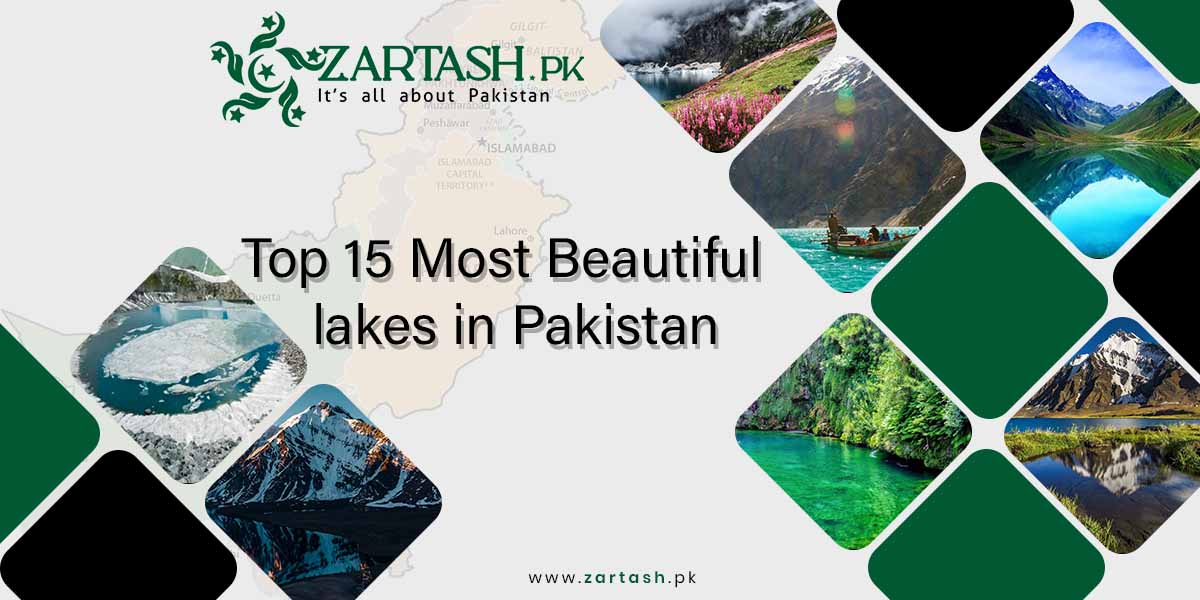
Pakistan has more than 60 well known lakes. Manchar Lake in Sindh is the largest, Rush Lake in Gilgit-Baltistan is the highest at 4,694 metres, and Lake Saif-ul-Maluk in Kaghan Valley is the most visited.
Lakes in Pakistan divide into three groups. Alpine lakes sit above 3,000 metres in Gilgit-Baltistan, upper Khyber Pakhtunkhwa, and Azad Kashmir, and are fed by glaciers and snowmelt. Salt Range and Potohar lakes in Punjab sit between 450 and 500 metres and are fed by rainfall. Delta and floodplain lakes in Sindh sit near sea level, are fed by the Indus, and hold the largest surface areas in the country.
This article lists 25 named lakes by region, gives elevation, district, type, and visiting season for each in one table, and answers the largest, highest, deepest, and most beautiful questions separately.
Lakes in Pakistan
The table below covers 25 lakes across Gilgit-Baltistan, Khyber Pakhtunkhwa, Azad Kashmir, Punjab, Sindh, Balochistan, and Islamabad.
| Lake | Region | District | Type | Elevation or notable fact | Best season |
|---|---|---|---|---|---|
| Attabad Lake | Gilgit-Baltistan | Hunza | Landslide dammed | 2,559 m (8,396 ft); maximum depth 109 m | May to October |
| Lake Saif-ul-Maluk | Khyber Pakhtunkhwa | Mansehra (Kaghan Valley) | Natural alpine | 3,224 m (10,578 ft) | June to September |
| Satpara Lake | Gilgit-Baltistan | Skardu | Natural, raised by a dam | 2,636 m (8,650 ft) | April to October |
| Dudipatsar Lake | Khyber Pakhtunkhwa | Mansehra | Natural alpine | 3,800 m (12,500 ft) | July to September |
| Lulusar Lake | Khyber Pakhtunkhwa | Mansehra | Natural alpine | 3,410 m (11,190 ft); source of the Kunhar River | June to September |
| Ansoo Lake | Khyber Pakhtunkhwa | Mansehra | Natural alpine | 4,245 m (13,927 ft) | July to September |
| Swaik Lake | Punjab | Chakwal (Kallar Kahar Tehsil) | Natural pool in the Salt Range | Also called Khandoa Lake | March to October |
| Mahodand Lake | Khyber Pakhtunkhwa | Swat (Usho Valley) | Natural alpine | 2,865 m (9,400 ft) | June to September |
| Ratti Gali Lake | Azad Kashmir | Neelum | Glacial | 3,683 m (12,083 ft) | July to September |
| Sheosar Lake | Gilgit-Baltistan | Astore, on the Deosai Plains | Natural alpine | 4,250 m (13,940 ft) | July to September |
| Banjosa Lake | Azad Kashmir | Poonch (Rawalakot) | Man-made | 1,981 m (6,499 ft) | April to October |
| Chitta Katha Lake | Azad Kashmir | Neelum (Shounter Valley) | Glacial | 4,100 m (13,500 ft) | July to September |
| Rush Lake | Gilgit-Baltistan | Nagar | Natural alpine | 4,694 m (15,400 ft), the highest lake in Pakistan | July to September |
| Karambar Lake | Gilgit-Baltistan | Ghizer (Ishkoman Valley) | Natural alpine | 4,272 m (14,016 ft); maximum depth 55 m | July to September |
| Lower Kachura Lake | Gilgit-Baltistan | Skardu | Natural | 2,500 m (8,200 ft); also called Shangrila Lake | April to October |
| Naltar Lakes | Gilgit-Baltistan | Gilgit (Naltar Valley) | Natural alpine | 3,050 to 3,150 m (10,010 to 10,330 ft) | June to September |
| Katora Lake | Khyber Pakhtunkhwa | Upper Dir (Kumrat Valley) | Glacial | 3,500 m (11,500 ft) | July to September |
| Upper Kachura Lake | Gilgit-Baltistan | Skardu | Natural | Maximum depth about 70 m | April to October |
| Kallar Kahar Lake | Punjab | Chakwal | Natural saltwater | About 1,500 ft above sea level | October to March |
| Uchali Lake | Punjab | Khushab (Soon Valley) | Natural brackish, Ramsar site | Listed under the Uchhali Complex in 1996 | November to February |
| Rawal Lake | Islamabad Capital Territory | Islamabad | Reservoir | 527 m (1,729 ft) | October to April |
| Manchar Lake | Sindh | Jamshoro and Dadu | Natural freshwater | Largest freshwater lake in Pakistan; maximum depth 5 m | November to February |
| Keenjhar Lake | Sindh | Thatta | Man-made freshwater, Ramsar site | About 135 sq km; supplies drinking water to Karachi | November to February |
| Haleji Lake | Sindh | Thatta | Man-made freshwater, Ramsar site | Listed as a Ramsar wetland on 23 July 1976 | November to February |
| Hanna Lake | Balochistan | Quetta (Urak Valley) | Man-made reservoir | About 1,980 m (6,496 ft) | March to October |
Which Is the Largest Lake in Pakistan?
Manchar Lake in Sindh is the largest lake in Pakistan. It is a natural freshwater lake lying west of the Indus in Jamshoro and Dadu districts, about 18 kilometres from Sehwan, and it is one of the largest lakes in South Asia.
Manchar Lake has no fixed size. Its surface area normally runs between 228 and 250 square kilometres, contracts to as little as 36 square kilometres in a dry year, and expands towards 500 square kilometres during heavy monsoon flooding. Maximum length is 23.5 kilometres and maximum depth is only 5 metres, so the lake is very wide and very shallow.
Manchar Lake is natural rather than artificial. Water reaches it from streams draining the Kirthar range and from the Indus through link canals, and it drains back into the Indus.
The largest man-made lake in Pakistan is the Tarbela reservoir on the Indus in Haripur District. Among purpose built freshwater lakes, Keenjhar Lake in Thatta District is the largest, at about 135 square kilometres, and it supplies drinking water to Karachi and Thatta.
Which Is the Highest Lake in Pakistan?
Rush Lake is the highest lake in Pakistan, at 4,694 metres or 15,400 feet above sea level. It sits in Nagar Valley in Gilgit-Baltistan below Rush Peak, about 15 kilometres north of Spantik, and is one of the highest alpine lakes in the world. Published rankings place it around 27th highest globally, and older lists that give 25th are counting a different set of lakes.
Three lakes follow it closely.
- Sheosar Lake at 4,250 metres, on the Deosai Plains, which are themselves among the highest plateaus on earth.
- Ansoo Lake at 4,245 metres in the Kaghan Valley, the highest lake in Khyber Pakhtunkhwa.
- Karambar Lake at 4,272 metres in Ishkoman Valley, which is often described as one of the highest biologically active lakes in the world.
Chitta Katha Lake at 4,100 metres is the highest lake in Azad Kashmir. All five are frozen for most of the year and open only between July and September.
Which Is the Deepest Lake in Pakistan?
Attabad Lake carries the deepest recorded figure of any lake in Pakistan, at 109 metres or 358 feet. It formed on 4 January 2010 when a landslide at Attabad village blocked the Hunza River, and it is 21 kilometres long.
The claim is not settled. Upper Kachura Lake near Skardu is recorded at a maximum depth of about 70 metres and is often described as one of the deepest freshwater lakes in Asia. Karambar Lake has a measured maximum depth of 55 metres and an average depth of 52 metres, and many Pakistani lists name Karambar the deepest lake in the country on that basis.
The disagreement comes from what is being counted. Attabad is deeper than both, but it is a landslide dammed lake barely 16 years old, so writers who count only long established natural lakes exclude it. No national bathymetric survey of Pakistani lakes exists to settle the question.
Which Is the Most Beautiful Lake in Pakistan?
No measurable answer exists to this question, because beauty is not a recorded property of a lake. Visitor numbers and coverage give a usable proxy.
Lake Saif-ul-Maluk receives the highest visitor traffic of any alpine lake in Pakistan and appears in more travel coverage than any other, which is why it is the lake most often named the most beautiful. It sits at 3,224 metres at the head of the Kaghan Valley, ringed by snow covered peaks including Malika Parbat.
Attabad Lake is the closest competitor on visitor numbers because the Karakoram Highway runs along its shore, and its turquoise colour makes it the most photographed. Rush Lake, Katora Lake, and Chitta Katha Lake receive the highest ratings from trekkers, because reaching any of the three requires a full day walk and the surroundings stay undeveloped.
Top 15 Most Beautiful Lakes in Pakistan
The 15 lakes below are the ones Pakistani travellers name most often, listed in the order used since this guide was first published.
1. Attabad Lake

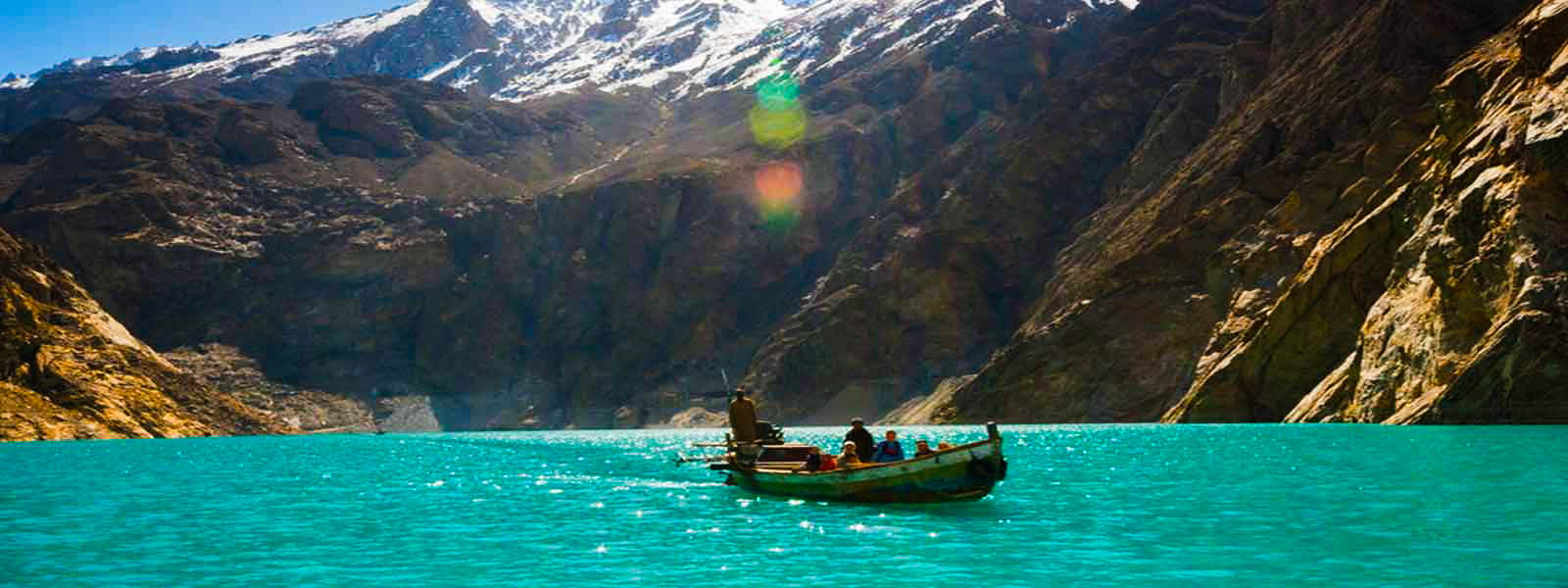
Attabad Lake lies in Gojal in Hunza District, Gilgit-Baltistan, and is also called Gojal Lake. It did not exist before 4 January 2010, when a landslide at Attabad village dammed the Hunza River and flooded the valley behind it. The lake is 21 kilometres long, 109 metres deep at its maximum, and 2,559 metres above sea level. The Karakoram Highway now runs along the shore through tunnels, and boating, jet skiing, and fishing operate from the eastern end.
2. Lake Saif-ul-Maluk

Lake Saif-ul-Maluk sits at the northern end of the Kaghan Valley in Mansehra District, Khyber Pakhtunkhwa, at 3,224 metres or 10,578 feet. The lake covers about 2.5 square kilometres and is fed by snowmelt, so its water level rises through summer. It is the most visited alpine lake in Pakistan rather than the largest, and the road from Naran is rough enough that most visitors hire a jeep for the hour long drive.
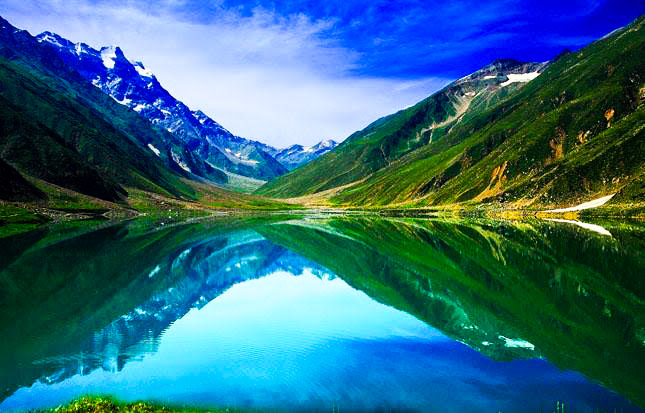
The lake carries the folk tale of a Persian prince named Saif-ul-Maluk and a fairy princess, which gave the lake its name.
3. Satpara Lake
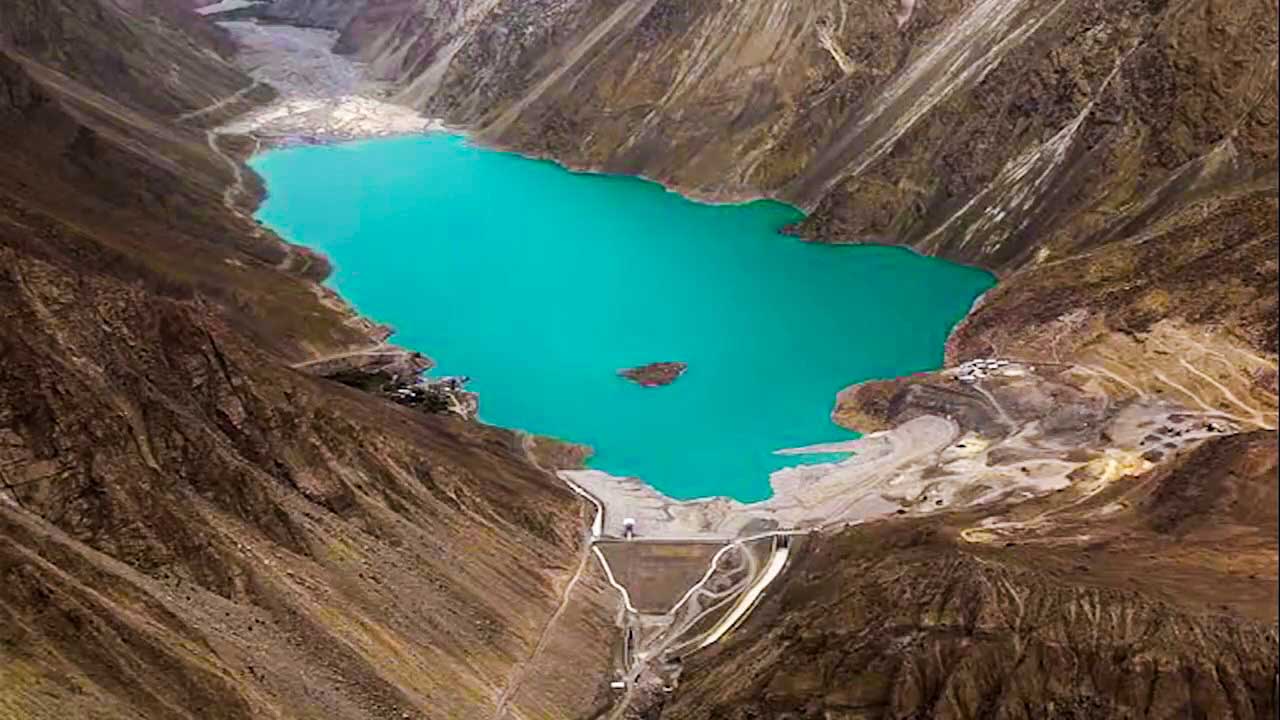
Satpara Lake lies about 9 kilometres from Skardu in Skardu District, Gilgit-Baltistan, at 2,636 metres or 8,650 feet, and covers roughly 2.5 square kilometres. The Satpara stream feeds it, and the Satpara Dam built downstream raised its level and turned it into Skardu’s water supply. It is not the largest freshwater lake in Pakistan, a title that belongs to Manchar Lake in Sindh, but it is the main source of drinking water for the Skardu valley.
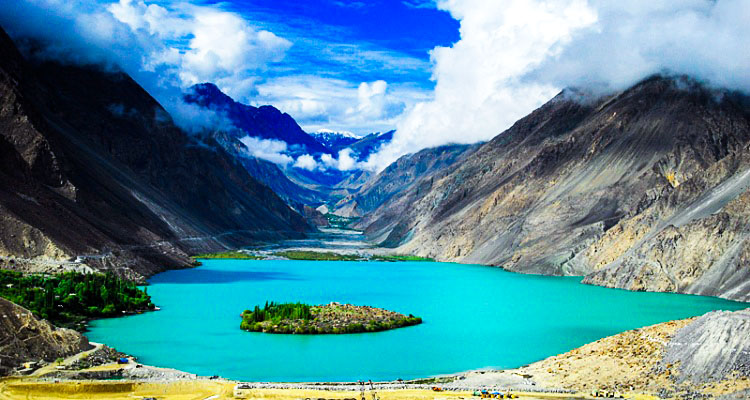
4. Dudipatsar Lake
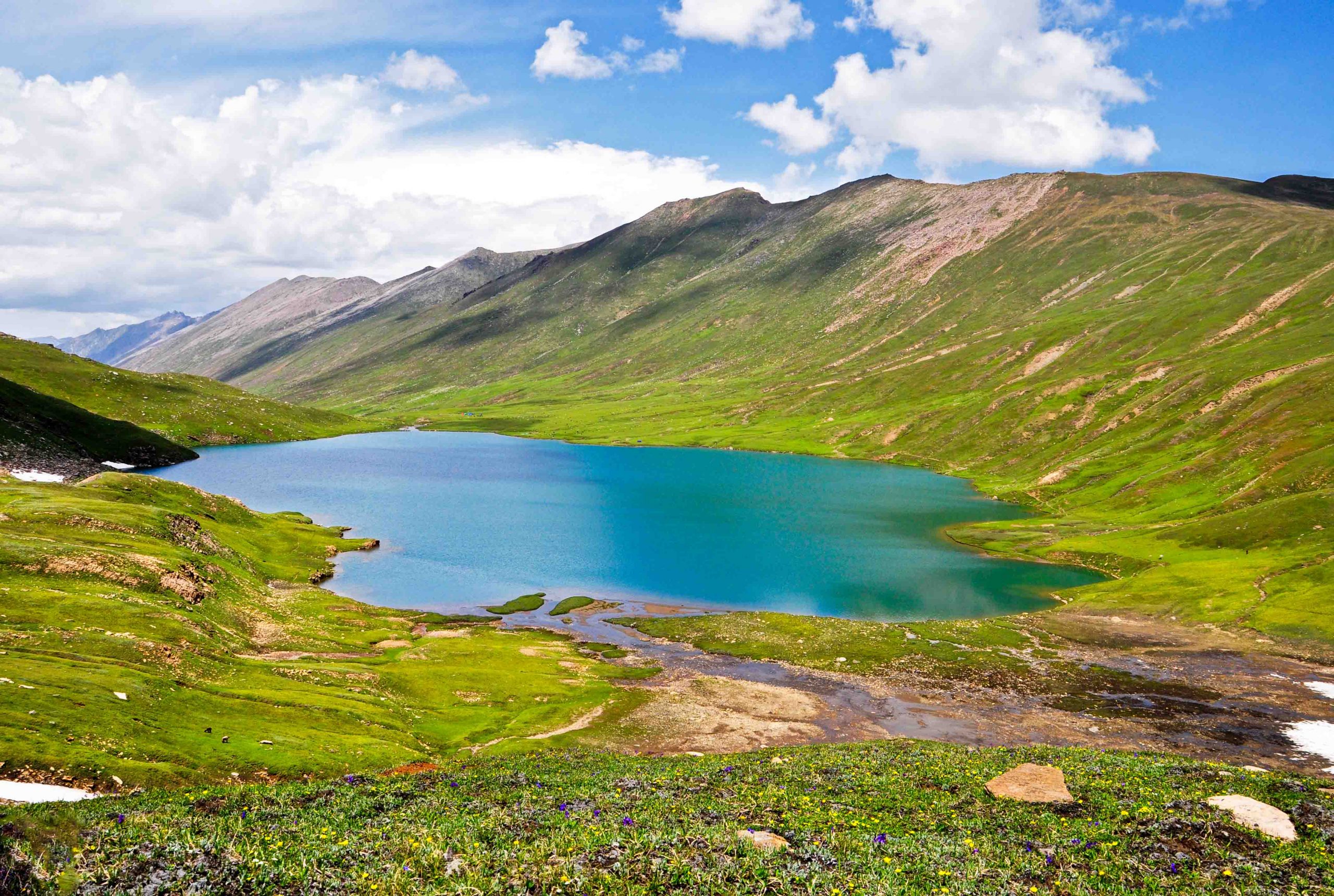
Dudipatsar Lake sits at 3,800 metres or 12,500 feet inside the Lulusar-Dudipatsar National Park in the Kaghan Valley, Mansehra District. The name means white mountain lake, which the snow on the surrounding ridges explains. No road reaches the lake. The approach is a walk of roughly six to ten hours from Besal, which is about an hour beyond Naran, and horses are available for part of the route.
5. Lulusar Lake

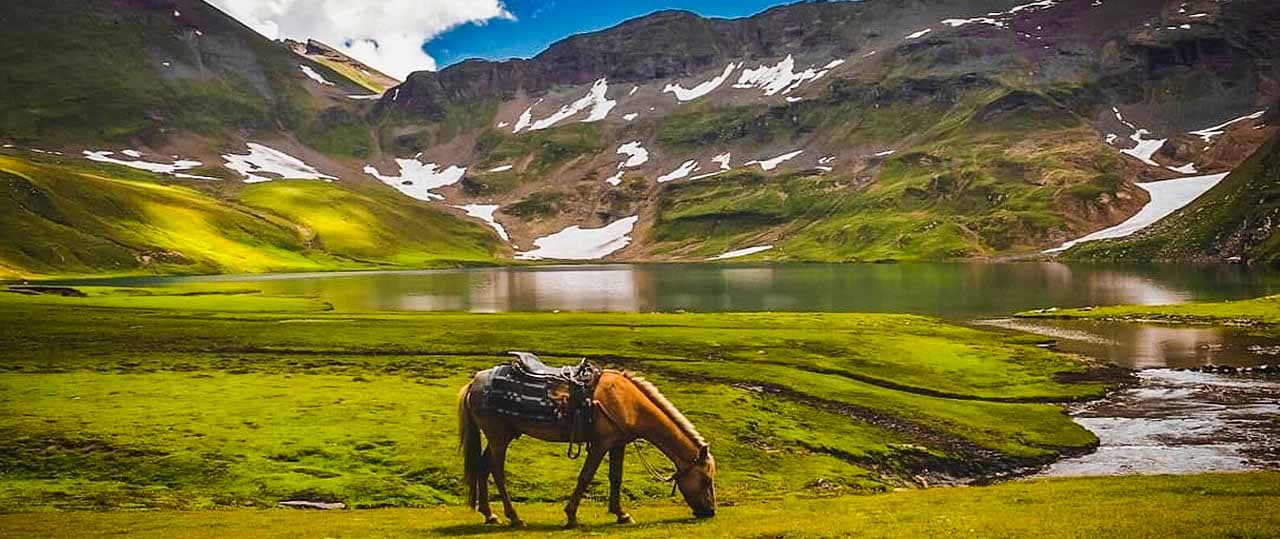
Lulusar Lake lies at 3,410 metres or 11,190 feet in Mansehra District, on the road between Naran and Babusar Top. It is the primary source of the Kunhar River, which runs the length of the Kaghan Valley. Lulusar is the easiest high alpine lake in Pakistan to reach, because the metalled road runs along its shore and no trek is needed, and it is about eight hours by car from Islamabad.

6. Ansoo Lake

Ansoo Lake sits at 4,245 metres or 13,927 feet in the Kaghan Valley in Mansehra District, and is the highest lake in Khyber Pakhtunkhwa. Ansoo means tear, and the outline of the lake matches a teardrop when the ice retreats. A low flying Pakistan Air Force aircraft recorded the shape in 1993, which is how the lake became widely known. The route is a full day on foot or horseback from Lake Saif-ul-Maluk, and there is no accommodation, so visitors camp.
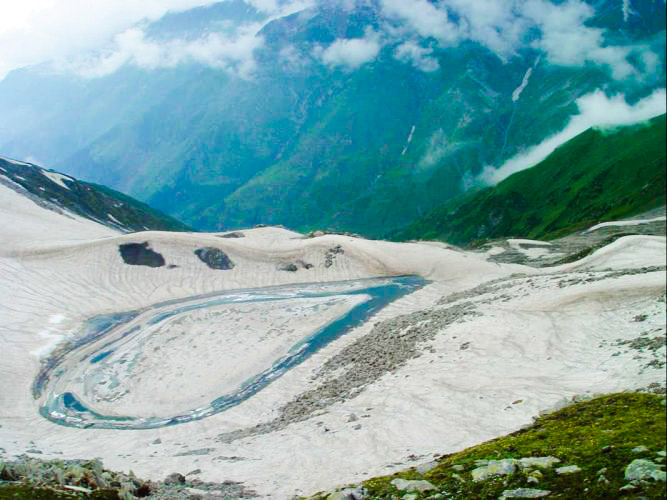
7. Swaik Lake

Swaik Lake lies in Kallar Kahar Tehsil in Chakwal District, Punjab, and is also called Khandoa Lake after the nearby village. It is a Salt Range pool rather than an alpine lake, fed by a small waterfall at its head, and its blue green colour comes from the limestone bed. No metalled road reaches it, and the approach is a hike of roughly 50 minutes from the M2 motorway over rocky ground.

8. Mahodand Lake

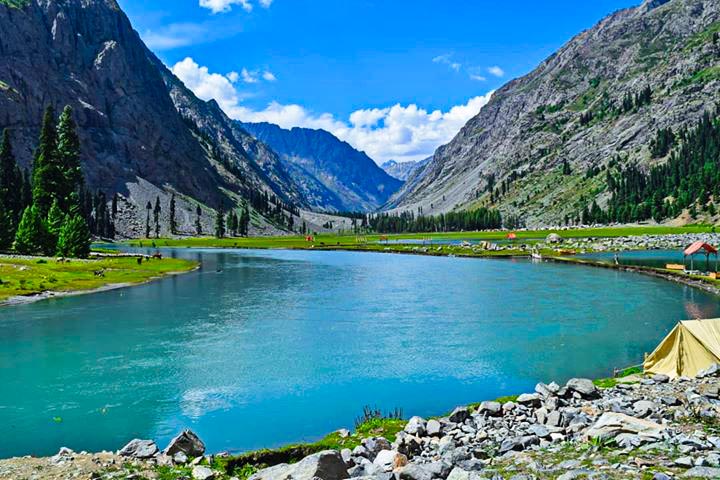
Mahodand Lake sits at 2,865 metres or 9,400 feet in Usho Valley, about 35 kilometres beyond Kalam in Swat District. The name means lake of fishes, and the lake is stocked with trout, so fishing permits are sold on site. It lies at the foot of the Hindu Kush with pine forest and meadow on three sides. A jeep track reaches the shore, and boating, camping, and horse riding all operate through the summer.
9. Ratti Gali Lake

Ratti Gali Lake lies at 3,683 metres or 12,083 feet in Neelum Valley, Azad Kashmir. Glacier melt feeds it through summer, and alpine flowers cover the surrounding meadow in July and August. Vehicles reach only as far as the Dowarian base camp, and the rest of the route is a jeep track followed by a trek, so most visitors stay overnight in camps near the lake.

10. Sheosar Lake
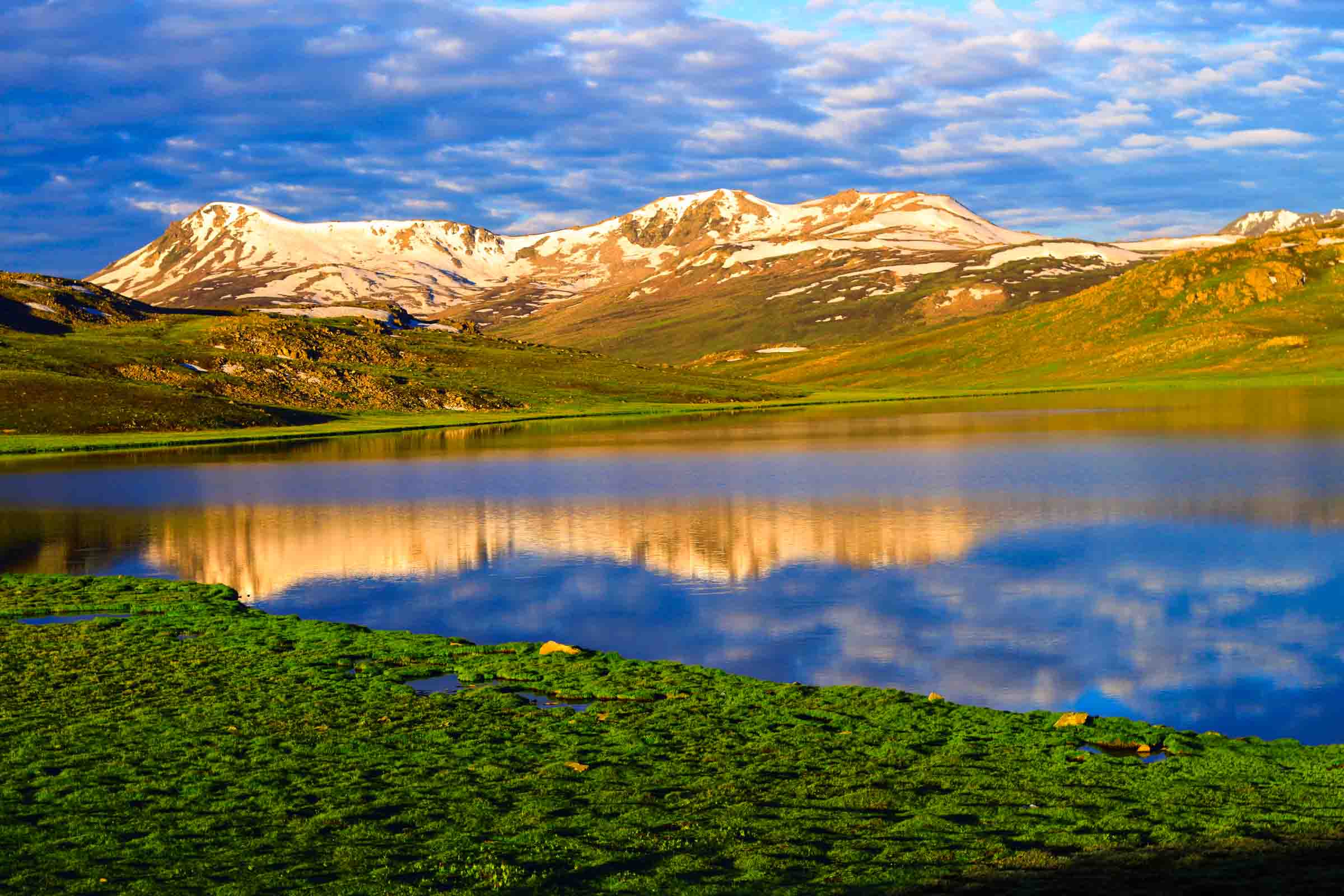
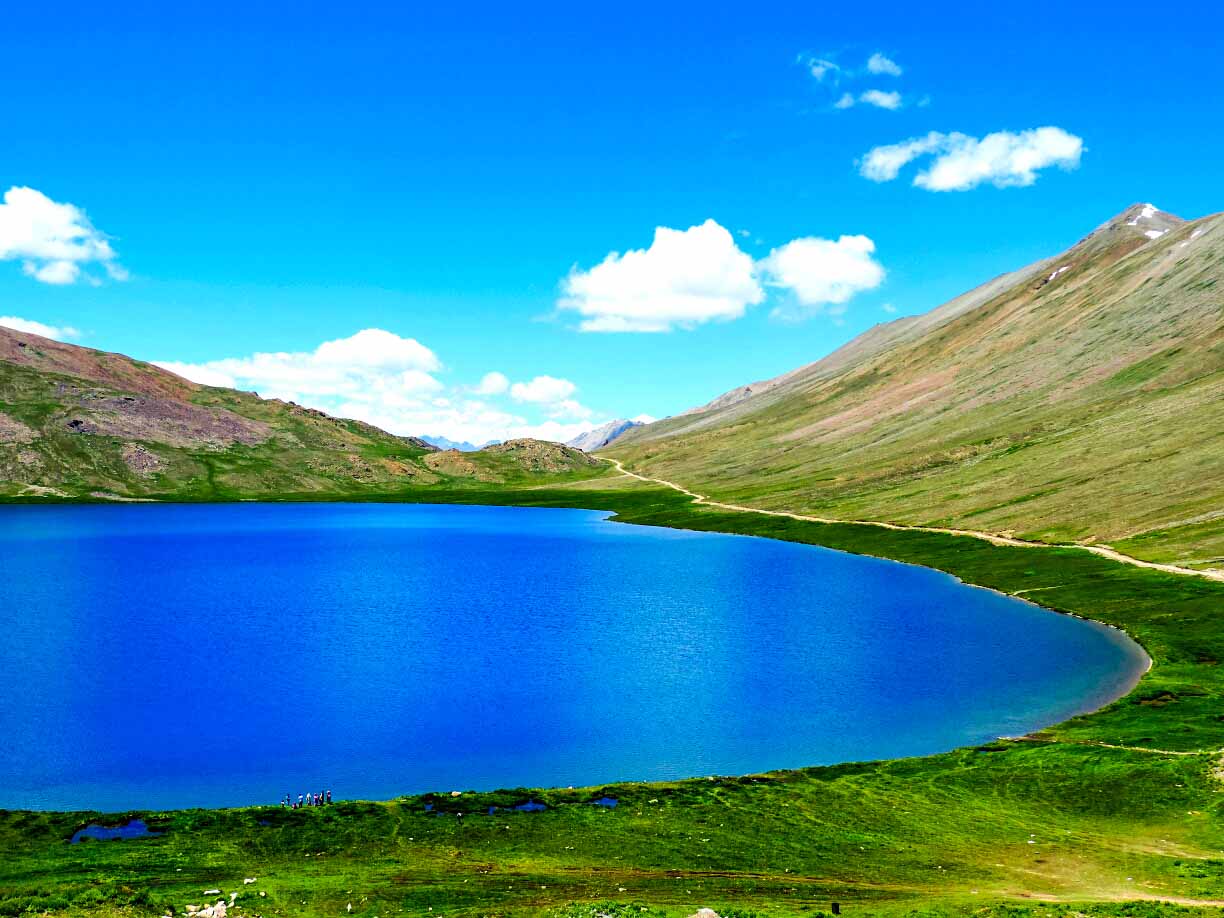
Sheosar Lake, also spelled Shausar, lies at 4,250 metres or 13,940 feet inside Deosai National Park in Gilgit-Baltistan. Deosai is one of the highest plateaus on earth and is known as the land of giants, with wildflowers covering it in July. The lake is about 2.3 kilometres long and 1.8 kilometres wide. Deosai is snowbound from November to May, and the tracks from Skardu and Astore open only in high summer.
11. Banjosa Lake

Banjosa Lake is an artificial lake 18 kilometres from Rawalakot in Poonch District, Azad Kashmir, at 1,981 metres or 6,499 feet. Dense pine forest surrounds it and a rest house sits on the shore. A metalled road reaches the lake, which makes it one of the few in Azad Kashmir needing no trek. Summer temperatures stay between roughly 16 and 23 degrees Celsius.

12. Chitta Katha Lake
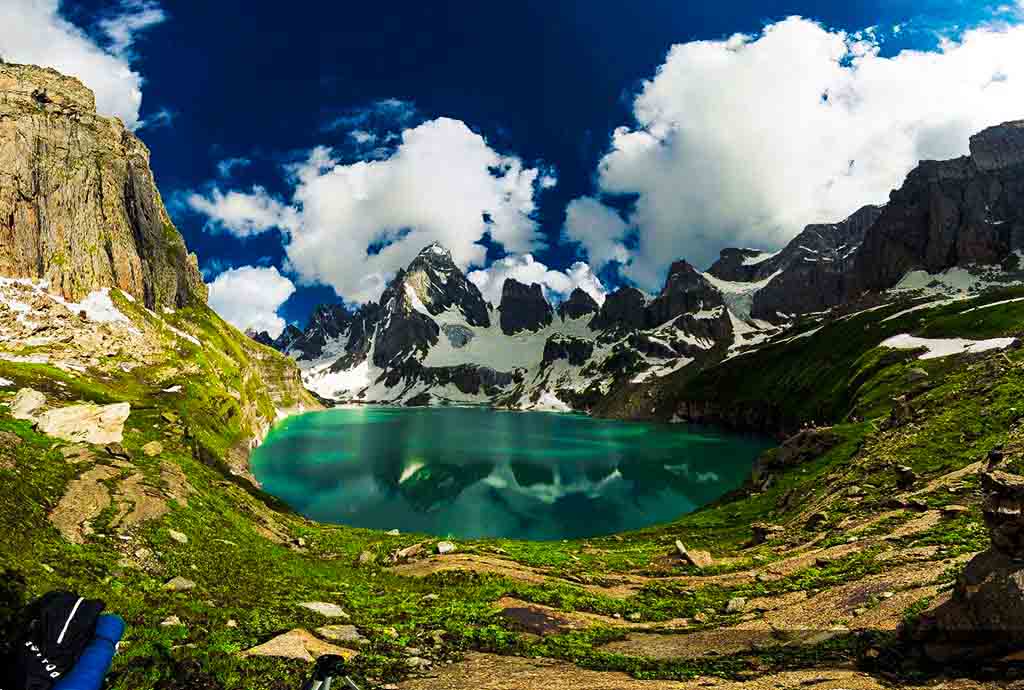
Chitta Katha Lake lies at about 4,100 metres or 13,500 feet in Shounter Valley in Neelum District, Azad Kashmir, which makes it the highest lake in the territory. The name means white stream, after the glacier fed channel that leaves the lake and joins the Shounter river. Access is a jeep ride of roughly 20 kilometres from Kel followed by a trek of about 5 kilometres.
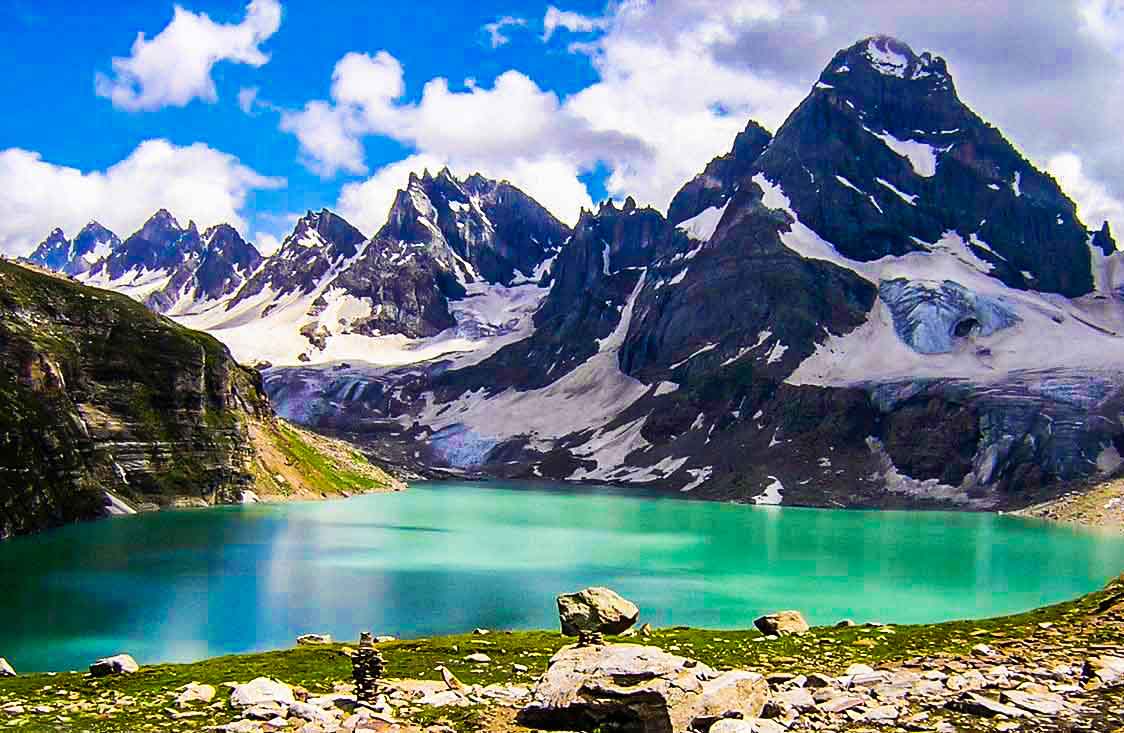
13. Rush Lake
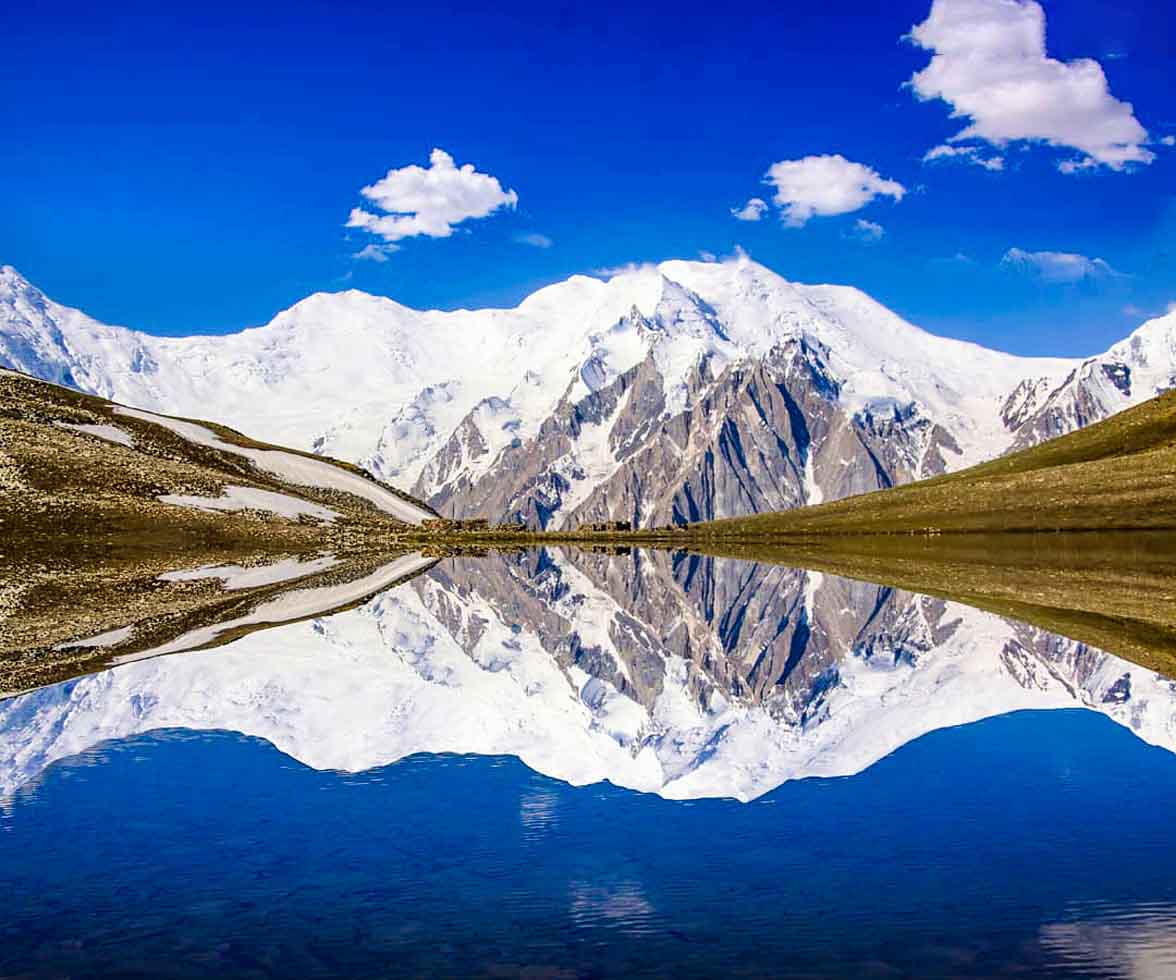
Rush Lake is the highest lake in Pakistan, at 4,694 metres or 15,400 feet, and one of the highest alpine lakes in the world. It lies in Nagar Valley in Gilgit-Baltistan below Rush Peak, north of Miar Peak and Spantik. Published rankings put it around 27th highest in the world. The approach is a two to three day trek from Nagar through Hopar Valley, crossing the Barpu glacier, with views of Malubiting and Ultar Sar from the ridge.
14. Karambar lake

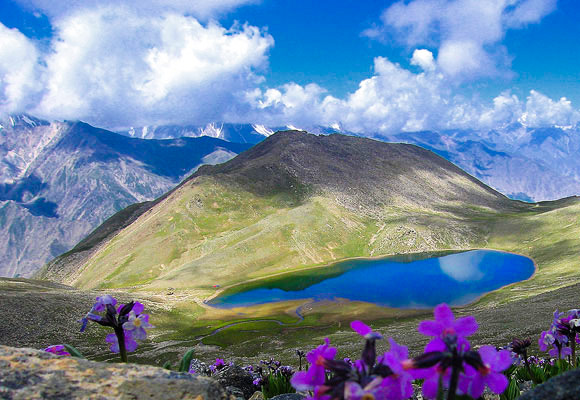
Karambar Lake, also spelled Qurumber, lies at 4,272 metres or 14,016 feet in Ishkoman Valley in Ghizer District, Gilgit-Baltistan, close to the boundary with Chitral in Khyber Pakhtunkhwa. It is 3.9 kilometres long, 2 kilometres across at its widest, and 55 metres deep at its maximum, with an average depth of 52 metres. It is often described as one of the highest biologically active lakes in the world, and its depth is why several Pakistani lists call it the country’s deepest lake.
15. Lower Kachura Lake
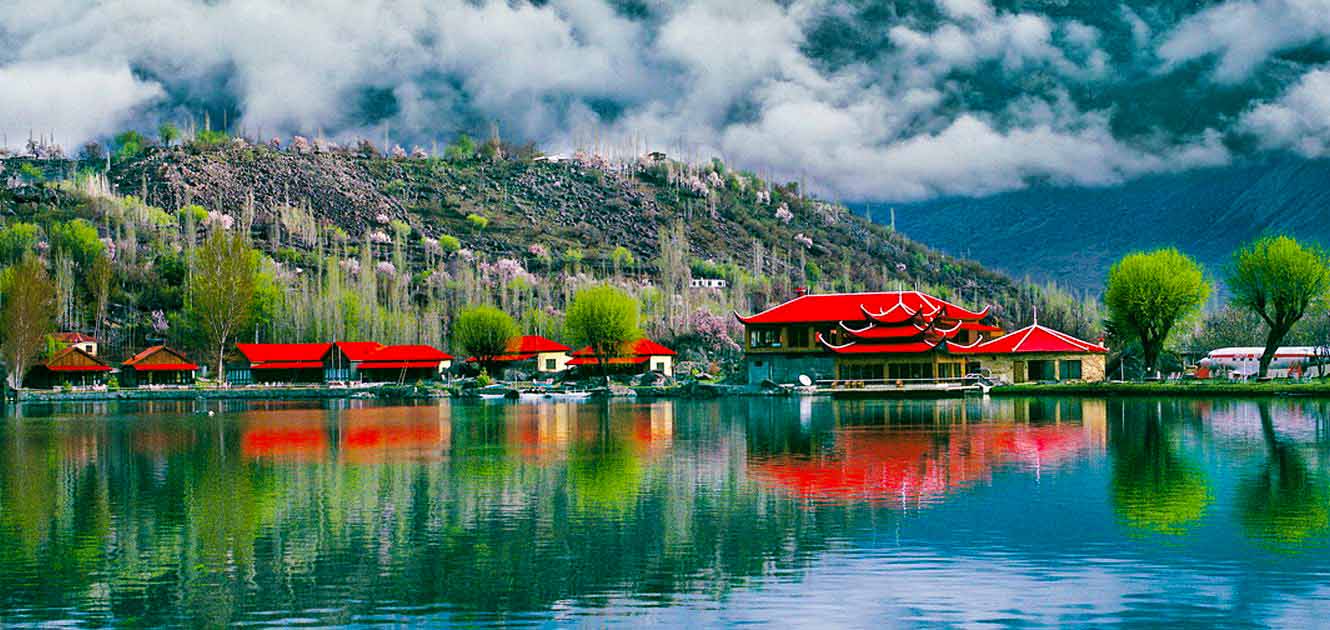
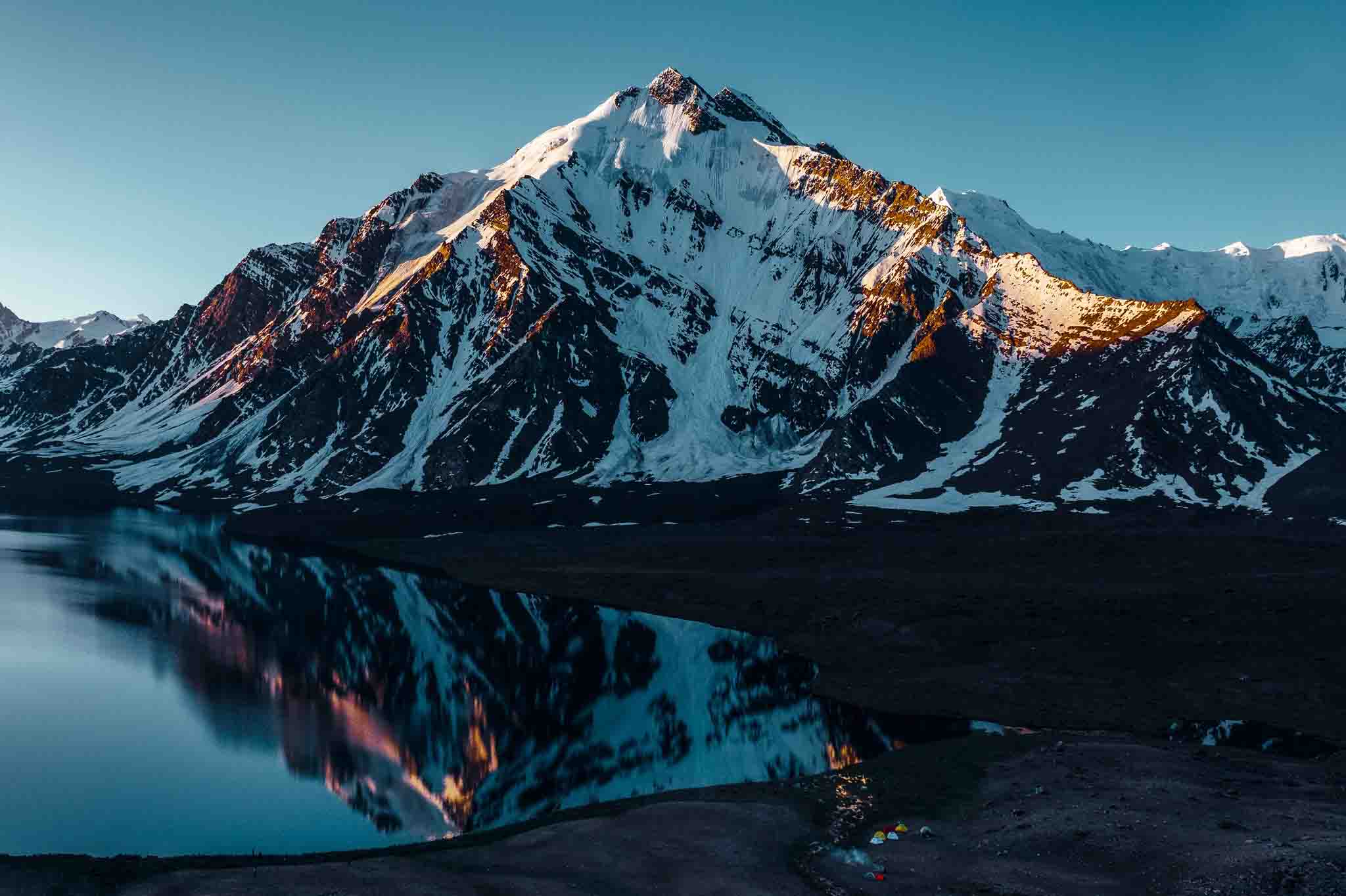
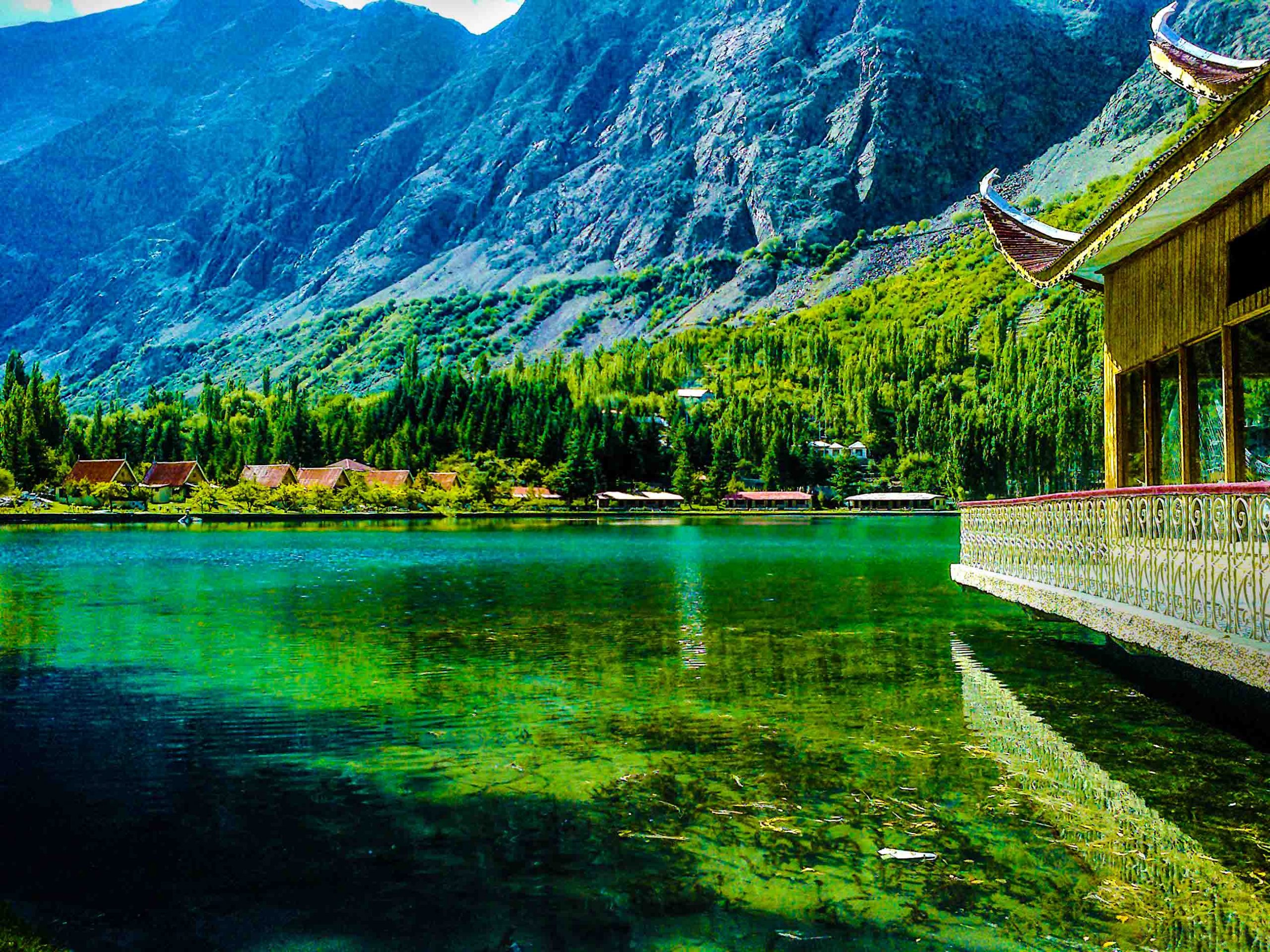
Lower Kachura Lake, better known as Shangrila Lake, sits at 2,500 metres or 8,200 feet in Skardu District, Gilgit-Baltistan, and has an average depth of about 70 metres. The Shangrila Resort was built on its shore in the 1980s and gave the lake its second name. The word Shangrila comes from a 1933 novel and is used locally to mean an earthly paradise. Boating and fishing operate from the resort, and the lake is 20 minutes by road from Skardu.
More Lakes in Gilgit-Baltistan and Khyber Pakhtunkhwa
Three further northern lakes appear on most current travel lists and are covered below.
16. Naltar Lakes
Naltar Lakes are a group of three lakes in Naltar Valley in Gilgit District, at altitudes between 3,050 and 3,150 metres. The best known of the three is often called Blue Lake for the colour its glacial sediment produces. Naltar is 40 kilometres from Gilgit by jeep track, holds Pakistan’s main ski slope, and the lakes are reachable from June to September.
17. Katora Lake
Katora Lake lies at 3,500 metres or 11,500 feet above Jahaz Banda in the Kumrat Valley, Upper Dir District, Khyber Pakhtunkhwa. Katora means bowl, which describes the rock basin holding the water. The route runs by jeep to Thal and Jahaz Banda, then a trek of four to five hours, and the lake is frozen outside July to September.
18. Upper Kachura Lake
Upper Kachura Lake sits beside its lower neighbour in Skardu District at about 2,500 metres, with a maximum depth near 70 metres that puts it among the deepest freshwater lakes in Asia. It is smaller, colder, and far quieter than Lower Kachura, and a short walk separates the two.
Lakes in Punjab and Islamabad
Punjab’s lakes are in the Salt Range and the Potohar plateau, fed by rainfall rather than glaciers, so they are shallow and several are saline.
19. Kallar Kahar Lake
Kallar Kahar Lake is a saltwater lake in Chakwal District at about 1,500 feet above sea level, beside the M2 motorway between Islamabad and Lahore. Peacocks, orchards, and the Takht-e-Babri site sit around it. The lake shrinks in summer and is best seen between October and March.
20. Uchali Lake
Uchali Lake lies in the Soon Valley in Khushab District, below Sakesar, the highest peak of the Salt Range at 1,530 metres. It is a brackish lake with no outlet, and it forms part of the Uchhali Complex together with Khabikki and Jahlar lakes. The complex was designated a Ramsar site in 1996 and receives wintering waterfowl, so November to February is the season for it.
21. Rawal Lake
Rawal Lake is a reservoir in Islamabad at 527 metres, built on the Korang river to supply water to Islamabad and Rawalpindi. Lake View Park runs along one shore. It is the most accessible lake in the country, reachable in 20 minutes from the centre of either city, and the cooler months are the comfortable season.
Lakes in Sindh
Sindh holds the largest lakes in Pakistan by surface area. All three below are floodplain or embanked lakes near the Indus, all are important bird wintering grounds, and all are best visited between November and February when the heat drops.
22. Manchar Lake
Manchar Lake in Jamshoro and Dadu districts is the largest freshwater lake in Pakistan and one of the largest in South Asia. Its area moves between about 36 and 500 square kilometres with the season and normally holds around 228 to 250 square kilometres. It is 23.5 kilometres long at maximum and only 5 metres deep. The Mohana fishing community has lived on boats on the lake for generations, and pollution from the Main Nara Valley Drain is the standing threat to it.
23. Keenjhar Lake
Keenjhar Lake, also called Kalri Lake, lies in Thatta District about 122 kilometres from Karachi. It was created by embanking the natural Sonheri and Keenjhar depressions, covers about 135 square kilometres, and supplies drinking water to Karachi and Thatta. It is a Ramsar site and a nature reserve, and the shrine of Noori Jam Tamachi stands in the water at its centre.
24. Haleji Lake
Haleji Lake in Thatta District sits at about 60 metres above sea level and was enlarged during the Second World War to supply water to troops in Karachi. It was designated a Ramsar wetland on 23 July 1976, one of Pakistan’s first, and holds large winter populations of ducks, flamingos, and pelicans.
Lakes in Balochistan
Balochistan has few permanent lakes because rainfall is low across the province. The one that visitors reach easily is described below.
25. Hanna Lake
Hanna Lake sits at about 1,980 metres in Urak Valley, roughly 10 kilometres from Quetta in Balochistan. It is a reservoir built during the British period, ringed by dry hills and fruit orchards, with boating on the water and a small island at the centre. Water levels fall sharply in drought years. The Hanna Urak waterfall lies a short distance up the valley, and both appear on the list of famous waterfalls in every province of Pakistan.
Frequently Asked Questions (FAQs)
How many lakes are there in Pakistan?
Pakistan has more than 60 well known lakes, roughly 51 natural and 9 man-made. Satellite mapping of Gilgit-Baltistan and Chitral has identified several hundred more high altitude water bodies, most of them unnamed.
Which lake is the deepest in Pakistan?
Attabad Lake holds the deepest recorded figure at 109 metres. Upper Kachura reaches about 70 metres and Karambar 55 metres, and lists that exclude landslide dammed lakes name Karambar instead.
Which lake is the most beautiful lake in Pakistan?
Lake Saif-ul-Maluk is the lake most often named the most beautiful in Pakistan. It receives more visitors than any other alpine lake and sits at 3,224 metres below the Malika Parbat peak.
Which lake is the largest man-made lake in Pakistan?
The Tarbela reservoir on the Indus is the largest man-made lake in Pakistan. Keenjhar Lake in Thatta District is the largest purpose built freshwater lake, at about 135 square kilometres.
Why is Attabad lake blue?
Attabad Lake is blue because glacial rock flour suspended in the water scatters blue light. The colour is strongest in summer when meltwater carries the most sediment, and it fades once the lake freezes.
Last Thoughts on Lakes in Pakistan
Lakes in Pakistan answer to altitude. Above 3,000 metres the lakes are small, deep, cold, and open for two or three months a year, and reaching Rush, Ansoo, Katora, or Chitta Katha costs a day or more of walking. Below 500 metres in the Indus plain the lakes are wide, shallow, warm, and open all winter, and Manchar and Keenjhar can be driven to.
The superlatives are worth stating carefully. Manchar is the largest by area but changes size by a factor of ten between drought and flood. Rush is the highest at 4,694 metres and that figure is stable. The deepest lake has no settled answer, because Attabad’s 109 metre reading beats every natural lake yet the lake itself is only 16 years old. Any list that gives one confident number for the deepest lake in Pakistan is choosing a definition without saying so. The wider travel context for these regions is set out in the guides to beautiful places in Pakistan and to the geographical importance of Pakistan.
