

Tourism in Pakistan is a superb experience for the one who loves traveling. As Pakistan is situated in South Asia, it contains strategic geographical positions, thus shares the natural beauty of Ancient Places. Makli, Mohenjo –Daro, Minar e Pakistan, Taxila, and Badshahi Mosque are the most popularly visited ancient places of Pakistan.
Pakistan is the “Land of Pure” and shares four borders. These are China, Iran, Afghanistan, and India. These borders also remain the place of interest for the people to be visited.
Why Do International Tourists Visit Pakistan?
Pakistan is an agricultural country but at the same time, it is blessed with so many hills, mountains, and valleys.
The most beautiful valley which is situated in the North of Pakistan is known as Hunza Valley. This flourishing green valley is also famous as Heaven on the Earth due to its glaciers, mountains, and natural beauty.
It observes four seasons in a year. Every season contains its intrinsic splendor.
Several cultural and civilized places in Pakistan depict the values, traditions, beliefs, mental approach, dress, food, and customs of people in common time.
The most prominent cultures are Pushtoon, Punjabi, Sariki, Balochi, Sindhi, and Kashmiri.
Majority of tourist prefers to visit breathtaking views of the mountains of Gilgit Baltistan.
People from all around the world are attracted by the majestic landscape and the snowcapped mountains in the Northern areas. These mountains cover the world’s highest ranges.
From hundreds of mountains, the name of some peaks is K2, Broad Peak, Gasherbrum, Nanga Parbat, and Passu Cones. All these are the best places for tourism in Pakistan.
Is Pakistan Safe for Tourism?
Recently, on Oct 14, 2019, the British royal couple Prince William and Kate Middleton arrived in Pakistan. They safely completed tourism in Pakistan. They visited the Chiatibo glacier in the Hindu-Kush mountain. The couple loves to be there.
Prince William expressed his feelings by saying that it is a wonderful place that he never saw before even all over the world.
Importance of Tourism
- Tourism is beneficial because it can be a source of income, thus improve the economy.
- It provides opportunities for jobs.
- It is a source of welfare.
- Due to tourism, cultural information can be gained.
- It helps to preserve local traditions.
To stand honorably and independently, the economy of a country must be expanded. Those nations; whose economic conditions are stable, can put their heads high in the world. Several factors play a vital role in increasing the economy, and a state continues to struggle to find different ways to expand the production and trading methods.
Among the several factors, i.e. culture, geography, laws, and history, there is another trend that is grown widely in Pakistan and plays decisive role regard to the economy of a country, which is Bike Tourism.
Why is Bike Tourism Most Suitable One?
Initially, tourists like to use a bicycle as a vehicle for tourism but now a day’s Bike is most commonly used. Bike tourism reduces fatigue, and also it is time-saving. It is the most suitable way for girls because it reduces the burden of peddling and saves their energy.
Although some safety measures are also required during the tour on a bike so that journey becomes more comfortable.
A place where girls are safe 😍
Biker tourist in pakistan#پرامن_پاکستان pic.twitter.com/69Pov126Ti— AYESHA KHAN (@Ashkhan0345) June 21, 2019
Precautions for Bike Tourism
Safety is the most important responsibility of a person while going for any tour. Always work on the following precautions:
- Ensure a comfortable and secure route for the journey and avoid shortcuts.
- Always wear a Helmet and gloves during riding.
- Keep sunglasses, waterproof jackets, and wind jackets during the trip.
- Don’t forget to take a torch and also some common medicines in case of an emergency.
- Tourism is not a cheap task, thus keep an extra investment usually for bike maintenance.
Tourism in Sindh, Pakistan
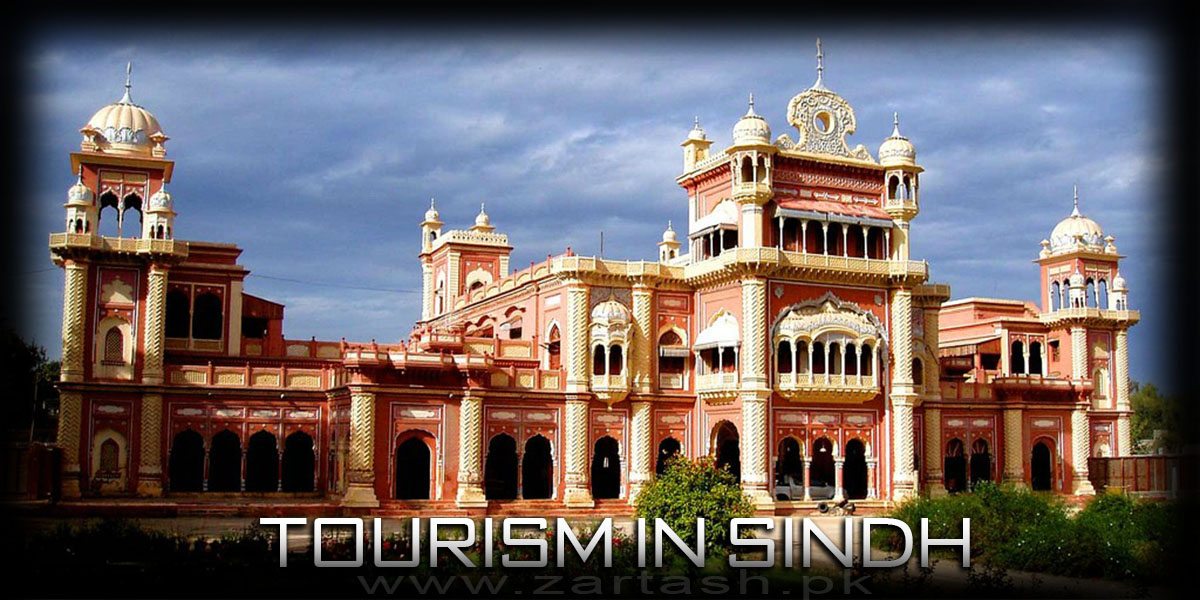
Sindh is present on the southeast side of Pakistan. It is Pakistan’s third-largest province by area. Sindh is the most populated province after Punjab and it has amazing people.
Historically, Sindh depicts the cultural and ethnic values of those Muslims who migrated from India after independence and mostly are Urdu Speaking.
Cities in Sindh
- Karachi
- Hyderabad
- Thatta
- Sukkur
- Larkana
- Moen Jo Daro
- Mirpurkhas
- Thar Desert
- Jacobabad
- Sehwan
- Khairpur
- Nawab Shah
All cities are popular and contain different agricultural and historical values in the eyes of people who love tourism in Pakistan.
Which is the Most Famous City in Sindh?
Karachi, which is the capital of Sindh, is the most popular one. It is worldwide recognized because Pakistan’s busiest international and domestic airport named Jinnah International Airport is present in Karachi.
Historical Places
Furthermore, it contains several historical places. Some other sites which are liked to be visited by tourists are listed below:
Charna Island, located in the Arabian Sea.
Frere Hall building serves for the exhibitions and located at Fatima Jinnah Road in Karachi City.
Aladin Park
Tooba Mosque or Gol Masjid
The Great Fiesta Family Water Park
Beautiful and Memorable Places in Sindh
The cities of Sindh contain various memorable and historical places to be visited. We introduce city-wise tourism places below:
Tourism In Karachi
-
Mazar-e-Quaid

Mazar-e-Quaid is the tomb of great Pakistani leader, Quaid-e-Azam Mohammad Ali Jinnah who is the creator of Pakistan. It is located near Gulshan-e-Iqbal in Karachi with easy road links; thus, the visitors face trouble-free access towards the tomb.
The Tomb has a magnificent appearance. Globally renowned architecture Yahya designed the structure of the tomb. The tomb contains white marble with curved arches. The inner chamber is decorated with a crystal chandelier.
There are beautiful gardens around the monument. Lush greenery is an exciting and spectacular thing for people to spend their time in the evening. The gardens also contain numerous benches.
There are 15 fountains that are installed on one side of the mausoleum.
The park is decorated with beamed spotlights. At night, these lights are projected creatively on the tomb, thus develop charismatic feelings inside the viewers. These lights increase the beauty and charm of the place and mesmerize the visitors.
The glowing on the marvelous tomb can be seen from several miles by the Karachiites at night.
People from all around the country like to visit Mazar-e-Quaid.
Especially on the 14 August and on the birth date of our great national hero Quaid-e-Azam Mohammad Ali Jinnah (25 December), the tomb remains crowded by the people.
Few official and military-based ceremonies are also held on Pakistan Day (23rd March) and his Death anniversary (11 September) where different political leaders and army officers do present a tribute to him.
-
Clifton Beach
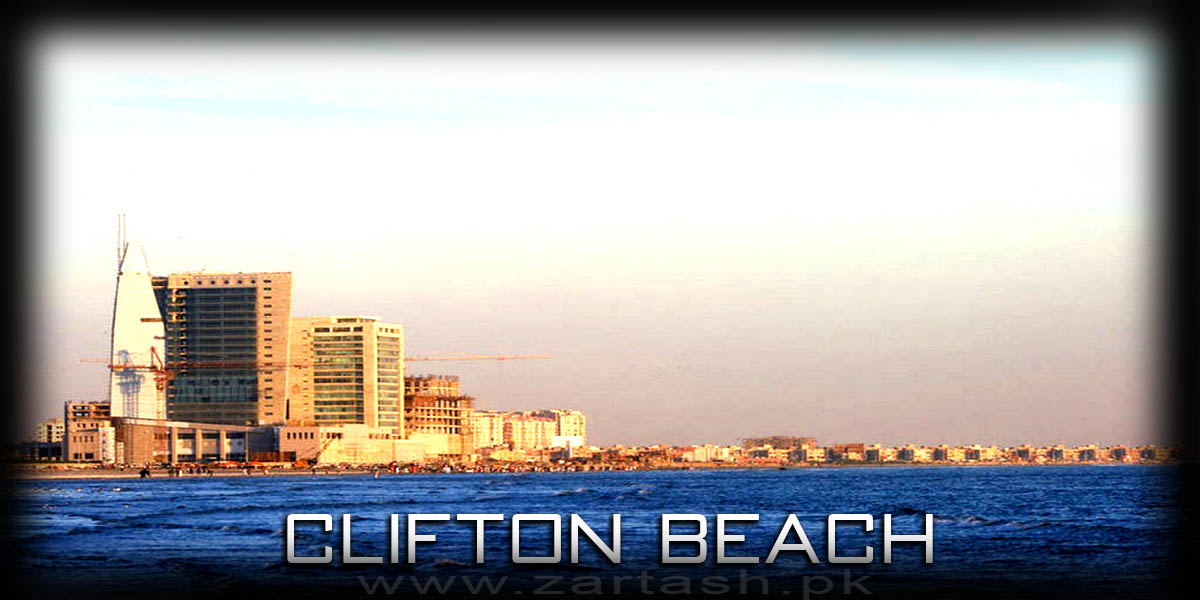
Clifton Beach is one of the beautiful places of Karachi, which is also known as sea view. It is situated in the Arabian Sea and it the only one all-around Pakistan, thus it is prevalent among the people and holds significant value among beach lovers and tourists.
The sea view is present near Sadder Town, which is the living area of elite class people. The apartments across the beach are rated very high, but at the beach, the fun which is managed to provide to the tourists is much inexpensive. It includes tri bikes, camel riding, and horse riding.
People enjoy a lot by riding on them on an affordable budget.
Near Clifton beach, there is an amusement park, and there is also a newly constructed Cineplex Cinema. Different entertaining shows are held there.
Some people go there to watch international movies but mostly like to celebrate the picnic at the beach and enjoy the freedom of cooking by eating ready-made food items that are also available at the sea view.
The food items include gool gappy, chana chat, ice cream, etc. People enjoy the taste of these traditional Pakistani foods.
At the seashore, there are also stalls of handy made items that are made by sippi, seashell, or pearl barley.
These items reflect the asset that is present in the depth of the ocean and sometimes come to the shore along with waves. Some of them are very precious, but people like to buy it. Children love to collect seashells and try to make handmade jewelry from them.
Also, there is a food street on the right side of the sea-view point where Chinese, continental, and seafood are present.
People can choose different dishes according to their taste.
On the left side of the sea viewpoint, there is a Dolmen Mall which is a famous shopping area for the comers.
This Mall introduces top and expensive international brands. Tourists from all around the world find it an ideal place to visit.
Clifton Beach surprises the visitors with the floodlights at night. At the time when the sun sets in the West, different feelings develop in you as compared to the daytime because these floodlights provide an electrifying effect on the entire sea.
People also make memorable pictures after standing among the coming waves. Some tourists like to go far enough inside the sea to make their tourism more exciting and full of fun, but safety measures should also concern before doing any adventure.
-
Mohatta Palace Museum
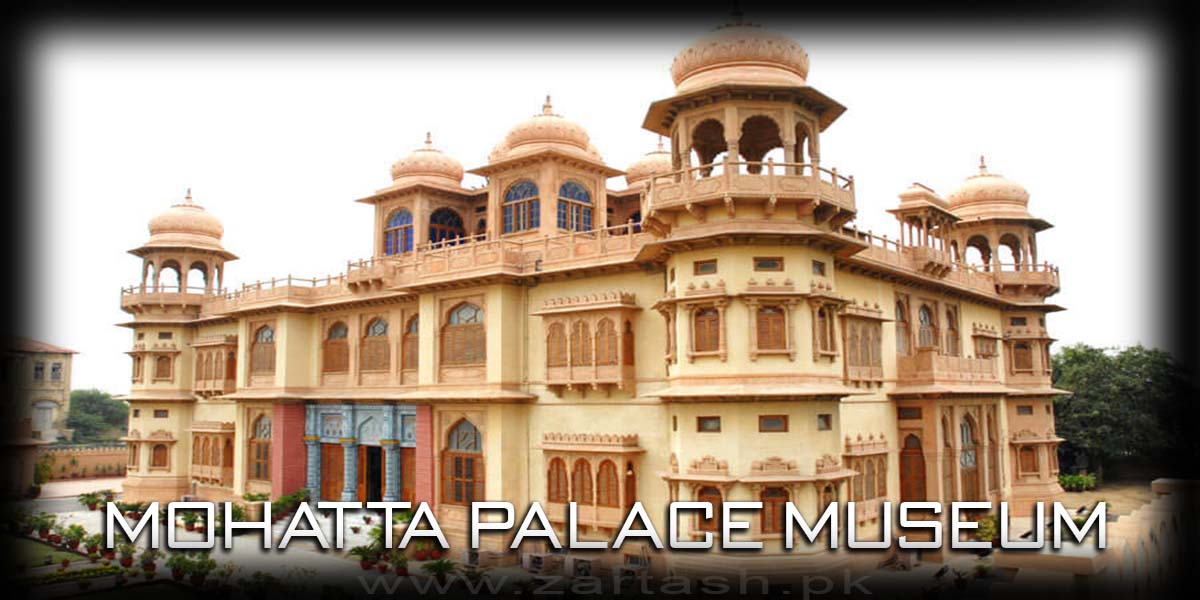
Mohatta Palace Museum is a true reflection of art, culture, and history. It is present in Karachi near the posh seaside of Clifton. The Palace is a beautiful place for tourism with friends and family.
The existence of the Mohatta Palace Museum was the result of an Indian Marwari businessman, Shivratan Chandraratan Mohatta, who built this building in 1927 for the residential purpose. The design was architected by Agha Ahmed Hussain.
This Palace depicted the taste of Hinduism as he built a beautiful family temple on the terrace of the palace that was dedicated to their Hindu God, Lord Shiva. But after independence, Shivratan Chandraratan Mohatta had to leave Karachi and shifted to Rajasthan in India.
After his departure, in 1947, the Government of Pakistan got hold of the building to house the Ministry of Foreign Affairs. From 1964 to 1980, Jinnah’s family lived here, but after the death of Shireen Jinnah, the palace was sealed.
In 1995, the government of Sindh purchased it and converted it into a museum. The museum was properly opened in the year 1999. Nowadays, it is used as an art and heritage exhibition venue.
The palace occupies an 18,500 sq ft area. There are nine domes with one in the middle position. There are octagonal towers on each corner of the Palace. It is trimmed with windows containing stained glass that open in the gardens.
The Palace has luxurious large rooms on the first floor while the ground floor rooms are for entertainment purposes to facilitate the visitors.
The basement comprises a stairway that downward towards a pool house that has an attached changing room. Near the pool, the house has small ventilators that are the best source of sunlight and letting out condensation. There is a small collection of English statues next to the Main building.
Entry in the museum is free for kids up to 12 years old. Tickets for adults are Rs 30. A small souvenir products shop is also available here. Opening timings are between 11-00 am and 6-00 pm from Tuesday to Sunday. On Monday it remains closed. It is an excellent place for architecture and history lovers.
-
National Museum of Pakistan
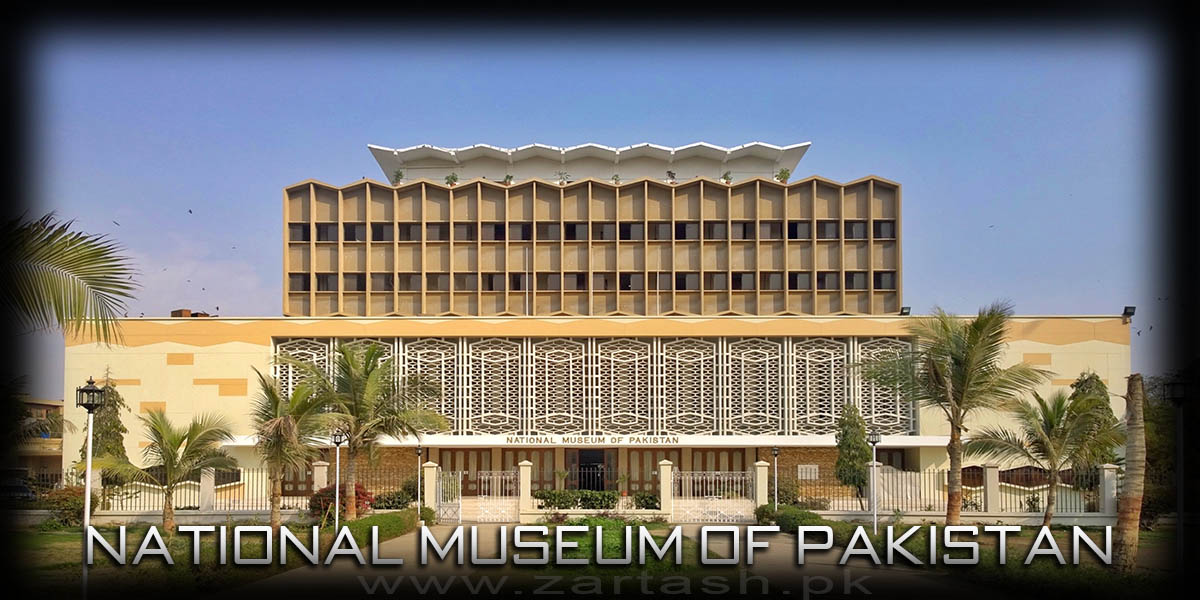
The museum is an extraordinary place to become familiar with the cultural, religious, and historical values of its people. The National Museum of Pakistan is a famous place in Karachi and established in 1950. This museum has preserved the records of hundreds of sculptures.
There is more than 57,000 collection of an old coin. Reading material and publications around 70,000 are present in the National Museum. Museum also contains the “Quran Gallery” where more than 300 copies of Quran Pak are available on display.
-
Manora

Manora is a favorite tourist spot due to its long sandy beaches that expands along the southern edge of the island and unite into the shores of Sandspit and Hawkesbury. From mainland Karachi, Manora lies approximately at the distance of 15–20 minutes by boat ride.
In the southeastern end of Manora island, there is the tallest lighthouse having a measurement of 28 m or 9 1 feet with a reach of 26 marine miles Manora light-house in Pakistan. A Canadian engineer Alain-Chartier-de-Lotbiniere built this lighthouse at the command of the British Empire in 1889. The purpose of this lighthouse was to assist the vessels approaching Karachi port.
Manora is present in the south direction of the Port of Karachi. Manora and adjacent islands make a protective obstacle between Karachi port to the north and the Arabian Sea towards the south. Initially, this island utilized as a small fort.
At that time, the harbor of Karachi traded with Bahrain and Oman. Due to the strategic location of Karachi, the British stormed at the Fort and defeated the Kalmati Baloch tribe who settled in Karachi. Although the fort has now hidden beneath the marine base and Manora island has served for more than 50 years as the main base of the Pakistan Navy.
Attractive Places in Punjab for Tourists
Punjab is a province that welcomes tourists attracting and captivating them with its beautiful and historical places. Here we enlist some of the top tourists’ attractions in the province of Punjab.
Katas Raj Temple
Katas Raj Temple, located about 16km from Kallar Kahar in the district of Chakwal is among the top beautiful and historical places that attract tourists in the province of Punjab. This amazing place is a beautiful and historic mixing and combination of seven historic and ancient temples called Satgraha. There is a Holy pond between these temples and it is very sacred for Hindus.
Badshahi Masjid
It is Pakistan’s second-largest mosque and Punjab’s top attractive place for tourists. This mosque is also very famous as it is the 8th largest mosque in the world. It was built by Mughal Emperor Aurangzeb in 1673 A.D. This mosque also has a small museum for tourists. In the museum, there is some religious and ancient piece of art that attracts tourists.
Minar-e-Pakistan
Minar-e-Pakistan is a memorable place that was built to commemorate the Lahore Resolution which was held on 23rd March 1940. This monument was built when it was decided to make a separate homeland for the Muslims of the subcontinent so is a symbol of freedom for the Muslims.
Noor Mahal
This palace is one of the most attractive places in Punjab which was built by the Nawab Subah Sadiq in the remembrance of his wife. This palace is an ancient place as it is about 150 years old. It is located in Bahawalpur. In 1999, some of its valuable belongings were black-marketed and sold. So, as a result, Pakistan Government declared it a protected and safe monument and It was given under the control of the Pakistan Army.
Derawar Fort
This for is located about 99km from Bahawalpur in the Cholistan Desert. It attracts tourists due to its magnificence. This fort has a circumference of 1.5km having each wall with a length of 204m and a height of 30 m. This fort was built by Hindu Rajput, Rai Jajja Bhatti.
Jahangir Tomb
Tourists attraction present in Pakistan is a mixture of ancient and historic landmarks and magnificent historic monuments. The Tomb of Jahangir is also one of them that enchants and fascinates the tourists. It is the tomb of Mughal Emperor Jahangir who died and was buried in 1627.
Khewra Salt Mines
In the list of attractive places in Punjab, Kheawra salt mines play the biggest role as these salt mines located in the Jhelum district are significant as they are the second largest salt mines in the world. These mines are situated 288m above sea level.
Wazir Khan Mosque
The state religion of Pakistan is Islam and all the former rulers have a great interest in building the magnificent, enchanting, and captivating mosques that attract the tourists by their grandeur. So there are a number of mosques in the subcontinent. Wazir Khan Mosque in one of them which has left the tourist and engineers in awe with its marvelous structure.
Attractive and Beautiful Places in Balochistan
Balochistan makes up 44% of Pakistan’s total area. It is a mineral-rich province and it is filled with mind-blowing and enchanting places that captivate the travelers. Here are some top attractive places in Balochistan that one must-see.
Pir Ghaib—the Invisible Saint
Pir Ghaib Waterfalls are present in the Bolan Valley in Balochistan. The most interesting thing about this is that it is making its way in the shade of palm trees that look so enchanting and it makes its way through many lakes and rivers. The residents there believe in a myth that a Saint struck a stick on the mountain and water begins to start flowing from that place and it’s still pouring out to date.
Moola Chotok
Moola Chotok is also known as the Moola Waterfall because there are many small and large waterfalls in that place. This place is also known as the hidden paradise due to its matchless beauty.
Quaid-e-Azam Residency
Quaid-e-Azam Residency is located in Ziarat, Balochistan, and is famous because Quaid-e-Azam Spent the last days of his life there. It is worth visiting the place due to its mindblowing beauty and peace at that place
Pir Chattal Noorani
It is a beautiful oasis that is located in the center of Jhal Magsi in Balochistan. It is one of the top tourists attraction in Balochistan that leaves the visitors in awe.
Hannah Jheel
Surrounded by mountains, this beautiful and magnificent lake is located in Urak Valley in Balochistan. This lake presents a beautiful and captivating view to the visitors and tourists there.
Top Beautiful Places in Khyber Pakhtunkhwa (KPK)
Khyber Pakhtunkhwa is a heavenly place in Pakistan that not only warmly welcomes the people of Pakistan but also the foreigners who are attracted by its awe-inspiring greenery, captivating scenes, and mind-blowing views. Here we enlist some of the top attractions in the province of Khyber Pakhtunkhwa.
Malam Jabba
Malam Jabba in KPK is the right choice for the tourists and visitors that are interested in skiing because it is only in Malam Jabba that a ski resort is present in the whole of Pakistan. It is famous for its snowcapped trees and almost all the year temperature here remains so low that the passages are places in Malam Jabba remain covered with snow.
Lake Saif-ul-Malook
it is ranked 5th in the list of top attractive places in Pakistan. This place is so much beautiful that one has to pat his eyes in order to realize himself that is it a dream or a reality. Its sea green and crystal clear water having freezing temperature is the most enchanting thing that captivates the tourist amongst the gigantic glaciers.
Nathiagali
Nathiagali is the most heard and most visited place in KPK province. It is said about this place that it is a maze of incredible and matchless beauty. Weather there is cold because of the high altitude. This place is about an hour’s drive from Abottabad and doubles from Islamabad. It is most crowded during the months of May, June, July, and August when there is much hot weather in other regions of Pakistan and this place offers a welcoming spot for the people who are tired of hot weather. In these months, the weather in KPK is very pleasant and soothing.
Mushpuri
Mushpuri is a place that presents nature in such an awesome way that you have never seen and never heard of it before. Located in Abottabad is known as the second-highest hill of Galyat. This place is also a resort for trekkers and hikers and attracts the visitors and leaves them in awe. There are fresh springs with crystal clear water sprouting here and there that add to the scenic beauty. The amazing and awesome sight of the Beautiful Kashmir valley could be seen from its top. Its intrinsic beauty is breathtaking.
Swat Valley
Swat is the most beautiful valley in Pakistan and is known to be the Switzerland of Pakistan. Its mind-blowing scenes, intrinsic beauty, and awe-inspiring views captivate the tourists as it is one of the greenest valleys in Pakistan. People like to spend their honeymoons there. It is also best for hiking, trekking, and archeology. This valley displays and presents stunning views of nature. It is ranked in the list of attractive places in Pakistan.
Kalash Valley
This valley is located in Chitral and it is as beautiful as its people are awesome. People are very courteous and their hospitality adds to the uniqueness and beauty of this place which has made this place worth visiting. Art and culture are very famous that attracts tourist to visit there.
Shogran Valley
among the standards of valleys, no one can find a valley like Shogran. It is filled with captivating sights and warmly welcomes trekkers and nature lovers to come and explore how nature has beautified this valley.
Thandiani
This praiseworthy and breathtaking place is about 31 kilometers from Abbottabad. Thandiani is a term that means “very cold” Summer revives its beauty as greenery is spread everywhere and looks so marvelous and awesome as heaven on earth.
Top Beautiful Places in Gilgit Baltistan
Gilgit Baltistan is a region in Pakistan that is known and famous as it is surrounded by mountains on all its sides and the three extravagant mountains ( Himalaya, Hindukush, Karakoram) surround this marvelous place. This place presents an eye-catching view to its tourists as it is the home of flora and fauna.
Here are some most beautiful places in Gilgit Baltistan:
Hunza Valley
Hunza Valley, an astonishing mountainous valley of Gilgit Baltistan is located in the extreme north of Pakistan and is about 3 hour drive from Gilgit. Hunza Valley is one of the most attractive places to visit in Pakistan as it fascinates the tourists with its snow-packed mountains.
Sakardu Valley
Skardu Valley is the center of attraction in Gilgit Baltistan. This valley connects the paths of the highest mountains in the world i.e. K2, K3etc. This valley is also famous as it also attracts the climbers from all over the world that come here to summit these high and steep climbs.
Shiger Valley
In Gilgit Baltistan there is a beautiful valley known as Shiger Valley that is about 17km from Skardu. It is located along with Shiger River. This eye-catching valley is a gateway to Karakoram Mountains. The best thing about this valley is that it is very fertile and apples, walnut, cherries, apricots, and pears are grown here. This valley is also captivating and attracts the hikers and trekkers.
Astore Valley
Astore Valley is located in Gilgit Baltistan in the Astore District and this valley connects Nanga Parbat to the east. It provides spell bounding views to its visitors as there is a beautiful courtyard at its entrance. It provides enchanting views to nature lovers and photographers and is also a desired place for hikers and trekkers.
Wrap Up:
Tourism in Pakistan is a wide and interesting topic. The more we talk about it, the more the joy and excitement of the reader increase especially the beauty of northern areas that can never describe in words. It is a natural beauty that one can feel by visiting these places in real.

The most beautiful Place of Pakistan is the Hunza valley. There are many beautiful places there. The people who visit there enjoyed it very much. Thanks for sharing your post about this beautiful place.
There are many beautiful places in Pakistan such as Mohatta Palace Museum. I really liked it. Thank you for sharing your post.
You have described very well about the most beautiful places in Pakistan. Obliged you for sharing your post and website with us.
The beautiful places are the source of comfort for us and you have beautifully collected the all names of beautiful Places in Pakistan. I am really thankful to you for sharing your post with us.
The museum is an extraordinary place to become familiar with the cultural, religious, and historical values of its people. Last time i visited with my friends at the National Museum of Pakistan. Today when i read your article i feel very happy after reading your post. Thanks for sharing your post.
It is a great post. I have read your post completely and i got a lot of information about the beautiful places in Pakistan. Obliged you for sharing your post.
It was interesting post to read for me. I like your post.