

What is CPEC?
CPEC stands for China Pakistan Economic Corridor. Pakistan and China are bound together in the relation of friendship from a period of 66 years. Their friendship is continually moving on an ascending route and gaining strength over time. CPEC Projects show Pakistan and China’s long-lasting relationship.
These two countries have celebrated several anniversaries of their friendship, which is unique in many ways in the recent history of state-to-state and people-to-people relations.
The development of this extraordinary relationship is based on the principles of peaceful co-existence, the commonality of interests, and shared perceptions on regional and global events.
Maintaining close relations with China is a central part of Pakistan’s foreign policy. Pakistan has a long and healthy relationship with China that has been mutually beneficial for both countries.
On May 21, 1951, China and Pakistan set up formal strategic relations. Pakistan was one of the first nations to perceive China.
As close friendly neighbors, China and Pakistan keep up close correspondence and coordination on international and local issues of common concerns.
What is the significance of CPEC?
CPEC (China-Pakistan Economic corridor} is significant as it determines the development in the region. CPEC ensures the development and progress of the following aspects;
- It will increase regional connectivity.
- It will enhance transport infrastructure.
- It will boost trade and commerce in Pakistan.
- It assures peace and development of the region.
- It will diversify investment opportunities.
- There would be industrial and financial cooperation.
- Tourism would be increased.
- It assures educational linkage.
- It will increase people-to-people contact.
- It will increase livelihood and employment opportunities.
- It will enhance the security of the region.
An Exclusive Interview with Chinese Ambassador on CPEC
Impact of CPEC on Pakistan’s Economy
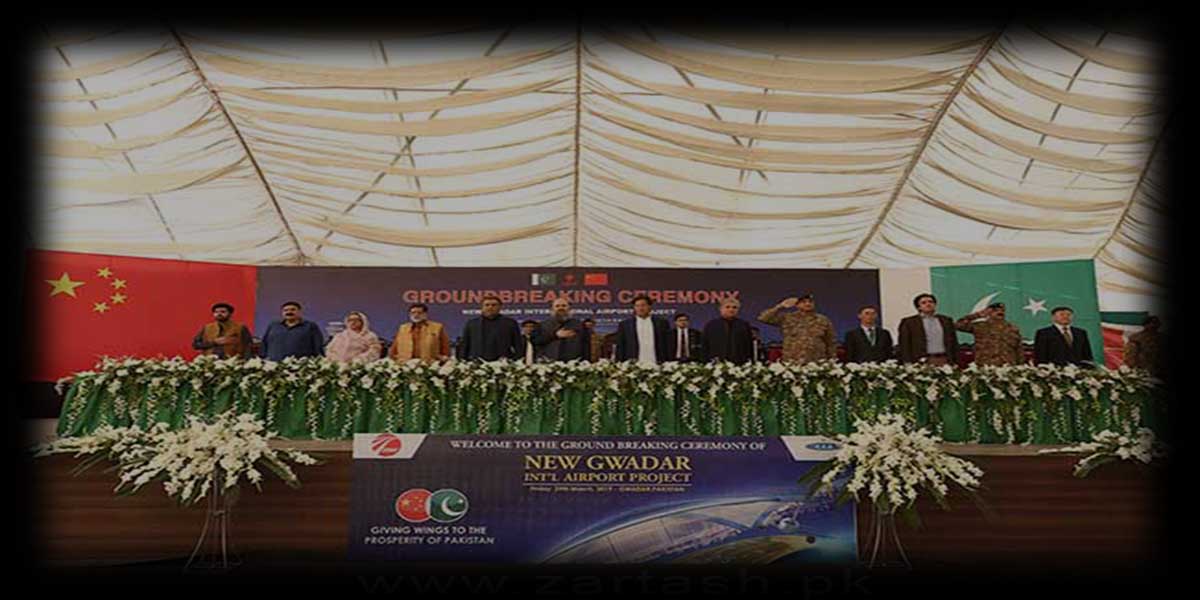
China is the primary investor in Pakistan’s Gwadar Deep Sea Port or Gwadar CPEC, which is located at the mouth of the Strait of Hormuz. Thus due to this collaboration, Pakistan’s economy has reached high points.
It is obvious by both America and India as a probable launch pad for the Chinese Navy, giving them the facility to launch submarines and warships in the Indian Ocean.
Both countries have an enduring free trade agreement. China has recently pledged to contribute almost $43 billion US dollars.
China has turned into Pakistan’s second-biggest exchanging partner, while Pakistan becomes China’s most important investment destination in South Asia with total two-sided trade reaching 18 billion US dollars.
Pakistan has served as China’s major bridge between Muslim countries. Pakistan also played a critical part in crossing the communication gap between China and the West by encouraging the 1972 Nixon visit to China.
CPEC and Pakistan
Pakistan’s representative has described the relations between Pakistan and China as, higher than the mountains, deeper than the oceans, stronger than steel, dearer than eyesight, sweeter than honey, and so on.
China-Pakistan Economic Corridor (CPEC) plan is the most significant achievement that is recently carved by China for economic growth and development in Pakistan.
The CPEC route map will unite Pakistan with China as well as with Central Asian countries through highways.
CPEC Advantages and Disadvantages
The advantages and disadvantages of CPEC are given below:
Advantages
There are many advantages of CPEC as it has boosted Pakistan’s economy. Some of the advantages are given below:
- On the basis of the notion of a win-win situation, CPEC has increased the economic gains of Pakistan and strengthened the potential aspects of socio-economic development as CPEC has become a source of shipping of millions of tons of goods from China to Europe, the Middle East, and Africa via Gwadar port.

- CPEC projects will connect Kashgar to Khunjerab and Gwadar. Gwadar port in southern Pakistan will be proved as the trade nerve center for China because most of its business, especially that of oil, will be done through this port, which is operated by the China Overseas Port Holding Company.
- It is only through CPEC that Pakistan’s Government has learnt from the Chinese and now they are fully determined to remove the poverty of people by raising their living standards and by providing them the opportunities for employment.
- CPEC not just benefits Pakistan and China, but it will also promote regional trade by connectivity in South Asia.
- This economic corridor will not just enhance and boost Pakistan’s economy but also will increase the cooperation and understanding of people across the region.
Disadvantages
The disadvantages of CPEC are given below:
- At this time, China transports sixty percent of its oil by dispatch (ship/boat) from the Persian Gulf to the central business port in China named Shanghai. This distance is more than 16,000 kilometers. The trip takes a few months, during which time the ships are helpless against pirates, bad weather, political opponents, and different dangers.
- There is a fear that the Chinese would dump their excess productions here in Pakistan.
- There is also a fear that Pakistani culture which is very rigid to accommodate any other culture, would adopt the culture of Chinese.
Electric Buses in Pakistan
Other than the CPEC Projects list, China and Pakistan also committed to various other ventures. On 26 August 2020, another trading agreement has been finalized between Pakistan and China. A Chinese company has given investment to launch Electric buses in Pakistan.
To have electric vehicles running on the roads of Pakistan is a matter of pride. It will control pollution also as pollution is becoming a big problem in regard to climate change in Pakistan as addressed in the speech of the Pakistani prime minister at the UN.
In short, Pakistan-China relationships are unique, and their friendship has a substantial impact on India.
It is hopeful that both countries will reach the highest peak of progress as soon as the Gwadar project completes, and further developing agreements will be held in the future.
Military Projects between China and Pakistan
China and Pakistan also share close military relations, with China providing a scope of modern weapons to the Pakistani defense forces. There are strong military ties between China and Pakistan.
Since 1962, China has been a steady source of military gear to the Pakistani Army for helping in the establishment of ammunition factories, giving mechanical help, and modernizing existing facilities.
There are several projects running between China and Pakistan to improve military and weaponry systems, which incorporate:
- The joint development of the JF-17 Thunder warrior aeroplane
- K-8 Karakorum propel preparing flying machine
- A tailor-made training aircraft for the Pakistan Air Force based on the Chinese household Hongdu L-15
- Space innovation
- AWACS systems
- Al-Khalid tanks, which China allowed license production and tailor-made adjustments based on the initial Chinese Type 90 as well as MBT-2000.

Nuclear Plans for Peaceful Purposes
China has been a solid vocal and devoted supporter of Pakistan’s atomic power generation for peaceful purposes. CHASNUPP-I is the commercial nuclear power plant in Punjab.
It is set up with the Chinese help by its CNNC (China National Nuclear Corporation) under International Atomic Energy Agency (IAEA) shields. China has regularly supported Pakistan’s improvement and usage of hostile to anti-terrorism security technique because of its national conditions.
Pakistan firmly bolsters China on the issues of Taiwan, Tibet, Xinjiang, and different aspects. China also supports Pakistan’s standpoint on Kashmir.

Pakistan and China are great friends. And their friendship is based on the good relations of the people of Pakistan and China. And The CPEC is the symbol of Pakistan and China relationship. Good job that Zartash Pakistan is performing. Thanks Zartash Pakistan for sharing your website.
The CPEC is a big contract. It is a source of Communication between the people of Pakistan and China. Pakistan’s trade will grow if the deal is completed. I hope that this project will complete successfully. Thanks for sharing your post.
CPEC is a good project for Pakistan and China. Obliged for sharing.
It is informational post. I got a lot of Information form your post about the Cpec. I am really thankful to you because you have shared a good and informational post.