

Mehndi designs are henna patterns applied to the hands and feet for weddings, Eid and festivals. This page collects more than 160 mehndi design images, sorted by style, placement and occasion, from decent everyday patterns to full bridal hands.
Mehndi, also called henna, sits at the centre of Asian celebrations. Marriage ceremonies, both Eids and traditional festivals are treated as incomplete without it, which is why the search for new mehndi designs never really stops. The gallery below is grouped so you can go straight to the placement or the occasion you need: front hand, back hand, fingers, feet, Eid, bridal and kids.
2026 Mehndi Design Trends
Five patterns account for most of what artists are applying in 2026, and all five move in the same direction: less coverage, finer lines, and more bare skin left between the motifs.
- Jewellery style mehndi. Thin chains, finger rings, wrist bracelets and small hanging pendants are drawn fine enough that the henna reads as jewellery rather than as a pattern. It needs a sharp cone and a steady hand, and it covers very little of the skin.
- Negative space. One statement motif, usually a mandala or a single floral trail, is placed on the palm or the back of the hand and the surrounding skin is deliberately left bare. The empty area is treated as part of the design rather than as unfinished work.
- Bold outlines with light shading. Thick dark outlines are filled with sparse dusty shading instead of solid henna. The contrast holds its shape in photographs and stays readable from a distance as the stain fades.
- Glitter and stone work. Fine glitter, and sometimes small stones, is added over dried henna for parties and mehndi nights. It sits on top of the stain rather than replacing it, and it comes off with the paste.
- White henna. White body paste is used for daytime events and photo shoots. It is a surface decoration rather than henna, it leaves no stain, and it lifts off the skin within a day or two.
Traditional Arabic, jaali and bridal work has not gone anywhere; the trends above sit alongside it. The sections that follow cover both, starting with the lightest coverage.
Latest Mehndi Designs
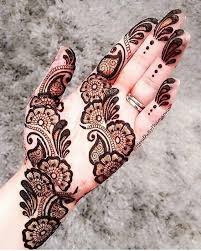
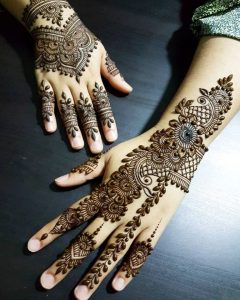
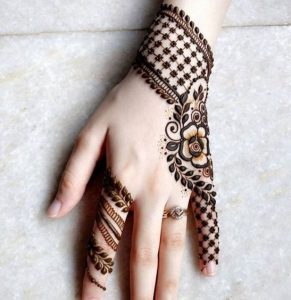
Recent mehndi designs favour lighter coverage than the fully filled hands of a decade ago. Multi-coloured cones are now sold alongside the traditional brown cone, but for weddings and religious festivals most families still use plain henna, because only henna leaves a stain that keeps darkening for a day or two after the paste comes off.
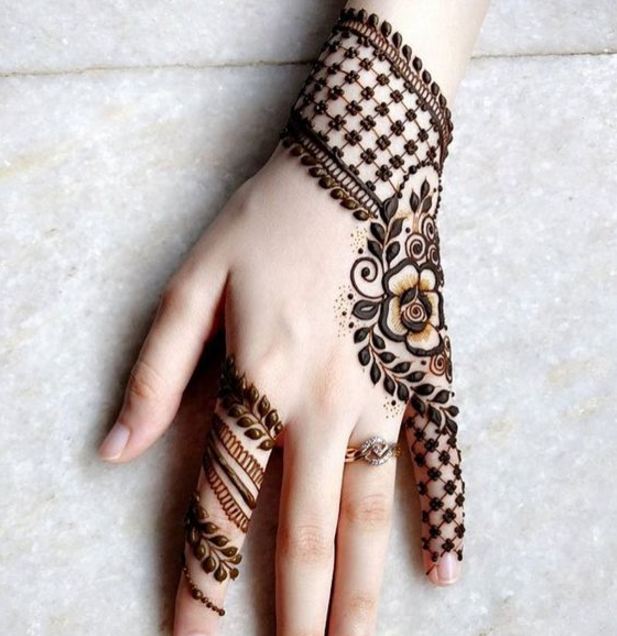


Decent Mehndi Designs
A decent mehndi design keeps the work light and tidy: a single motif or a narrow trail, thin lines, no solidly filled blocks, and coverage that stops well short of the wrist. These are the designs chosen for office days, college, a family dinner or a quiet Eid morning, when the henna should be visible without being the first thing anyone notices.
Three things decide whether a design reads as decent. Coverage is the first: about a quarter of the hand or less, with the palm or the back left mostly bare. Simplicity is the second: one repeated element, usually a small floral vine, a chain of dots or a plain band, rather than several patterns competing on the same hand. Placement is the third: work kept to the fingers, to a single knuckle line or to one corner of the hand stays clear of sleeves and cuffs and never reads as a bridal hand.
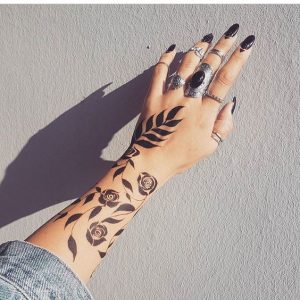
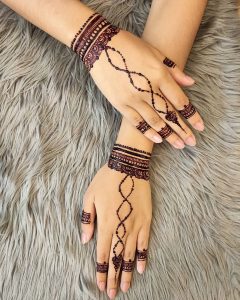


Decent designs also suit anyone still learning to apply henna. A thin single line is easier to keep even than a filled panel, and a light design dries in ten to fifteen minutes instead of the hour a covered hand needs.
Decent Mehndi Designs for Front Hand
On the front hand, meaning the palm side, a decent design usually centres on one small round tikki with a short trail running towards the middle finger, or on a plain band across the base of the fingers. The palm takes a darker stain than the back of the hand, so a thin line already shows up strongly there and no extra filling is needed.


Keeping the pattern inside the palm and away from the wrist is what separates a decent front hand from a party one. If the fingers are included, one line down the middle of each finger is enough; filling the fingertips pushes the same design into festival territory.
Decorative Floral Circle Design


A round floral tikki sits at the centre of the palm or the back of the hand, with petals worked outward from one point. Drawn small and open it stays decent enough for casual wear; drawn large, with filled petals and matching finger work, the same motif carries a bridal hand.
Marigold Mehndi Design
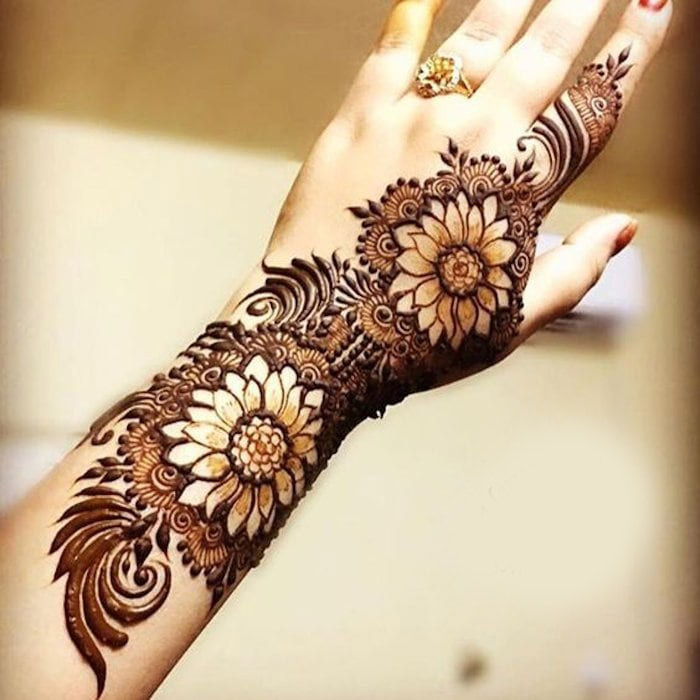
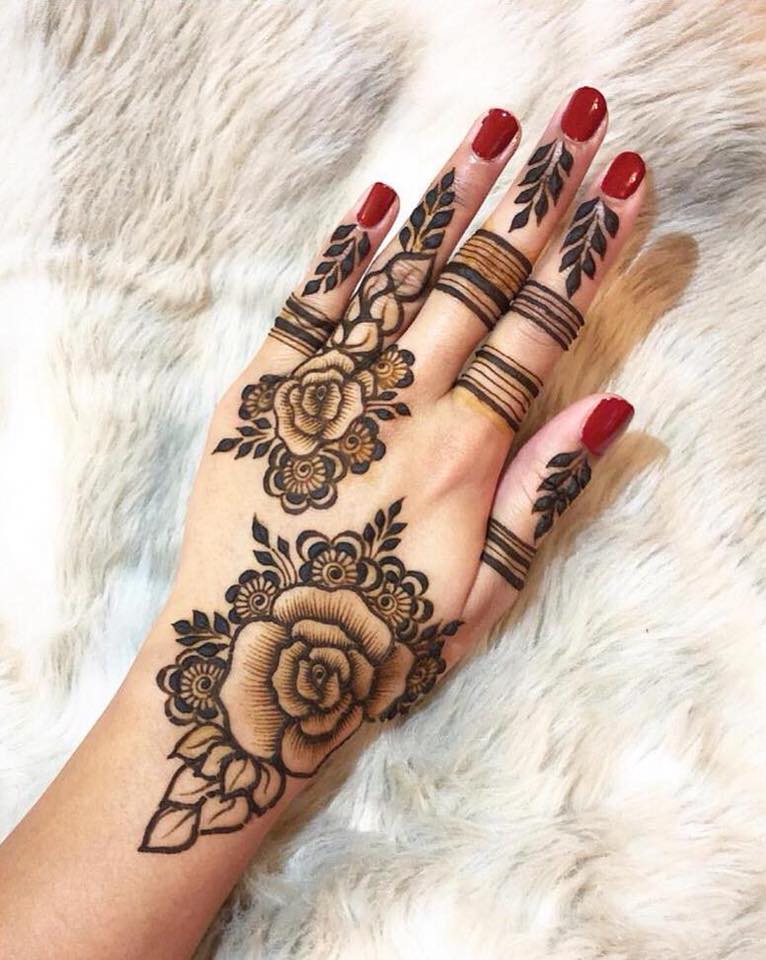
The back of the hand carries fully opened marigold flowers, drawn large and layered petal over petal. Because the flowers already cover most of that surface, the fingers are usually left plain or given a single line so the hand does not become crowded.
Rose Mehndi Design


Roses replace the usual round motif here. Each flower is built from a spiral centre with petals added around it, and the gaps between the roses are closed with leaves, dots or a fine net.
Arabic Mehndi Design

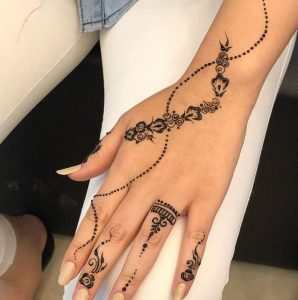


Arabic mehndi combines floral trails with mandala circles and leaves a good deal of skin bare between them. The outlines are thicker than in Indian styles and the shading inside is lighter, which is why the pattern stays readable on both hands and feet even after the stain starts to fade.
Round Floral Mehndi Design

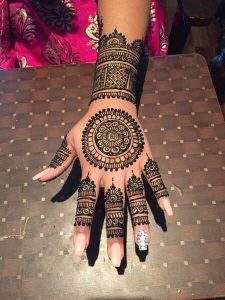
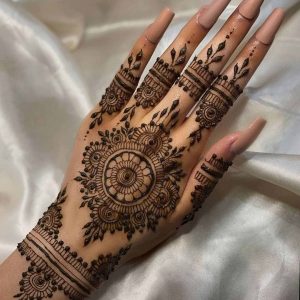
A circle of floral work sits at the centre of the palm and smaller flowers run down each finger. The circle is drawn first and the fingers are matched to it, so both halves of the design share the same motif and the same line weight.
Ring Style Design
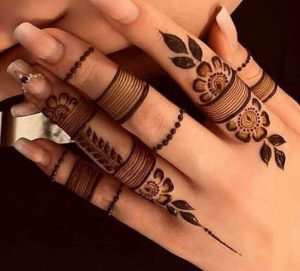


The design is built around a ring drawn on one finger, on either the front or the back of the hand. A chain of dots or a thin line runs from the ring towards the wrist. That link between finger and wrist is what produces the jewellery effect this style is named for.
Abstract Minimalistic Mehndi Design


Abstract minimalistic work mixes a few small elements, some lines, a scatter of dots and one geometric shape, without repeating any of them across the hand. Coverage stays low, which places this style close to the decent designs above.
Jaali Design


Jaali means net. A grid of fine crossing lines is laid over the hand and each square is dotted or left open, so the design reaches the whole surface while skin still shows through it. It is a common choice for brides who want full coverage without solid blocks of henna.
Arabic Lace Design of Mehndi


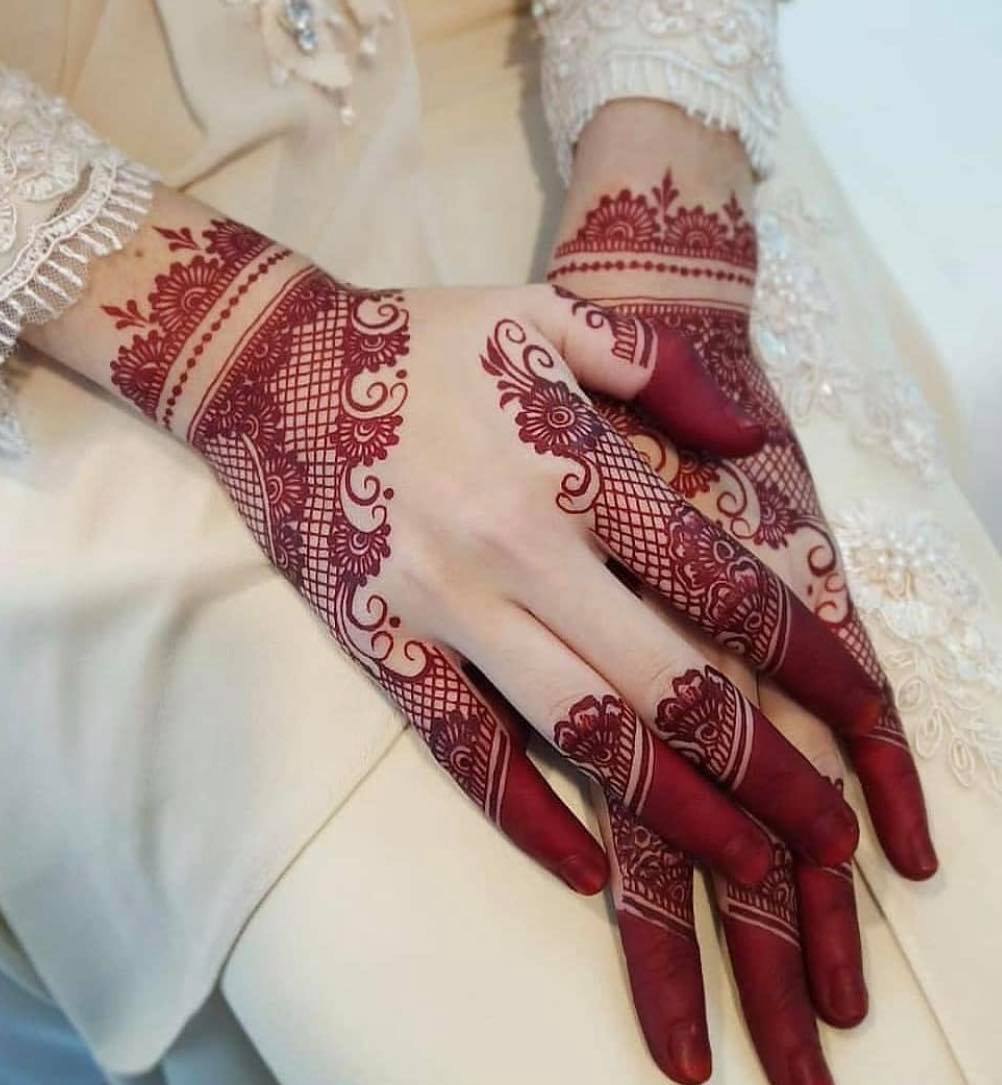

A lace motif built around a central rose or flower runs across the hand, edged with scallops and fine strings in the way a lace border is worked. The centrepiece is drawn first and the lace is extended outward from it.
Cornered Motif Mehndi Design

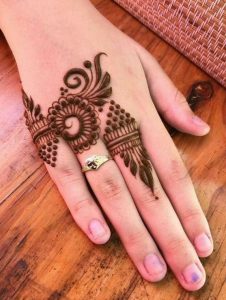

One motif is placed on a corner or on the outer side of the hand and the rest of the surface is left bare. It is among the quickest Arabic patterns to apply and among the easiest to keep neat, because only one area has to be worked.
Bracelet Mehndi Design

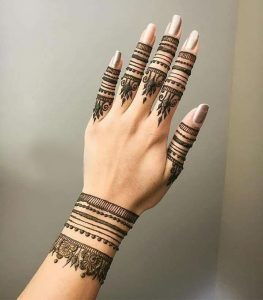
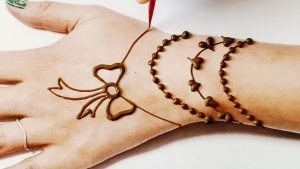
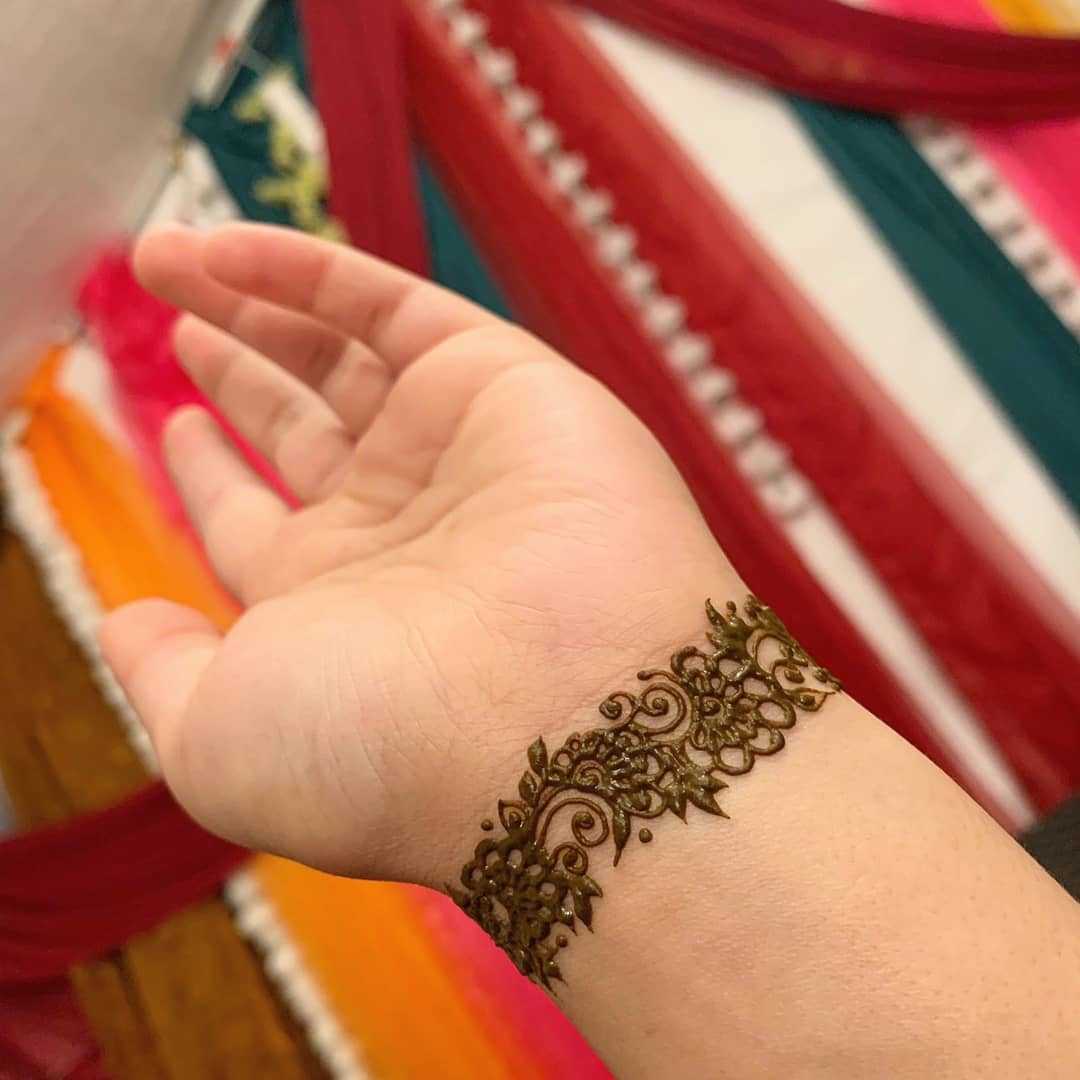
A band is drawn around the wrist in the shape of a bracelet and thin strands run from it onto the back of the hand and up the fingers. This is the pattern the 2026 jewellery style trend is built on.
Mehndi Designs for Front Hand
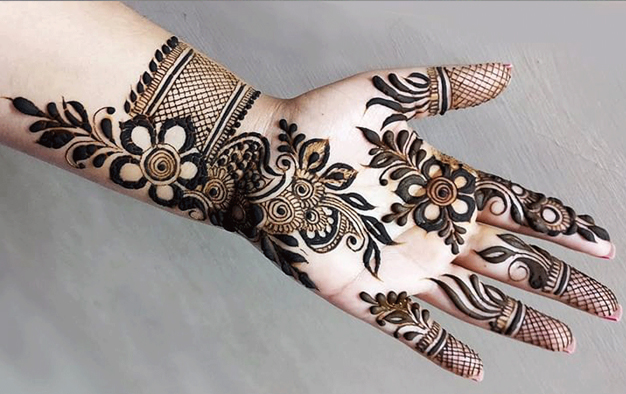

Front hand mehndi runs from matched patterns on both hands to single motifs such as hanging bells, stars, leaves and peacocks. Most of these elements are taken from nature. The palm holds a darker stain than the back of the hand, so the same design shows up stronger here and needs less filling.
Symmetrical Mehndi Designs


The same pattern is drawn on both hands so that they mirror each other when the palms are placed side by side. The work has to be measured rather than freehanded, because any difference in spacing between the two hands is visible the moment they are held together.
Bold Mehndi Design
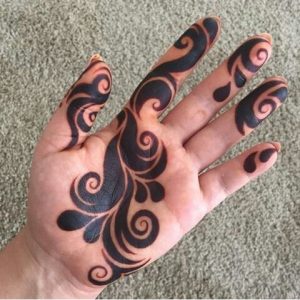
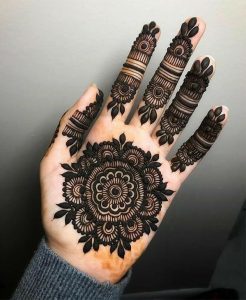

Floral arrangements are outlined with a thick cone tip so the lines sit heavier on the skin. A bold outline stains darker and stays legible for longer as the henna fades, which is why it is used for events that will be photographed.
Peacock Style Mehndi Design


A peacock is drawn across the hand, usually with the body near the wrist and the tail feathers opening towards the fingers. The feathers are worked as repeated curved rows, and that repetition is the part that takes the most time.
Diagonal Mehndi Designs
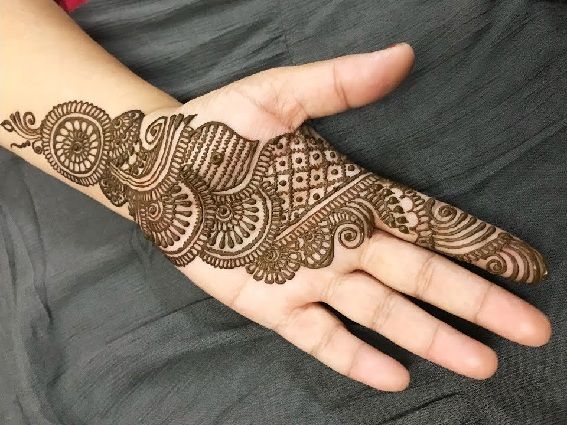

A diagonal design runs from one corner of the hand to the opposite side, crossing the palm or the back at an angle. Half the hand is left bare, so coverage stays moderate while the pattern still spans the full width.
Band Style Mehndi


The hand is divided into parallel bands and each band is filled with its own repeated pattern. Because the bands fix the spacing before any detail is added, this is one of the easier full hand styles to keep even.
Back Hand Mehndi Designs


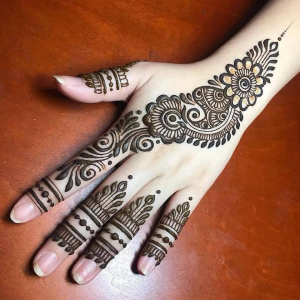

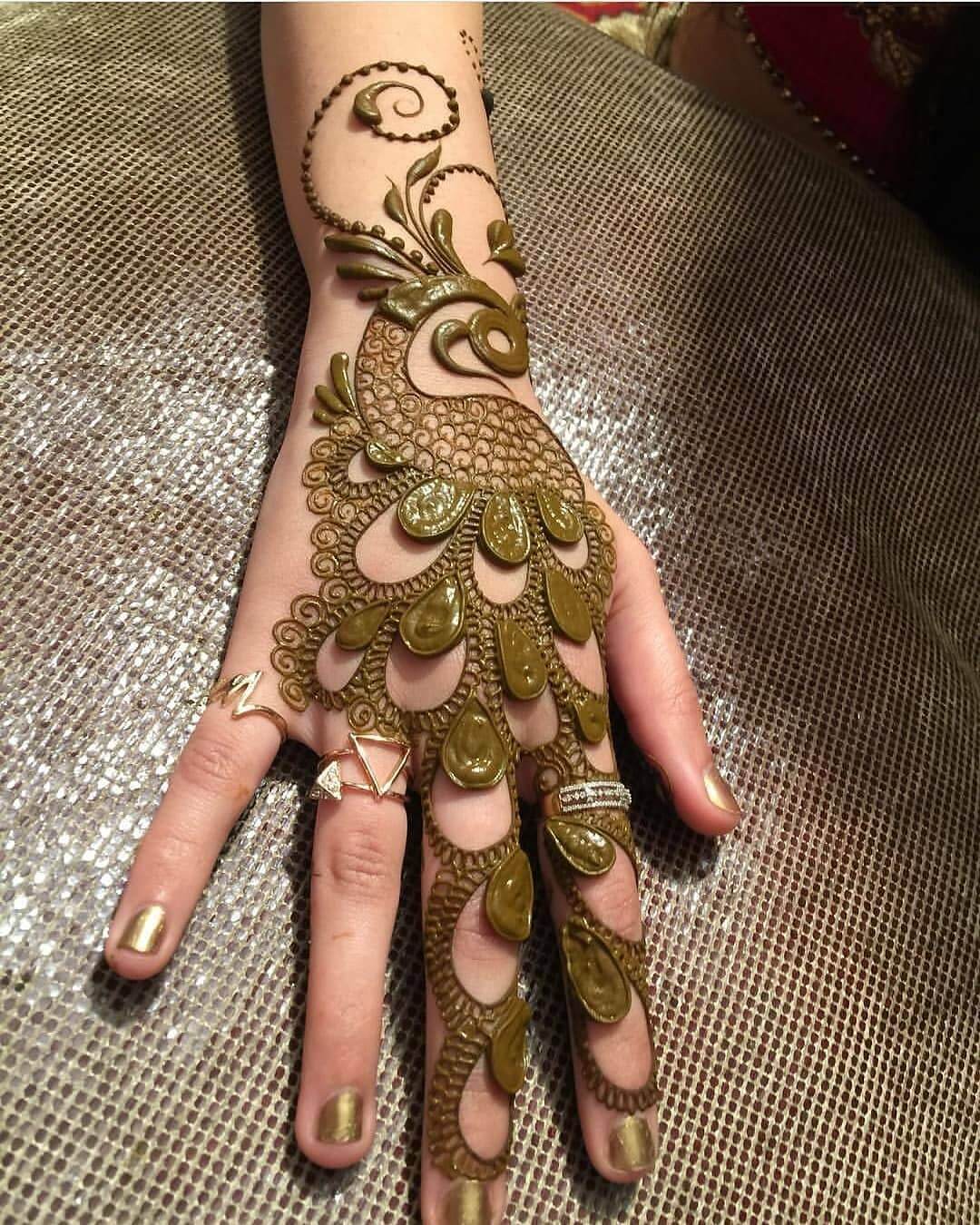
Henna is applied to the back of the hand more often than to the palm, because the design stays visible while the hand is in use. The back is also a flatter surface, so large single motifs and net work sit better there than they do on the palm.
Jali Design
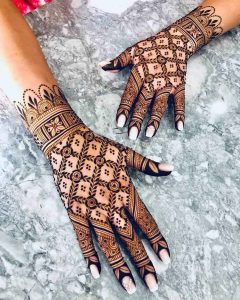


Net work is common on the back of the hand, where the flat surface lets the grid stay square. The lines are drawn in one direction first, then crossed, and the squares are dotted afterwards.
Lace Patterened Design

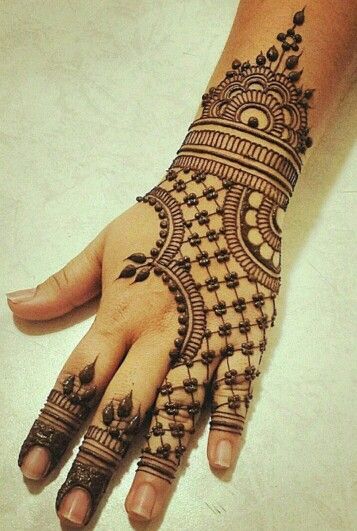
A lace pattern is drawn across the back of the hand with a scalloped edge running along the wrist and the base of the fingers, so the henna finishes in a border instead of a straight cut.
Floral Mehndi Design
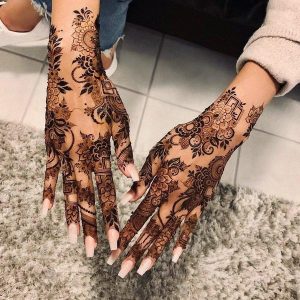

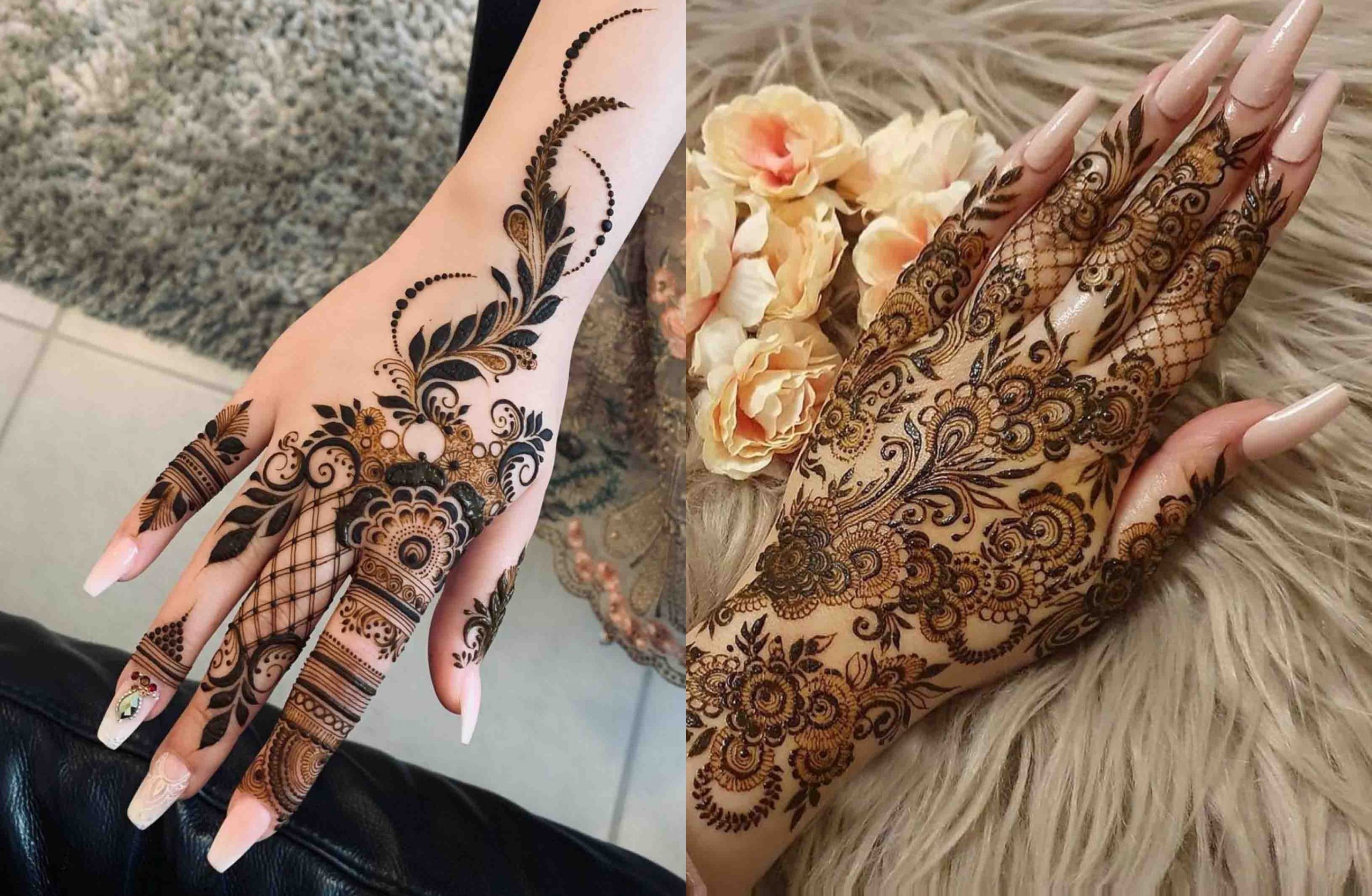
One flower is repeated across the back of the hand at an even spacing, with leaves and vines connecting the repeats. It is the most widely used back hand pattern because the repeat can be shortened or extended to fit any hand size.
Index Finger Mehndi Design
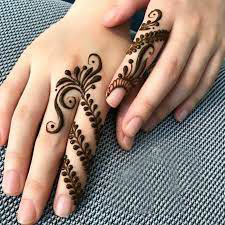
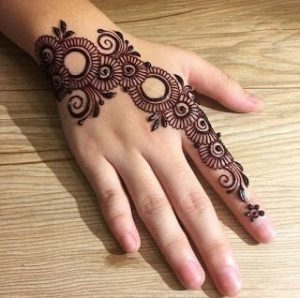
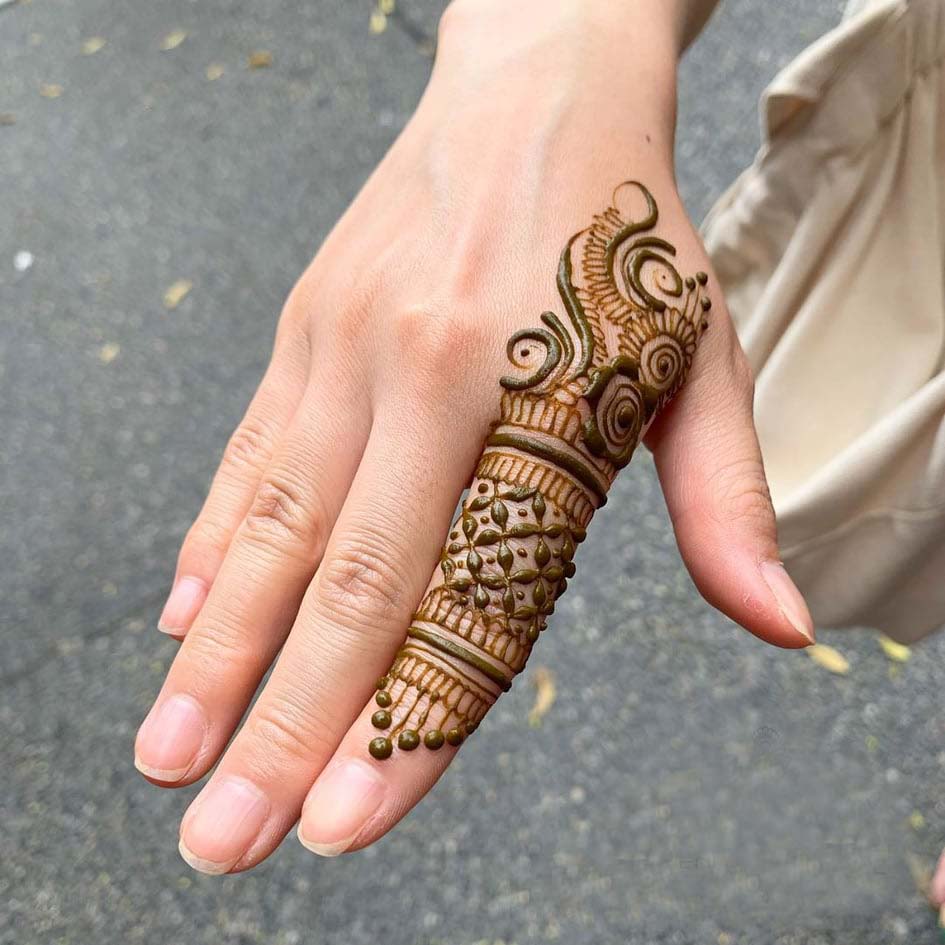
The pattern begins at one corner of the hand and travels up to the index finger, leaving the remaining fingers plain. Concentrating the work on one finger keeps total coverage low while still giving the hand a clear focal point.
HeavY Full hand Mehndi Design
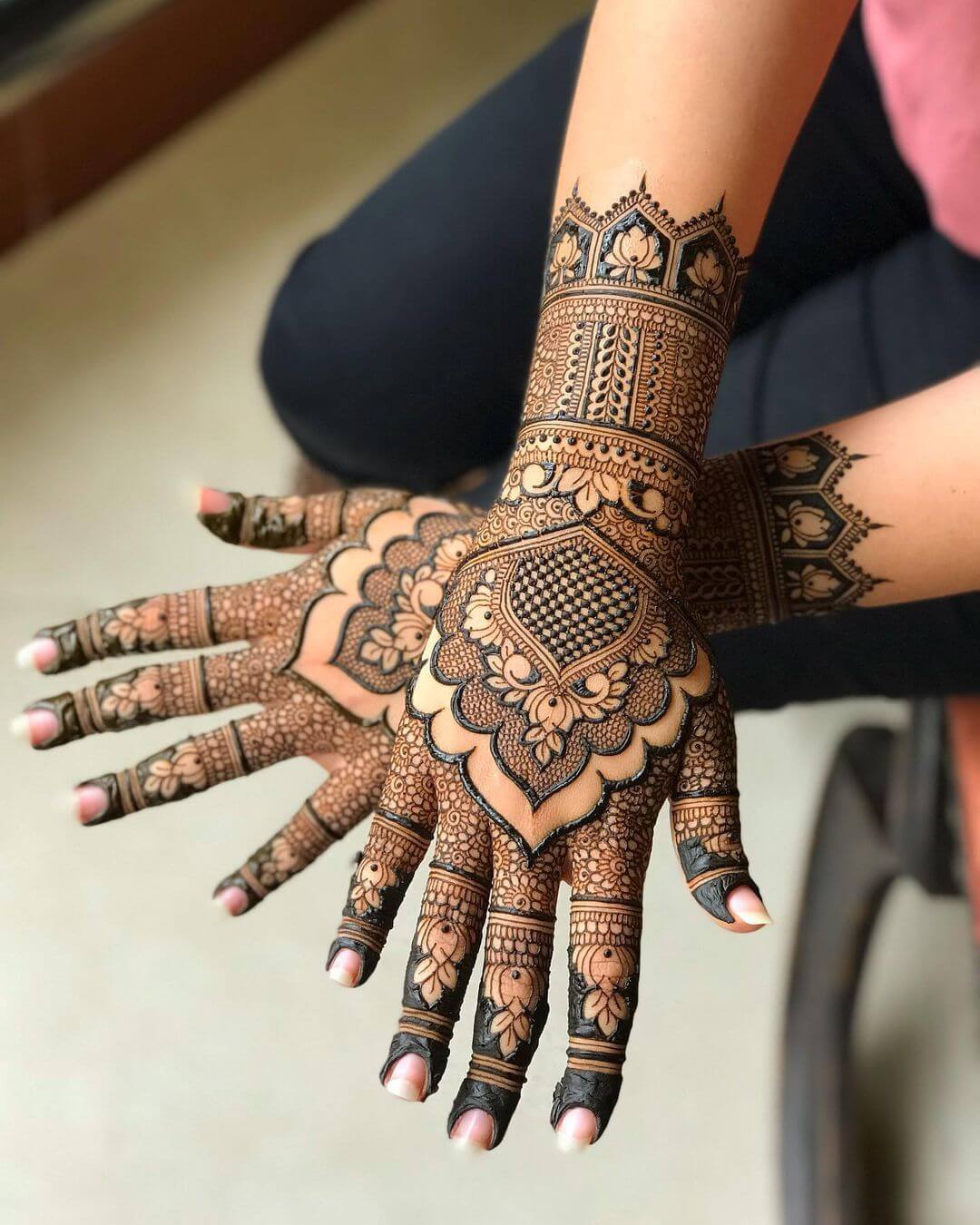


Henna covers the whole hand, from the fingertips to past the wrist, with no bare skin left between the motifs. A full hand of this kind takes an experienced artist roughly an hour per hand, which is why it is reserved for brides.
Mehndi Designs for Fingers
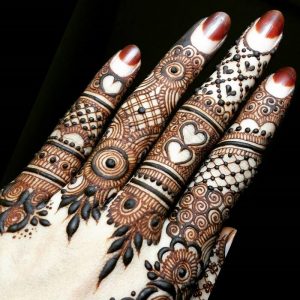


Finger mehndi designs keep the work on the fingers and leave the palm and the back of the hand bare. This is the lowest coverage group on the page. A full set of fingers takes ten to fifteen minutes rather than an hour, which is why it is the group most often chosen for office days and by anyone applying henna on themselves.
Because the fingers are the narrowest part of the hand, the same motif has to be drawn smaller here than it would be on the palm, so finger work rewards a fine cone tip more than any other placement.
Fingertips Mehndi Design
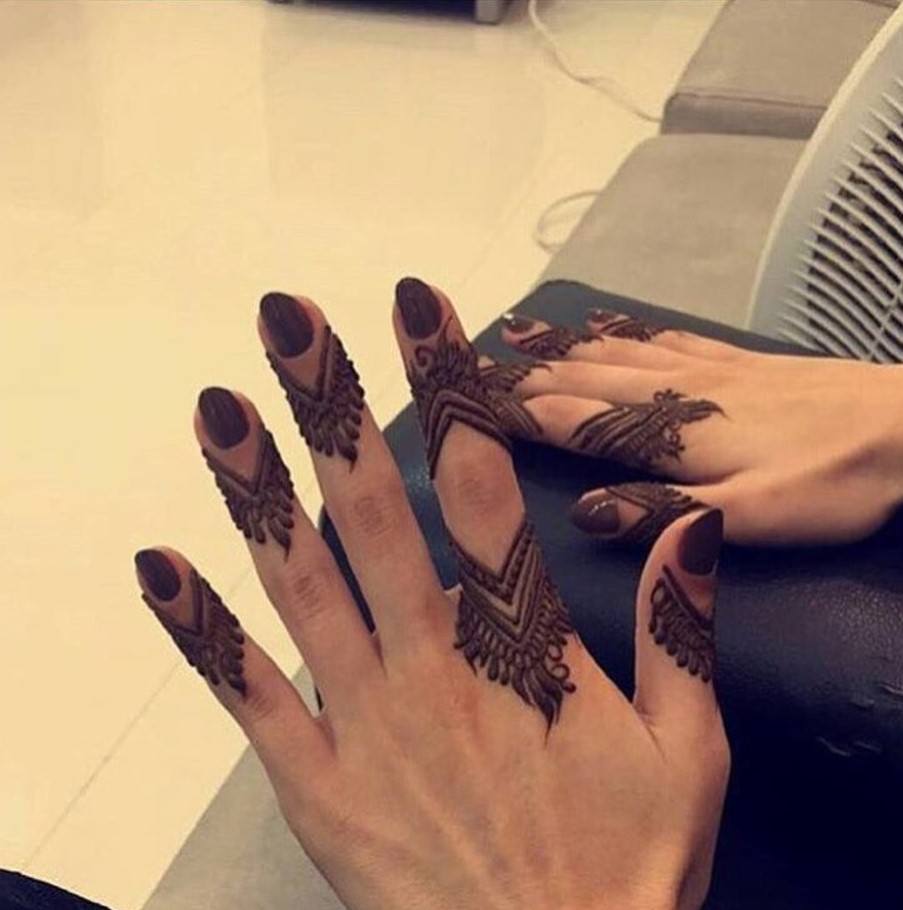


Only the fingertips are covered, from the first knuckle upward, in the way a dipped stain sits. The tips take the darkest stain on the whole hand, so this design holds its colour for longer than any other on the page.
Thumb Mehndi Designs


The design is applied to the thumb alone, usually as a small floral panel or a band across the joint. It is the smallest pattern in this gallery and the usual first exercise for beginners.
Finger Edges Mehndi Designs
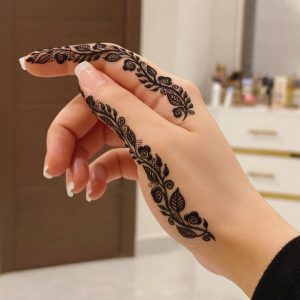

Henna is applied along the outer edges of the fingers and the side of the hand while the middle is left bare. The outline follows the natural curve of each finger, which is what makes the hand look longer than it is.
Heavy Fingers Mehndi Design


Every finger is covered from tip to knuckle while the palm and the back of the hand stay empty. The contrast between filled fingers and bare hand is the point of the style, and it reads as heavy without the time cost of a full hand.
Foot Mehndi Designs
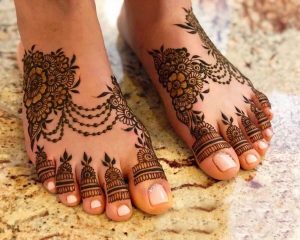


Mehndi designs for feet are applied most often for weddings, where the bride’s feet are decorated to match her hands. Feet stain darker and hold the colour longer than hands because the skin is thicker there. Arabic mehndi designs adapt to the foot easily, since the shape of the foot already suits a diagonal trail running from the toes to the ankle.
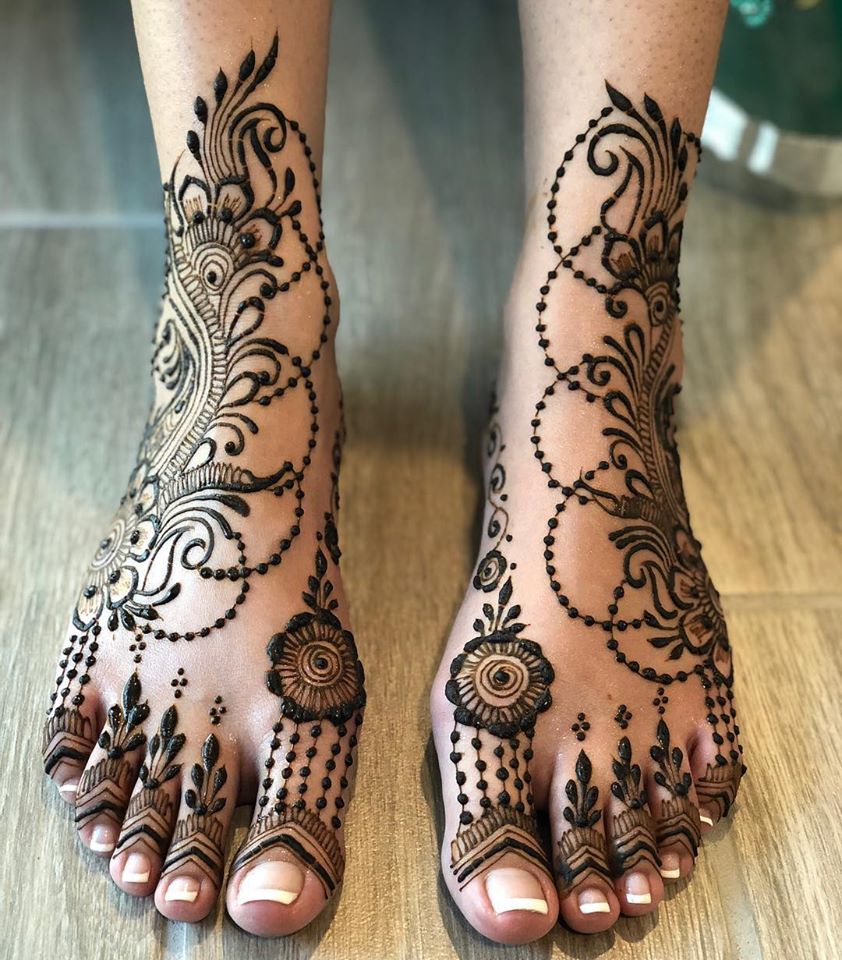
Rose Mehndi for Toe Fingers
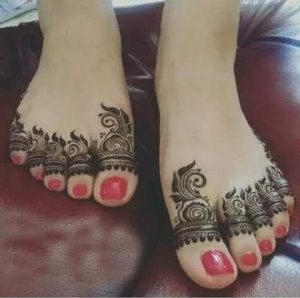


Small roses are drawn on each toe and joined by a vine running across the base of the toes. The rest of the foot is often left plain so the toes carry the design on their own.

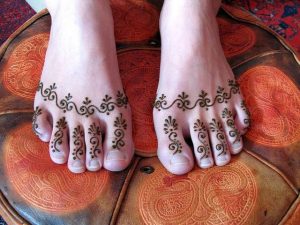
Toe fingers Mehndi Designs

The toes are covered while the top of the foot is kept light. Mandala circles, net work and rose motifs are the three patterns used most often here, and each one is scaled down to fit the width of a toe.
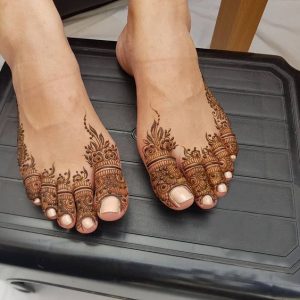
Heavy look Mehndi Designs on Feet

An Arabic floral pattern runs from the toes to the ankle and closes into a net, leaving no bare skin on the top of the foot. It is the foot equivalent of a full hand and is applied for the wedding day itself rather than for smaller events.


Anklet Mehndi Design

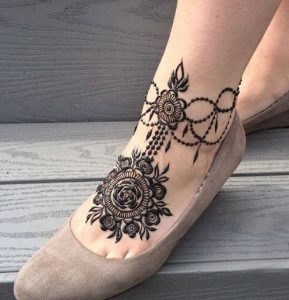
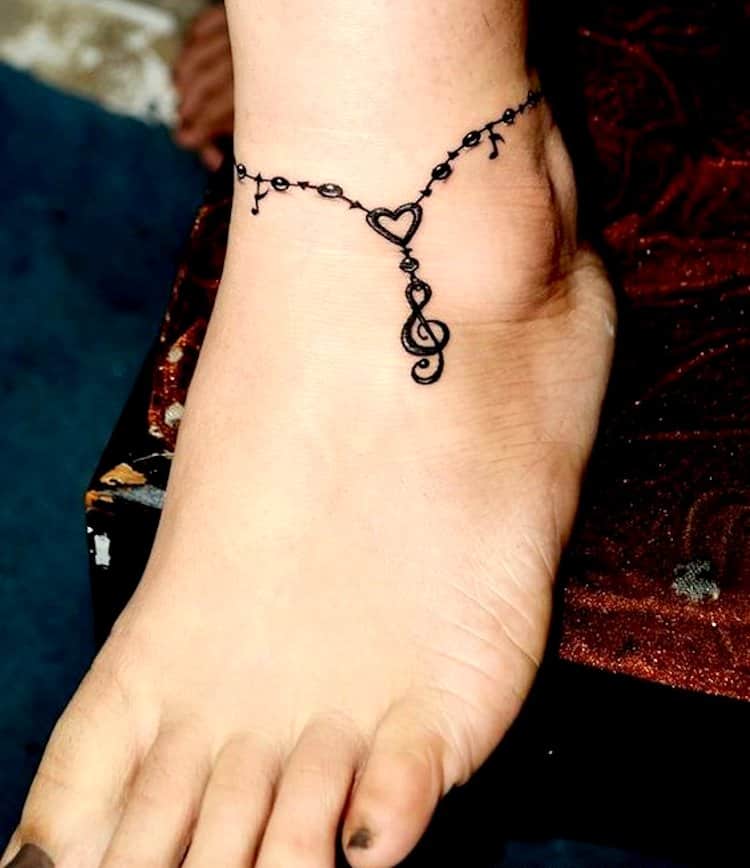
A net or lace band circles the ankle in the position an anklet would sit, with short strands dropping onto the top of the foot. It is the foot version of the bracelet design and belongs to the same jewellery style family.
Side Foot Mehndi Designs


Feet mehndi designs worked from the side run the length of the foot, from the little toe to the ankle bone, following the outer edge. The pattern is visible while the foot is in an open sandal, which is why it is applied for events where shoes come off.
Tikki Mehndi Design for feet

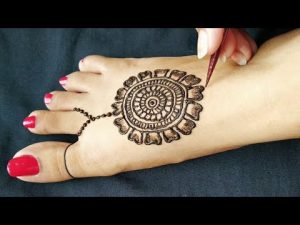
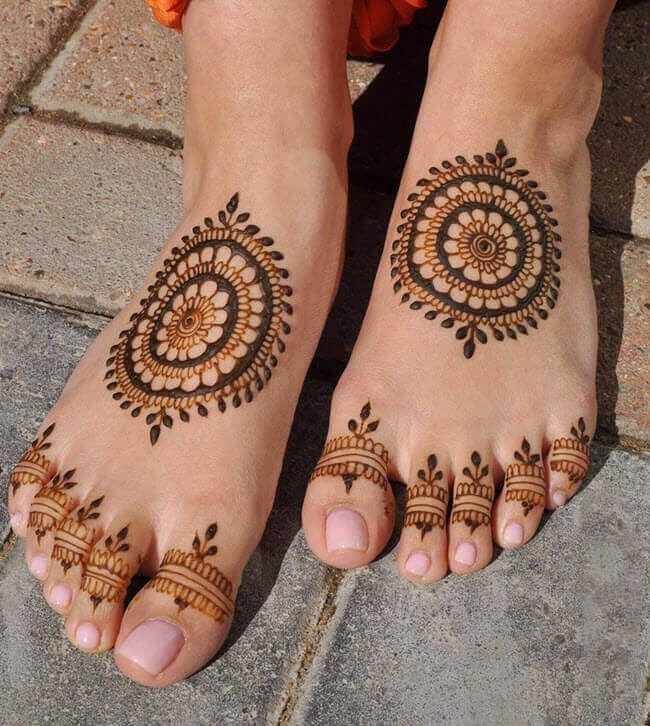
Tikki mehndi designs for the foot place one round motif on the top of the foot with a short trail towards the toes. They are the simplest foot patterns to apply and the quickest to dry, which makes them a common choice for Eid rather than for a wedding.
Mehndi Designs for Eid


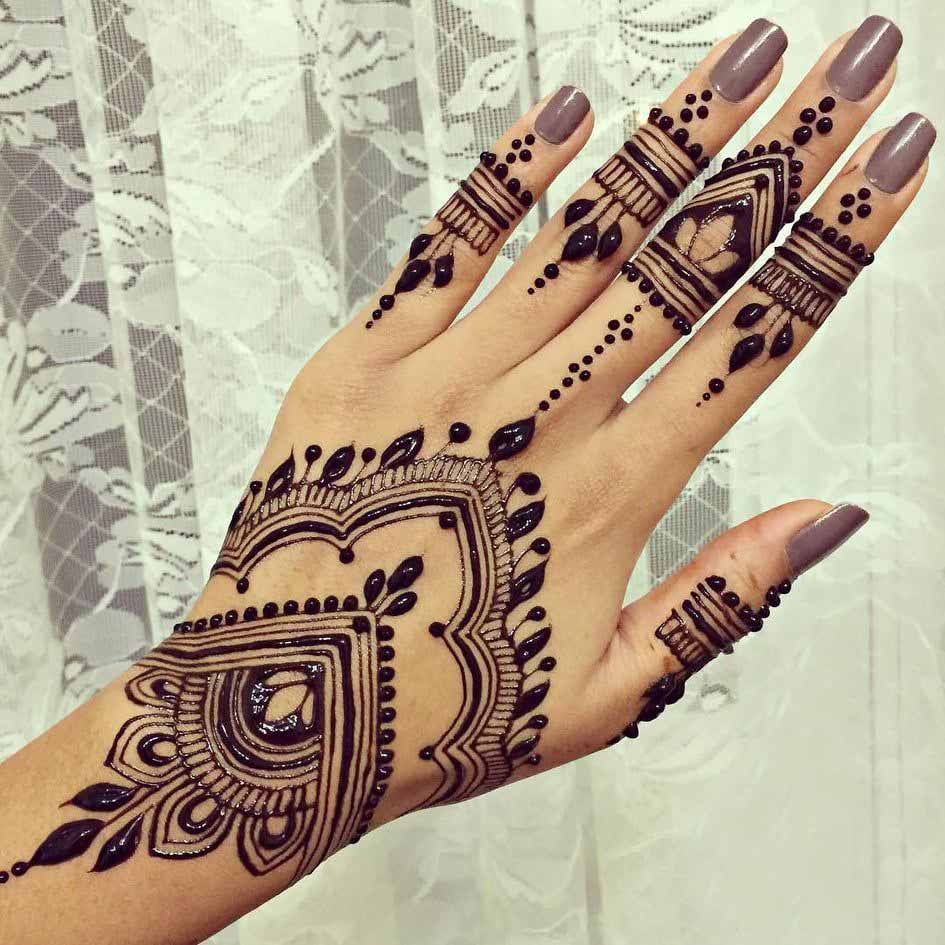
Mehndi designs for Eid are applied on chand raat, the night the moon is sighted before Eid, so that the stain has darkened by Eid morning. Because the henna goes on late and the hands are needed the next day, Eid patterns are lighter than bridal ones: a tikki, a band across the fingers, or finger work that dries within twenty minutes. Simple mehndi designs for Eid follow below.

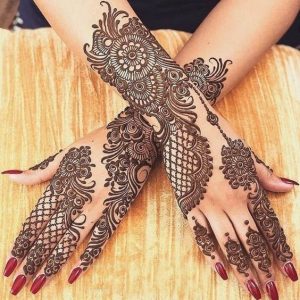


Small Mehndi Designs
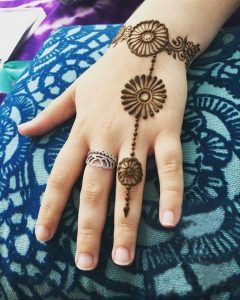
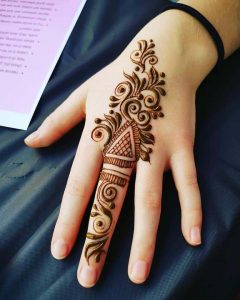
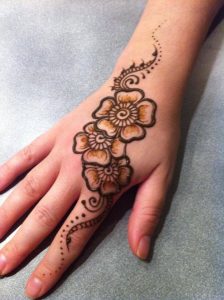
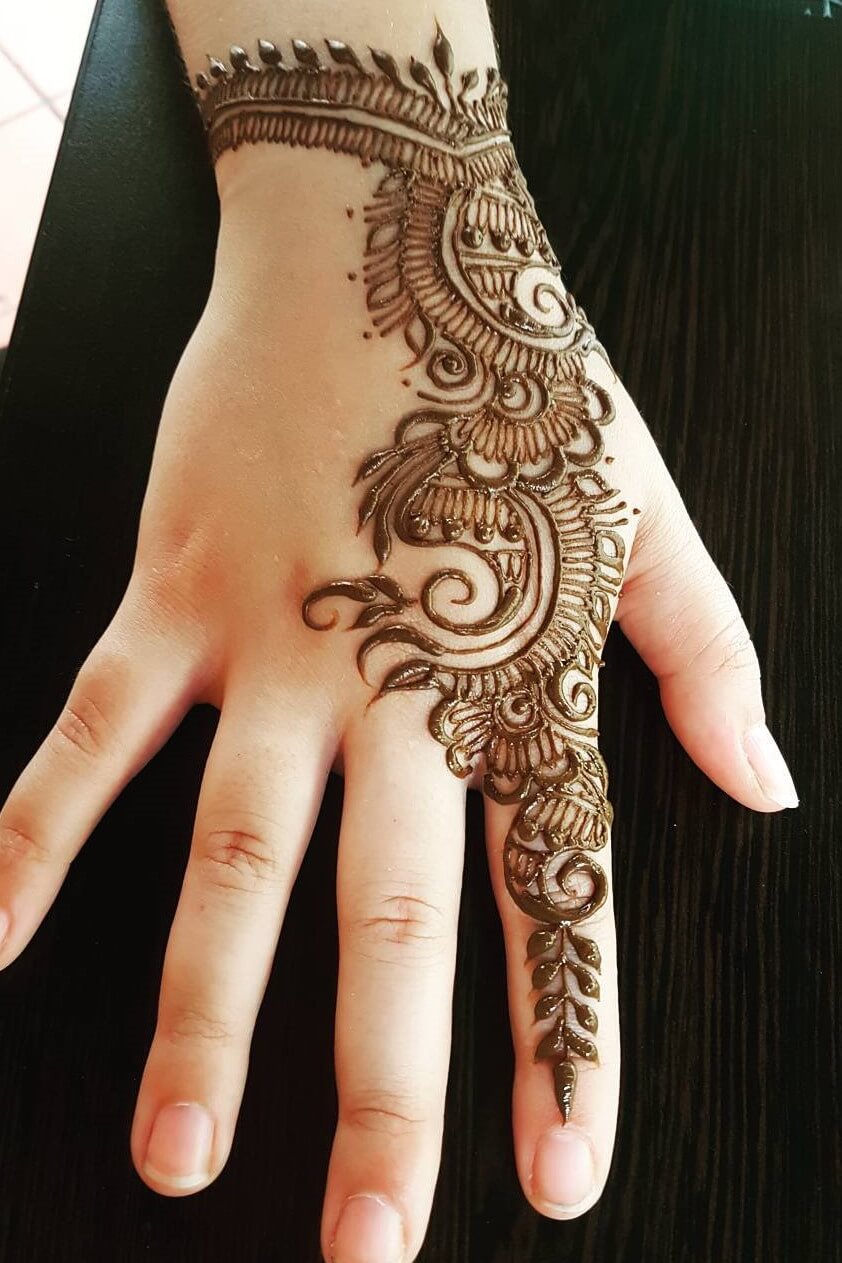
Small mehndi designs are where beginners start, because a short pattern can be finished before the cone tip clogs and any mistake stays confined to a small area. Mehndi designs for beginners also suit children and anyone who wants the stain gone within a week.
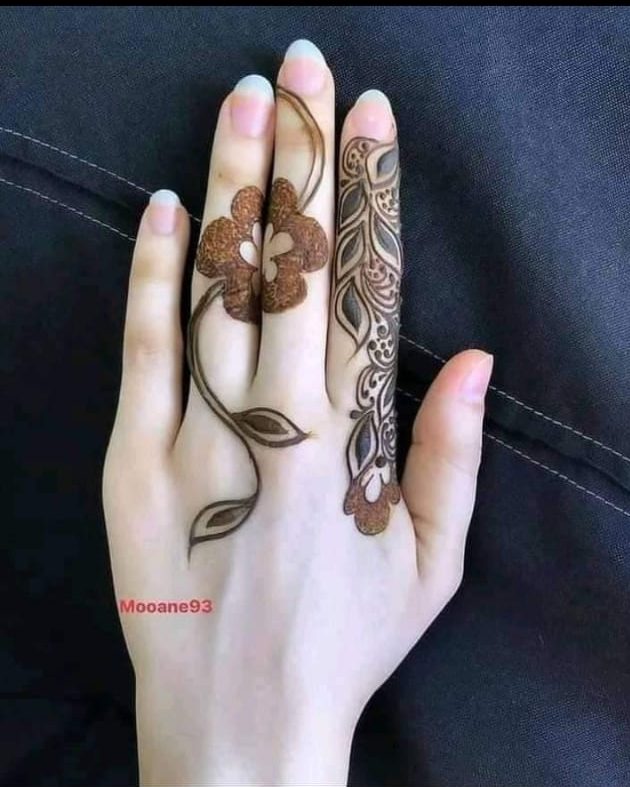

Simple Mehndi Designs
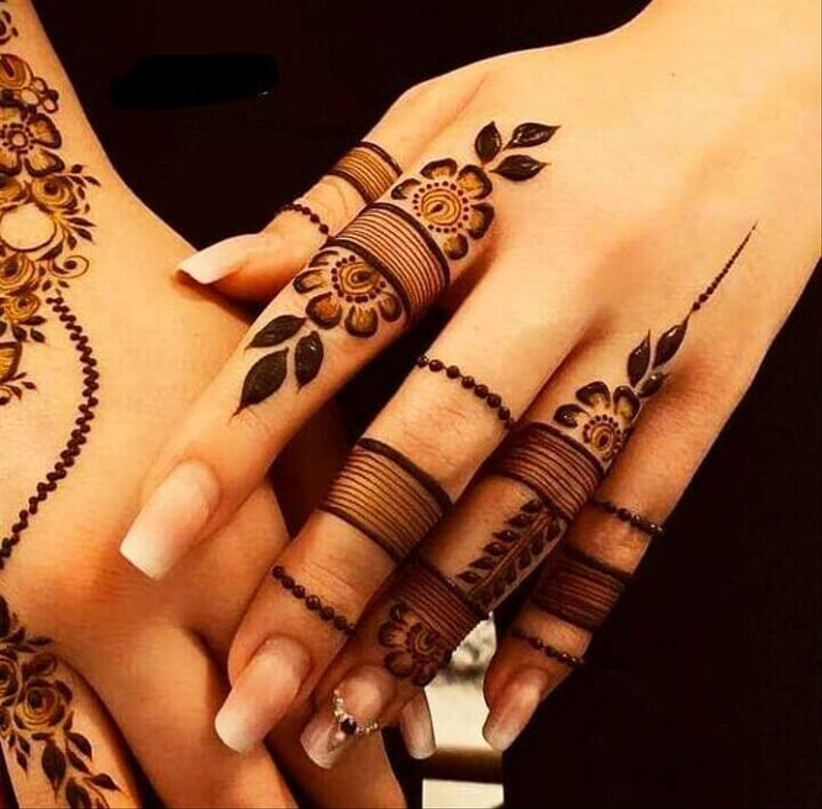
Simple mehndi designs use single lines, open spacing and one repeated motif, so they can be applied in a few minutes without an artist. They overlap closely with the decent designs higher up this page and are the usual choice for daily and office wear.
Henna patterns move with clothing, so the seasonal motifs that appear on hands also appear in the work of Pakistan’s fashion industry, where the same florals and nets are printed and embroidered.
The same floral and net geometry runs through the blue pottery of Pakistan, where the patterns are painted onto ceramics instead of skin.
Alphabet Mehndi Design
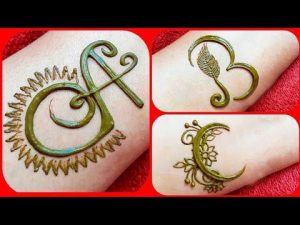

Many women write the first letter of their own name, or of a partner’s name, inside the mehndi design. It is most common at engagements and weddings. The letter is usually hidden inside a mandala or a floral panel rather than drawn plainly, so it has to be looked for rather than read at a glance. Groups of friends sometimes share one letter and apply the same design together.


Tikki Style Mehndi Designs

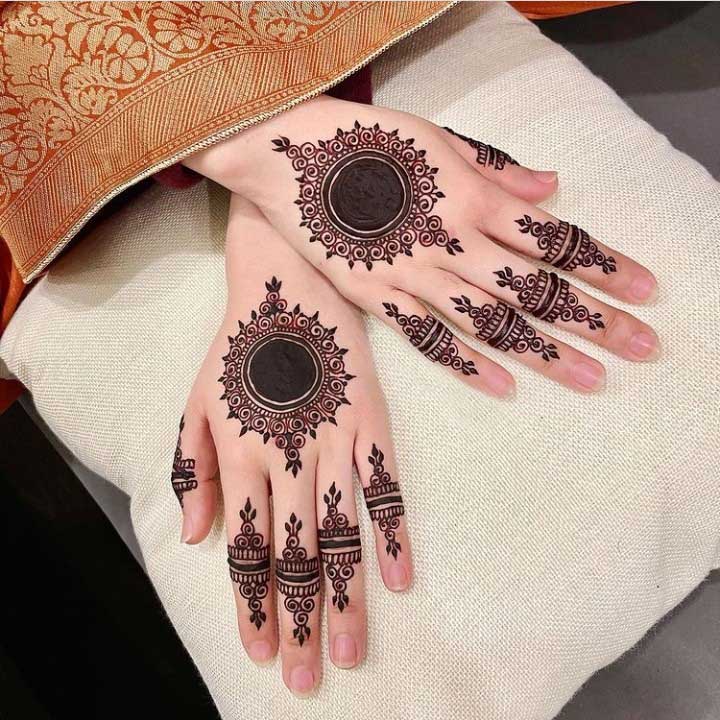


In Pakistan, tikki is the traditional word for a round design, also called a circle design. The circle is placed at the centre of the palm and every other element is arranged around it. That is why tikki mehndi designs work at any coverage level, from a plain outlined circle for a decent hand to a solidly filled one on a bride.
Bridal Mehndi Designs
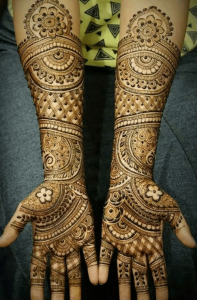


Bridal mehndi designs cover both hands and both feet and are applied one or two days before the wedding, so the stain reaches its darkest point on the day itself. The latest bridal mehndi design in demand is tikki style mehndi, in which a filled circle anchors each palm.
Tikki designs need practice, because the circle has to sit at an equal distance from every edge of the palm. It is drawn before anything else and the rest of the hand is built outward from it.

An experienced artist takes roughly an hour on a single bridal hand, and a full set of hands and feet is normally booked as a half day.
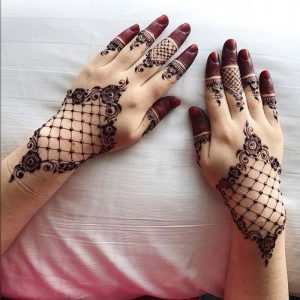
An elaborate diamond pattern worked across the back of the hand, shown below, is one of the heaviest bridal formats in use.

In eastern wedding traditions, mehndi designs for weddings fill the hands completely. Indian mehndi designs in particular are worked to the fingertips and carried past the wrist, with almost no skin left uncovered.
Mehndi Designs for Kids


Mehndi designs for kids keep to a small area and a short drying time: a single flower on the back of the hand, a row of dots, or a plain vine on one finger. Children rarely sit still for more than a few minutes, so the pattern has to be finished quickly and the paste scraped off within an hour.

Cones used on children should be plain henna. The so called black cones, which contain the dye PPD, are the ones associated with skin reactions, and they are not suitable for children at all.

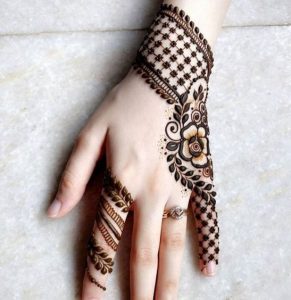
A simple mehndi design for kids is often applied on a matching adult hand at the same time, so the child copies the pose rather than fidgeting.

The designs below are all small enough to finish on a child’s hand in a few minutes.

Easy Mehndi Designs for Kids
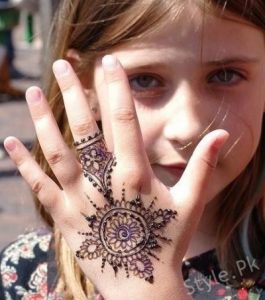

These are the smallest patterns in the gallery: a single line down one finger, one flower on the back of the hand, or a scatter of dots. Each takes two or three minutes and needs no outlining practice, so they are the right starting point for simple mehndi designs for hands.

FAQs About Mehndi Designs
Which Mehndi Design Is Best for the Front Hand?
A round tikki with a short trail towards the middle finger suits the front hand best. The palm stains darker than the back of the hand, so a thin line shows clearly and heavy filling is not needed.
How Long Does Mehndi Take to Darken?
Henna reaches its darkest colour 24 to 48 hours after the paste is scraped off. Leave the paste on for four to six hours, keep the hand warm, and avoid water on the stain for the first day.
What Is Arabic Mehndi?
Arabic mehndi uses thick outlines, flowing floral trails and open skin between the motifs. It covers less of the hand than Indian mehndi, takes less time to apply, and suits both hands and feet.
Which Mehndi Design Is Decent Enough for Office?
Finger work, a thin band across the knuckles, or one small motif on the back of the hand. Keep coverage under about a quarter of the hand and stop short of the wrist so sleeves sit normally.
Which Mehndi Design Is Suitable for Kids?
A single flower, a row of dots, or one decorated finger. Use plain henna rather than black cones containing PPD, leave the paste on for about an hour only, and expect the stain to fade within a week.
Last Thoughts on Mehndi Designs
Mehndi designs separate along three lines: how much of the hand they cover, where the work sits, and how long they take to apply. Decent and simple designs stay under about a quarter of the hand and dry in minutes. Arabic and tikki work holds the middle, with bold outlines and deliberate open space. Jaali and bridal designs fill the hand completely and take roughly an hour per hand.
The gallery above is grouped along those same lines, so the quickest way to use it is to settle on coverage first and placement second, then pick the pattern that fits the occasion.
