

The national heroes of Pakistan are the founders, soldiers, scientists and humanitarians the state honours for service to the country, including Muhammad Ali Jinnah, Allama Iqbal, Fatima Jinnah, Abdul Sattar Edhi, Dr Abdus Salam and the eleven Nishan-e-Haider recipients.
This list covers 20 national heroes of Pakistan with names, achievements and the years in which they served. The selection follows recorded state honours: the Nishan-e-Haider for gallantry in battle, the Nishan-e-Imtiaz and Sitara-e-Imtiaz for civil service, the Sitara-e-Shujaat for civilian bravery, and international recognition such as the Nobel Prize and Guinness World Records.
Sections below give a summary table, a numbered profile of each hero, an explanation of the Nishan-e-Haider and its eleven recipients, and direct answers to the questions readers ask most about Pakistan’s national heroes.
Who Are the National Heroes of Pakistan?
A national hero of Pakistan is a person the state has formally recognised for service to the country, either through a civil or military decoration or through an achievement recorded outside Pakistan. Recognition rests on a dated citation rather than on public fame, which is why every name below carries an award, a record or a documented action.
The national heroes of Pakistan fall into five groups: the founders of the state, military personnel decorated for gallantry, scientists, humanitarians, and record-setting figures in sport and art. The table below lists 20 of them with the achievement each is known for and the period of that achievement.
| No | Name | Known for | Era or years |
|---|---|---|---|
| 1 | Muhammad Ali Jinnah | Founder and first Governor-General of Pakistan | 1876 to 1948 |
| 2 | Allama Muhammad Iqbal | National poet and author of the 1930 Allahabad Address | 1877 to 1938 |
| 3 | Liaquat Ali Khan | First Prime Minister of Pakistan | 1895 to 1951 |
| 4 | Fatima Jinnah | Madar-e-Millat and 1965 opposition presidential candidate | 1893 to 1967 |
| 5 | Abdul Sattar Edhi | Founder of the Edhi Foundation welfare and ambulance network | 1928 to 2016 |
| 6 | Dr Abdus Salam | Nobel Prize in Physics 1979 for electroweak theory | 1926 to 1996 |
| 7 | Dr Abdul Qadeer Khan | Led uranium enrichment work for the nuclear programme | 1936 to 2021 |
| 8 | Ruth Pfau | Built Pakistan’s leprosy control programme | 1929 to 2017 |
| 9 | Malala Yousafzai | Nobel Peace Prize 2014 for girls’ education | Born 1997 |
| 10 | Jahangir Khan | Six World Open squash titles and 555 unbeaten matches | Born 1963 |
| 11 | Sadequain | Painter and calligrapher of the Frere Hall ceiling mural | 1930 to 1987 |
| 12 | Arfa Karim | Youngest Microsoft Certified Professional in 2004 | 1995 to 2012 |
| 13 | Captain Raja Muhammad Sarwar | First Nishan-e-Haider, Kashmir 1948 | 1910 to 1948 |
| 14 | Major Raja Aziz Bhatti | Nishan-e-Haider, Burki sector 1965 | 1928 to 1965 |
| 15 | Rashid Minhas | Nishan-e-Haider, youngest recipient, PAF 1971 | 1951 to 1971 |
| 16 | Major Shabbir Sharif | Nishan-e-Haider and Sitara-e-Jurat, 1971 | 1943 to 1971 |
| 17 | Lance Naik Muhammad Mahfuz | Nishan-e-Haider, Pul Kanjri 1971 | 1944 to 1971 |
| 18 | Captain Karnal Sher Khan | Nishan-e-Haider, Kargil 1999 | 1970 to 1999 |
| 19 | Marium Mukhtiar | First martyred female fighter pilot of the PAF | 1992 to 2015 |
| 20 | Aitzaz Hasan | Sitara-e-Shujaat for stopping a school bomber | Died 2014 |
Top 20 National Heroes of Pakistan with Names and Achievements
The 20 profiles below follow the order of the table. Each entry states the field, the dated achievement, and the award or record attached to it.
1. Muhammad Ali Jinnah
Muhammad Ali Jinnah (1876 to 1948) led the All-India Muslim League to the creation of Pakistan and served as the first Governor-General from 14 August 1947 until his death on 11 September 1948. Pakistan honours him as Quaid-e-Azam, the Great Leader, and as Baba-e-Qaum, Father of the Nation.

2. Allama Muhammad Iqbal
Allama Muhammad Iqbal (1877 to 1938) is the national poet of Pakistan. His presidential address to the Muslim League at Allahabad on 29 December 1930 called for the Muslim-majority provinces of north-west India to form a single state. Iqbal wrote in Urdu and Persian and was knighted in 1922.

3. Liaquat Ali Khan
Liaquat Ali Khan (1895 to 1951) served as the first Prime Minister of Pakistan from August 1947 until his assassination at a public meeting in Rawalpindi on 16 October 1951. He carried the Objectives Resolution through the Constituent Assembly in March 1949. Pakistan remembers him as Quaid-e-Millat and Shaheed-e-Millat.

4. Fatima Jinnah
Fatima Jinnah (1893 to 1967) qualified as a dental surgeon at the University of Calcutta in 1923 and became the closest political companion of her brother Muhammad Ali Jinnah. She contested the 1965 presidential election as the joint opposition candidate against Ayub Khan. Pakistan calls her Madar-e-Millat, Mother of the Nation.
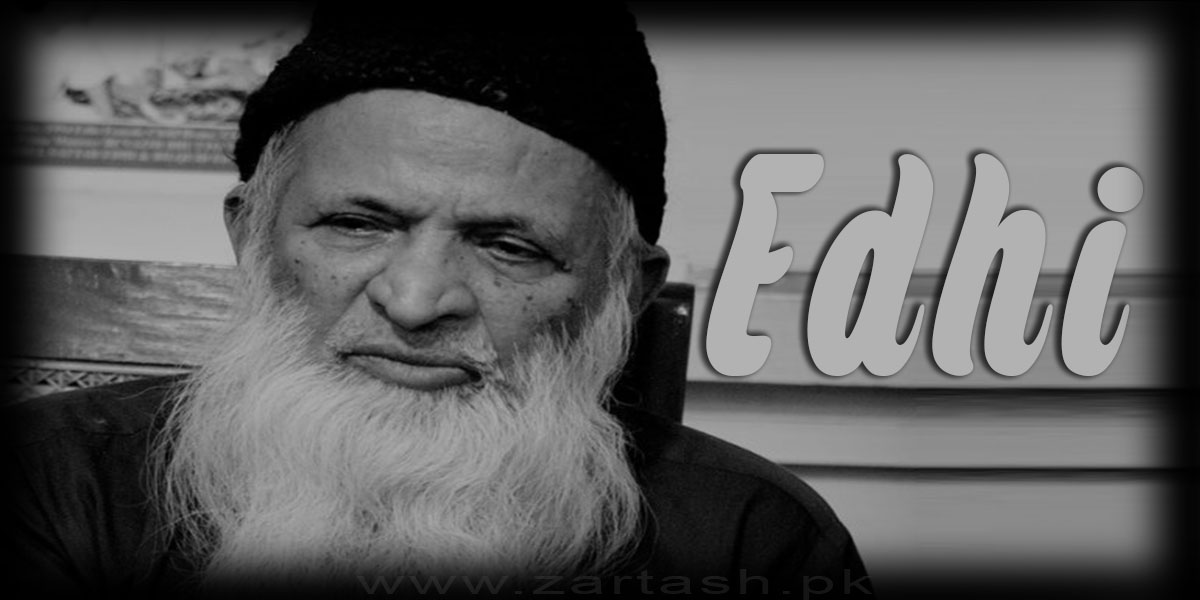
5. Abdul Sattar Edhi
Abdul Sattar Edhi (1928 to 2016) built the Edhi Foundation, which operates the world’s largest volunteer ambulance network alongside orphanages, shelters and morgues. Edhi received the Ramon Magsaysay Award in 1986, the Nishan-e-Imtiaz in 1989 and the Balzan Prize in 2000, and was buried with a state funeral.
6. Dr Abdus Salam
Dr Abdus Salam (1926 to 1996) shared the 1979 Nobel Prize in Physics with Sheldon Glashow and Steven Weinberg for the electroweak unification theory. Salam was the first Pakistani and the first Muslim to win a Nobel Prize in science, and he founded the International Centre for Theoretical Physics at Trieste in 1964.
7. Dr Abdul Qadeer Khan
Dr Abdul Qadeer Khan (1936 to 2021) was a metallurgical engineer who founded the laboratory at Kahuta in 1976, later named Khan Research Laboratories, and directed the uranium enrichment work behind the nuclear programme. Khan received the Nishan-e-Imtiaz twice and died in Islamabad on 10 October 2021.

8. Ruth Pfau
Ruth Pfau (1929 to 2017) reached Karachi in 1960 and spent the rest of her life treating leprosy in Pakistan, expanding one clinic into a national control programme. The World Health Organization declared Pakistan a leprosy-controlled country in 1996. Pfau received the Hilal-e-Imtiaz in 1979 and a state funeral in 2017.
9. Malala Yousafzai
Malala Yousafzai (born 1997) campaigned for girls’ education in the Swat valley and survived a gunshot to the head on 9 October 2012. She shared the 2014 Nobel Peace Prize with Kailash Satyarthi at the age of 17, which makes her the youngest Nobel laureate on record.
10. Jahangir Khan
Jahangir Khan (born 1963) won six World Open squash titles and ten consecutive British Open titles between 1982 and 1991. His run of 555 unbeaten matches, from November 1981 until Ross Norman beat him in the 1986 World Open final, is listed by Guinness World Records as the longest winning streak in professional sport.
11. Sadequain
Sadequain (1930 to 1987) produced an estimated 15,000 paintings and calligraphic works, more than any other Pakistani artist. His unfinished ceiling mural Arz-o-Samawat at Frere Hall in Karachi is his best known public commission. Sadequain received the Pride of Performance in 1962 and the Sitara-e-Imtiaz in 1985.
12. Arfa Karim
Arfa Karim (1995 to 2012) passed the Microsoft Certified Professional examination in 2004 at the age of nine, which made her the youngest MCP in the world at that time. A fuller account of her records and her death at 16 sits in this profile of Arfa Karim, Pakistan’s pride in information technology.
13. Captain Raja Muhammad Sarwar
Captain Raja Muhammad Sarwar (1910 to 1948) commanded a company of the 2nd Punjab Regiment in the Uri sector during the first Kashmir war. Enemy fire killed him on 27 July 1948 as he tried to cut a barbed wire barrier, and he became the first recipient of the Nishan-e-Haider.
14. Major Raja Aziz Bhatti
Major Raja Aziz Bhatti (1928 to 1965) held the BRB canal line at Burki near Lahore for five days during the 1965 war with India. Tank and artillery fire killed him on 10 September 1965. His Nishan-e-Haider citation records his refusal to leave the forward position.
15. Rashid Minhas
Pilot Officer Rashid Minhas (1951 to 1971) crashed his hijacked T-33 trainer in Sindh on 20 August 1971 rather than let his instructor fly it to India. At 20 he remains the youngest recipient, as the record of Rashid Minhas Shaheed and his Nishan-e-Haider sets out, and the only one from the Pakistan Air Force.

16. Major Shabbir Sharif
Major Shabbir Sharif (1943 to 1971) captured and held high ground near the Sulemanki headworks in the 1971 war and was killed by shellfire on 6 December 1971. He is the only member of the Pakistan Army to hold both the Nishan-e-Haider and the Sitara-e-Jurat.
17. Lance Naik Muhammad Mahfuz
Lance Naik Muhammad Mahfuz (1944 to 1971) of the 15 Punjab Regiment fought at Pul Kanjri in the Wagah sector on the night of 17 December 1971. Enemy shelling destroyed his machine gun, so he charged a bunker unarmed and was killed there. The Nishan-e-Haider followed posthumously.
18. Captain Karnal Sher Khan
Captain Karnal Sher Khan (1970 to 1999) defended forward posts in the Gultari sector during the Kargil conflict and died in a counter-attack on 5 July 1999. An Indian brigade commander wrote a citation praising his conduct, and Pakistan awarded him the Nishan-e-Haider.
19. Marium Mukhtiar
Marium Mukhtiar flew with the Pakistan Air Force and died on 24 November 2015 when her FT-7PG trainer developed a fault near Kundian in Mianwali district. She and her instructor steered the aircraft clear of a populated area before ejecting. This account of Marium Mukhtiar, the first martyred female fighter pilot, covers the Tamgha-e-Basalat that followed.
20. Aitzaz Hasan
Aitzaz Hasan was 15 when he stopped a suicide bomber outside his school at Ibrahimzai in Hangu district on 6 January 2014, with more than 2,000 pupils inside. The story of Aitzaz Hasan, the teenage hero of Pakistan, records the Sitara-e-Shujaat he received posthumously.
What Is the Nishan-e-Haider?
The Nishan-e-Haider is the highest military gallantry award of Pakistan. The name means Emblem of the Lion and refers to Ali ibn Abi Talib, known as Haider. Pakistan has conferred the Nishan-e-Haider eleven times, and every award has been posthumous.
The award was instituted on 16 March 1957 and applied retrospectively, which is why the earliest recipient died in July 1948. The medal is struck from captured enemy equipment and is an alloy of copper, gold and zinc. Ten recipients served in the Pakistan Army and one, Pilot Officer Rashid Minhas, in the Pakistan Air Force.
Naik Saif Ali Janjua originally received the Hilal-e-Kashmir, an Azad Kashmir decoration later recognised as equivalent to the Nishan-e-Haider, which is why some lists count ten recipients and others eleven.
Three lower military gallantry awards sit beneath the Nishan-e-Haider in the same 1957 sequence: the Hilal-e-Jurat, the Sitara-e-Jurat and the Tamgha-e-Jurat. Courage shown away from direct combat with an enemy carries different decorations, which is why Aitzaz Hasan received the Sitara-e-Shujaat as a civilian schoolboy and Marium Mukhtiar received the Tamgha-e-Basalat after a training accident.
| No | Recipient | Service | Conflict | Date of action |
|---|---|---|---|---|
| 1 | Captain Raja Muhammad Sarwar | Army | Kashmir war of 1947 to 1948 | 27 July 1948 |
| 2 | Naik Saif Ali Janjua | Army | Kashmir war of 1947 to 1948 | 26 October 1948 |
| 3 | Major Tufail Mohammad | Army | Border action of 1958 | 7 August 1958 |
| 4 | Major Raja Aziz Bhatti | Army | War of 1965 | 10 September 1965 |
| 5 | Pilot Officer Rashid Minhas | Air Force | Conflict of 1971 | 20 August 1971 |
| 6 | Major Muhammad Akram | Army | War of 1971 | 5 December 1971 |
| 7 | Major Shabbir Sharif | Army | War of 1971 | 6 December 1971 |
| 8 | Sowar Muhammad Hussain | Army | War of 1971 | 10 December 1971 |
| 9 | Lance Naik Muhammad Mahfuz | Army | War of 1971 | 17 December 1971 |
| 10 | Captain Karnal Sher Khan | Army | Kargil war of 1999 | 5 July 1999 |
| 11 | Havildar Lalak Jan | Army | Kargil war of 1999 | 7 July 1999 |
Which Other Pakistanis Set World and National Firsts?
Nine further Pakistanis hold documented world or national firsts outside the top 20 list. Each entry below states the record and the year it was set.
- Nergis Mavalvala worked on the LIGO team that announced the first direct detection of gravitational waves in 2016. The Karachi-born astrophysicist received a MacArthur Fellowship in 2010 and became dean of the MIT School of Science in 2020.
- Samina Baig summited Mount Everest on 19 May 2013 as the first Pakistani woman to do so, completed the Seven Summits by 2014, and became the first Pakistani woman to summit K2 in July 2022.
- Ayesha Farooq qualified in 2013 as the first war-ready female fighter pilot of the Pakistan Air Force after topping her final examinations at Mushaf base.
- Abdul Hafeez Kardar captained Pakistan in its first 23 Test matches from 1952 to 1958 and is one of only three cricketers to have played Tests for both India and Pakistan.
- Sohail Abbas scored 348 international goals in field hockey, a drag-flick record listed by Guinness World Records as the most international goals by an individual.
- Aisam-ul-Haq Qureshi reached the 2010 US Open men’s doubles final with Rohan Bopanna of India, the only Grand Slam singles or doubles final a Pakistani has contested.
- Maria Toorpakai Wazir trained as a squash player in South Waziristan disguised as a boy, then moved to Canada to train with former world champion Jonathan Power.
- Ansar Burney founded the Ansar Burney Trust in 1980, received the Sitara-e-Imtiaz in 2002, and was named an anti-trafficking hero in the 2005 United States Trafficking in Persons Report.
- Jehan Ara led the Pakistan Software Houses Association for more than 20 years and left in 2021 to found the Katalyst Labs startup accelerator.
FAQs About the National Heroes of Pakistan
Who is the greatest national hero of Pakistan?
Muhammad Ali Jinnah is recognised as the foremost national hero of Pakistan. He founded the country, led the All-India Muslim League through the independence campaign, and served as the first Governor-General from 1947 to 1948.
How many Nishan-e-Haider recipients are there?
Pakistan has awarded the Nishan-e-Haider eleven times, always posthumously. Ten recipients served in the Pakistan Army and one, Pilot Officer Rashid Minhas, in the Pakistan Air Force. The earliest award covers an action in July 1948.
Who is the national hero of Pakistan in sports?
Jahangir Khan is the national sporting hero of Pakistan. The squash player won six World Open titles, ten consecutive British Open titles from 1982 to 1991, and 555 matches in a row.
Who was the first Pakistani Nobel laureate?
Dr Abdus Salam was the first Pakistani Nobel laureate. He shared the 1979 Nobel Prize in Physics for the electroweak unification theory. Malala Yousafzai became the second when she shared the Nobel Peace Prize in 2014.
Who is the youngest national hero of Pakistan?
Arfa Karim became the youngest Microsoft Certified Professional at the age of nine, and Aitzaz Hasan died at 15 stopping a school bomber. Among Nishan-e-Haider recipients, Rashid Minhas was the youngest at 20.
Last Thoughts on the National Heroes of Pakistan
The national heroes of Pakistan span 1876 to the present day, and the record behind each name is documented rather than legendary. Muhammad Ali Jinnah, Allama Iqbal, Liaquat Ali Khan and Fatima Jinnah built the state itself. Eleven soldiers and airmen hold the Nishan-e-Haider, every one of them posthumously.
Dr Abdus Salam and Malala Yousafzai carry Pakistan’s two Nobel Prizes. Abdul Sattar Edhi and Ruth Pfau built ambulance and health systems the state did not provide. Jahangir Khan and Sadequain set marks in sport and art that still stand decades later, and Arfa Karim, Aitzaz Hasan and Marium Mukhtiar entered the list before the age of 25.
Read together, the 20 profiles show that national standing in Pakistan has been earned in battle, in laboratories, in hospitals and on sports courts alike, and that the state has recorded each case with a dated award.

History is determined by great men and great men are not born daily. Humanity has to wait for centuries. For me Quaid-e-Azam was the great men and true leader of Pakistan. Thanks for sharing.
Quaid-e-Azam is my favorite hero. He worked hard for the Pakistan. Thank you for sharing your post.
Zartash is a good site about provoding information pakistan.the one thing that zartash provide information about pakistani hereos.i don’t know very well about pakistani hero.In this article,it provide full of information.about heroes.thanks
Nice post because it is all about the great leaders of Pakistan. Really nice posts that you have collect in your website. I like it and thanks for sharing.
This information is indeed helpful! Thanks for your inputs..