
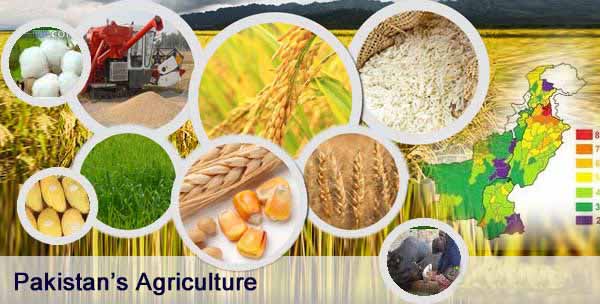
Yes, Pakistan is an agricultural country. Agriculture contributes 23.4 percent of Pakistan’s GDP and employs 33.1 percent of the workforce, according to the Pakistan Economic Survey 2025-26 released on 11 June 2026.
Agriculture also supplies the raw cotton behind the textile industry that dominates Pakistan’s export earnings, and it feeds the population of 241,499,431 counted in the 2023 digital census. The sector grew 2.89 percent in 2025-26 despite the monsoon floods of 2025, against a 4.5 percent target. This page gives the crops, the seasons, the livestock sub-sector, the problems and the verified world rankings, each with its year and source.
What Is Agriculture’s Share of Pakistan’s GDP and Jobs?
Agriculture contributes 23.4 percent of GDP and 33.1 percent of employment. The GDP share is the lowest recorded for the sector, and the employment share fell from 37.4 percent in 2021 as services absorbed rural labour. The employment figure comes from the Labour Force Survey 2024-25, measured on the 19th International Conference of Labour Statisticians standard, a different basis from the older 37 percent figure still quoted elsewhere.
| Indicator | Value | Period | Source |
|---|---|---|---|
| Share of GDP | 23.4 percent | 2025-26 | Economic Survey 2025-26 |
| Share of employment | 33.1 percent | Labour Force Survey 2024-25 | Economic Survey 2025-26 |
| Agriculture sector growth | 2.89 percent | 2025-26 | Economic Survey 2025-26 |
| Crop sector growth | 1.44 percent | 2025-26 | Economic Survey 2025-26 |
| Major crops growth | 0.65 percent, against a 6.7 percent target | 2025-26 | Economic Survey 2025-26 |
| Livestock share of agriculture | 62.4 percent | 2025-26 | Economic Survey 2025-26 |
| Livestock share of GDP | 14.6 percent | 2025-26 | Economic Survey 2025-26 |
| National GDP growth | 3.7 percent | 2025-26 | Economic Survey 2025-26 |
Agriculture is no longer the largest contributor to national output, because industry and services each add more. Agriculture remains the largest single employer, which is why a bad crop year moves rural incomes faster than it moves headline GDP.
What Are the Major Crops of Pakistan?
Pakistan grows five major crops plus a fruit crop of export scale. The table gives 2025-26 production from the Economic Survey 2025-26, the main growing regions, and the world rank where a sourced rank exists.
| Crop | Production | Year | Main growing regions | World rank |
|---|---|---|---|---|
| Wheat | 29.6 million tonnes, up 4.3 percent | 2025-26 | Punjab, Sindh | 7th largest producer, FAOSTAT 2024 |
| Rice | About 10 million tonnes, up 2.8 percent | 2025-26 | Punjab basmati belt, Sindh | 4th largest exporter, 2025 trade data |
| Cotton | 7.05 million bales, down 0.5 percent | 2025-26 | Southern Punjab, Sindh | About 5th largest producer, sources differ |
| Sugarcane | 89.45 million tonnes, up 6.2 percent | 2025-26 | Punjab, Sindh, Khyber Pakhtunkhwa | 5th largest producer, FAOSTAT 2023 |
| Maize | 8.79 million tonnes, down 2.68 percent | 2025-26 | Central Punjab, Khyber Pakhtunkhwa | Outside the world top 10 |
| Mangoes | About 2.6 million tonnes | 2023 | Multan and Rahim Yar Khan, Mirpur Khas | 5th largest producer, FAO 2023 |
Wheat—Largest Food Crop
Wheat is the largest crop in Pakistan by sown area and output, at 29.6 million tonnes in 2025-26, a rise of 4.3 percent. Wheat is a Rabi crop sown from October to December and harvested in April and May. Punjab supplies the bulk of the crop and Sindh is second. Wheat is the staple grain and carries a government support price.
Cotton—Backbone of Pakistan Economy
Cotton output fell 0.5 percent to 7.05 million bales in 2025-26. Cotton links agriculture to manufacturing, because the textile and garment industry that dominates Pakistan’s exports runs on domestic lint. Production sits well below the 14 to 15 million bale levels of the 1990s and 2000s, and Pakistan now imports cotton to keep its mills running.
Rice
Rice production reached about 10 million tonnes in 2025-26, up 2.8 percent. Basmati from the Punjab belt around Gujranwala, Sheikhupura and Sialkot commands the export premium, while Sindh grows coarse varieties. Pakistan is the fourth largest rice exporter in the world by annual volume.
Sugarcane
Sugarcane recorded the strongest performance of any major crop in 2025-26, up 6.2 percent to 89.45 million tonnes. Sugarcane is a Kharif crop grown across Punjab, Sindh and Khyber Pakhtunkhwa, and it supplies the sugar mills and the molasses used in distilling and animal feed.
Maize
Maize output declined 2.68 percent to 8.79 million tonnes in 2025-26. Maize grows in two seasons in central Punjab, around Sahiwal, Okara and Faisalabad, and in Khyber Pakhtunkhwa. Most of the crop goes to poultry feed, which ties maize prices to the poultry sector.
Mangoes
Pakistan produced about 2.6 million tonnes of mangoes in 2023 on FAO figures, fifth in the world behind India, Indonesia, China and Mexico. Multan, Rahim Yar Khan and Mirpur Khas are the main districts. The 2025 export season target was 125,000 tonnes, so most of the crop is eaten at home alongside the other seasonal fruits grown in Pakistan.
Cropping seasons in Pakistan
Pakistan runs two cropping seasons, Kharif and Rabi. Kharif is the summer monsoon season and Rabi is the winter season.
| Season | Sowing months | Harvest months | Main crops |
|---|---|---|---|
| Kharif | April to June | October to December | Rice, cotton, sugarcane, maize, millet, sorghum |
| Rabi | October to December | April to May | Wheat, gram, lentil, mustard, barley, tobacco |
The two seasons compete for the same water and the same land. A late sugarcane harvest delays wheat sowing on the same field, which is one reason wheat yields vary between districts receiving identical water.
How Important Is Livestock in Pakistan’s Agriculture?
Livestock is now the largest part of Pakistani agriculture, contributing 62.4 percent of agricultural value addition and 14.6 percent of national GDP in 2025-26. Livestock grew 3.75 percent that year against crop-sector growth of 1.44 percent, which means almost all of the sector’s 2.89 percent growth came from animals rather than from fields.
Gross livestock value rose from Rs 6,004 billion in 2024-25 to Rs 6,229 billion in 2025-26. More than 8 million rural families keep livestock, and the Economic Survey 2025-26 estimates animals provide 35 to 40 percent of rural household income. Cattle, buffalo, goats, sheep and poultry make up the herd.
What Problems Does Agriculture in Pakistan Face?
Five structural problems hold the sector’s output below its potential.
- Water scarcity. Per capita annual water availability has fallen from about 5,650 cubic metres in 1951 to roughly 900 to 1,000 cubic metres, close to or below the 1,000 cubic metre scarcity threshold. The Pakistan Council of Research in Water Resources recorded the country crossing the water stress line in 1990 and the water scarcity line in 2005. Storage capacity behind the major dams in Pakistan has also been reduced by sedimentation.
- Climate shocks. The 2025 monsoon floods damaged standing crops and are why major crops grew only 0.65 percent against a 6.7 percent target. Heat during grain filling cuts wheat yields, and shifting monsoon timing disrupts Kharif sowing.
- Seed quality and yields. Certified seed covers only part of the sown area, and per hectare yields for wheat, cotton and sugarcane sit below those of comparable producers. Cotton is the clearest case, down from 14 to 15 million bales in earlier decades to 7.05 million bales.
- Shrinking landholdings. The 7th Agricultural Census 2024 found average farm size down from 6.4 acres in 2010 to 5.1 acres in 2024, with the number of farms rising from 8.3 million to 11.7 million. About 6.55 million holdings, close to six farms in ten, are smaller than 2.5 acres, and 97 percent of farmers hold less than 12.5 acres. Holdings that small cannot justify mechanisation or on-farm storage.
- Post-harvest losses. Losses in fruit and vegetables run at 20 to 40 percent depending on the crop and the handling chain, and the Asian Development Bank has put the annual cost of post-harvest crop losses above 1 billion US dollars. About 60 percent of wheat is stored on farm in jute bags, mud bins and open ganjis, which exposes grain to pests and moisture.
Water delivery has the widest reach of the five, because the canal network described in the account of the irrigation system of Pakistan and its sources decides what can be grown in each district before seed or fertiliser choices matter.
Where Does Pakistan Rank in the World for Its Major Crops?
Pakistan holds a verified top-ten world position in four commodities. The repeated claim that Pakistan is the fifth largest producer of everything does not survive checking, so each rank below is tied to a named dataset and year.
- Wheat, 7th largest producer. FAOSTAT 2024 places Pakistan seventh, behind China, India, Russia, the United States, Canada and Australia. Some compilations place Pakistan eighth, depending on the year used.
- Sugarcane, 5th largest producer. FAOSTAT 2023 places Pakistan fifth behind Brazil, India, Thailand and China, at about 87 million tonnes.
- Mangoes, 5th largest producer. FAO 2023 figures place Pakistan fifth at about 2.6 million tonnes, behind India, Indonesia, China and Mexico.
- Rice, 4th largest exporter. Pakistan is fourth by annual export volume behind India, Thailand and Vietnam, and it briefly passed Vietnam into third place in December 2025 on a monthly basis. Pakistan’s rank by rice production is lower than its rank by export.
- Cotton, about 5th largest producer. Sources genuinely disagree. Pakistan accounts for roughly 4 to 5 percent of world cotton output, which recent analyses put at fifth place, while older lists say sixth. The rank is unstable because Pakistani production has been falling.
Maize has no verified top-ten world position, and it is not claimed here.
Crops Grown in Punjab
Punjab produces the largest share of every major crop in Pakistan. Wheat, rice, cotton, sugarcane and maize all have their biggest growing areas in the province, which holds the densest section of the Indus Basin canal network.
The province divides into belts. The rice belt runs through Gujranwala, Sheikhupura, Hafizabad and Sialkot. The cotton belt crosses southern Punjab through Multan, Bahawalpur, Vehari and Rahim Yar Khan. Central Punjab around Sahiwal, Okara and Faisalabad grows maize and wheat. Sindh is second, followed by Khyber Pakhtunkhwa and Balochistan.
Agricultural Exports of Pakistan
Rice is Pakistan’s largest direct agricultural export, while cotton reaches world markets as yarn, fabric and finished garments rather than as lint. Mangoes, kinnow oranges, dates and seafood make up the rest of the exportable surplus, and the 2025 mango season carried a 125,000 tonne target worth roughly 100 million US dollars.
Imports run the other way on three items. Palm oil and other edible oils are the largest agricultural import, because domestic oilseed production covers a fraction of demand. Pulses are second. Wheat is imported in shortfall years, which is why self sufficiency in wheat is a year-by-year question rather than a settled fact.
Frequently Asked Questions About Agriculture in Pakistan
What percentage of Pakistan’s GDP comes from agriculture?
Agriculture contributes 23.4 percent of Pakistan’s GDP, the lowest share recorded for the sector, according to the Pakistan Economic Survey 2025-26 published on 11 June 2026.
How much of Pakistan’s workforce depends on agriculture?
Agriculture employs 33.1 percent of Pakistan’s workforce, from the Labour Force Survey 2024-25 cited in the Economic Survey 2025-26. The older 37.4 percent figure used a different measurement basis.
What is the largest crop in Pakistan?
Wheat is the largest crop in Pakistan by area and output, at 29.6 million tonnes in 2025-26, a 4.3 percent rise, according to the Pakistan Economic Survey 2025-26.
Is Pakistan self-sufficient in food?
Pakistan is close to self sufficient in wheat, rice and sugar in a normal year, but imports wheat after poor harvests and imports most of its edible oil and part of its pulses every year.
Which province produces the most crops in Pakistan?
Punjab produces the largest share of Pakistan’s wheat, rice, cotton, sugarcane and maize. Sindh is second, with Khyber Pakhtunkhwa and Balochistan contributing smaller shares of national crop output.
Last Thoughts on Agriculture in Pakistan
Pakistan is an agricultural country by the two measures that decide the question. Agriculture supplies 23.4 percent of national output and one job in three, and it supplies the cotton on which the export economy runs. What has changed is the internal balance. Livestock now provides 62.4 percent of agricultural value and nearly all of the sector’s growth, while crop output rose 1.44 percent in 2025-26.
The constraints are measurable. Per capita water availability sits near the scarcity threshold, average farm size has fallen to 5.1 acres, and 20 to 40 percent of fruit and vegetables are lost after harvest. Each figure carries a published source and a date, and each will be updated when the next Economic Survey is released.

Pakistan is a agricultural country. Agricultural is one of the source of earning money and make our health.
I am obliged you because you share your post with us.