
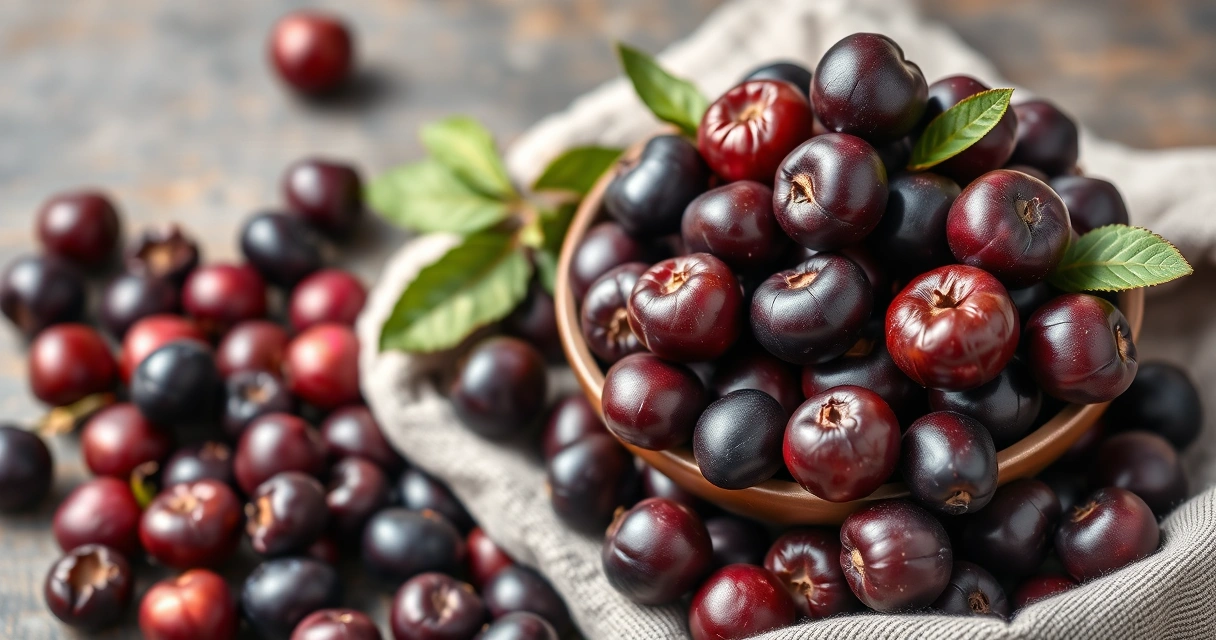
Jamun season in Pakistan runs from June to August, with the peak in July. The crop follows the monsoon rains and reaches markets mainly from Sindh and from Punjab’s canal-belt and avenue trees.
This page covers the jamun months, the growing regions, the reason the crop tracks the monsoon, how to pick and store the fruit, and the traditional uses of jamun in Pakistani kitchens. Jamun belongs to the short summer arrivals inside the wider list of seasonal fruits in Pakistan, and jamun season closes before autumn begins.
What Is Jamun?
Jamun (جامن) is the fruit of Syzygium cumini, an evergreen tree of the Myrtaceae family, sold in English as Java plum, black plum, or Indian blackberry. Jamun fruit is oval, 2 to 3 centimetres long, and deep purple to near black at full ripeness. Each fruit carries one seed inside soft, juicy flesh that tastes sweet with a strong astringent edge and stains the tongue purple. The jamun tree grows across the Indian subcontinent and Southeast Asia and reaches 20 to 30 metres in mature avenue plantings.
When Does Jamun Season Start and End in Pakistan?
Jamun season starts in June, reaches peak supply in July, and finishes in August. The marketing window on a single tree is short, because jamun ripens over roughly 30 to 40 days and the ripe fruit drops soon after it colours.
The table below shows what happens to jamun supply in each month of the Pakistani season.
| Month | Jamun status | Market note |
|---|---|---|
| June | Season starts | First fruit arrives, often smaller and more astringent, prices highest |
| July | Peak | Full supply across Sindh and Punjab markets, lowest prices, best size |
| August | Season ends | Supply thins through the month and stops as mango also finishes |
| September to May | Out of season | Only processed forms sell, including jamun vinegar and dried seed powder |
These months match the jamun row in the national fruit calendar, which lists a June start, a July peak, and an August finish.
Where Does Jamun Grow in Pakistan?
Sindh is the only province with a recorded commercial jamun crop, although the tree also grows widely across Punjab as canal-belt and avenue planting that orchard statistics do not count. Punjab supply centres on the canal belts and the older avenue plantings around Lahore, Faisalabad, and Multan. Sindh supply comes from Hyderabad, Tando Allahyar, and the districts around Karachi.
Official orchard statistics record a much smaller jamun crop than the volume sold in city markets. The figures below come from the Ministry of National Food Security and Research publication Fruit, Vegetables and Condiments Statistics of Pakistan 2023-24.
| Province | Area 2023-24 | Production 2023-24 | Note |
|---|---|---|---|
| Sindh | 114 hectares | 383 tonnes | The only province with a recorded jamun crop in 2023-24 |
| Punjab | 0 hectares | 0 tonnes | 643 hectares and 3,994 tonnes were recorded in 2019-20 |
| Pakistan | 114 hectares | 383 tonnes | 0.004 percent of the 9,487,113 tonne national fruit crop |
The gap between these numbers and the quantity of jamun on sale each July has one clear explanation: most jamun trees in Pakistan stand along roads, canal banks, and in gardens rather than in commercial orchards, so the crop reporting system that surveys orchards captures only part of the harvest.
Why Is Jamun Season Tied to the Monsoon?
Jamun ripens in the monsoon because the tree flowers in spring and needs the following 10 to 12 weeks of heat and humidity to fill and colour the fruit. The Pakistan Meteorological Department defines the monsoon season as 1 July to 30 September, and July and August are the wettest months of the Pakistani year.
Three effects of the monsoon shape the jamun market. Rain and high humidity complete the ripening and raise the juice content of the fruit. Wind and heavy showers knock ripe jamun off the tree, which concentrates supply into short bursts after each rain spell. Moisture on the skin also speeds spoilage, which is why jamun prices swing sharply within a single week in July.
Because of this timing, jamun arrives beside mango, plum, and fresh dates rather than before them, and jamun season ends when the monsoon weakens in late August.
How to Pick Ripe Jamun in the Market?
Ripe jamun is uniformly deep purple to black, firm to the touch, and unbroken at the stem end. The checks that separate good fruit from spoiled fruit are listed below.
- Check the colour. Fully ripe jamun carries an even purple black skin, while red or green patches mean the fruit was picked early and stays sour.
- Press the fruit gently. Ripe jamun gives slightly under pressure, and fruit that feels soft or wrinkled has already started to ferment.
- Look at the stem end. A dry, closed stem end keeps longer, and a wet or split end leaks juice within hours.
- Judge the size. The larger oblong type sold as ra jamun carries more pulp and less astringency than the small round type.
- Inspect the tray. Purple staining at the bottom of the basket shows crushed fruit underneath, so ask for a fresh lot.
How Long Does Jamun Keep After Buying?
Jamun keeps 2 to 3 days at room temperature and 5 to 7 days in a refrigerator. Storage research on jamun records the same 2 to 3 day limit under ambient conditions, after which the fruit softens and ferments.
Four storage steps extend the life of jamun at home. Keep the fruit unwashed until the moment of eating, because surface water accelerates rot. Spread jamun in a single layer in a shallow container rather than a deep bag. Refrigerate at the vegetable drawer temperature and eat within a week. Freeze the deseeded pulp, if the plan is to make juice or vinegar after the season ends.
What Are the Traditional Uses of Jamun in Pakistan?
Jamun is eaten fresh with salt, and the same fruit supports several preserved products that sell all year. Sprinkling salt on jamun is the standard Pakistani serving method, because salt cuts the astringency and draws out juice.
The main traditional preparations are listed below.
- Jamun sharbat. Crushed jamun pulp, sugar, and salt make a summer drink sold in Ramadan and through the monsoon weeks.
- Jamun sirka. Fermented jamun juice becomes jamun vinegar, sold in pansar shops across Pakistan and used as a table condiment.
- Jamun seed powder. The dried, ground seed is a long standing folk remedy sold by weight in herbal shops.
- Jamun chutney. Pulp cooked with salt, red chilli, and cumin gives a sour chutney eaten with rice and roti.
- Dried jamun slices. Deseeded fruit dried in the sun keeps for months and is used out of season.
What Does Research Say About Jamun and Diabetes?
Jamun is widely believed in Pakistan to control diabetes, and jamun seed powder is sold on that basis. Research has not established that jamun treats, prevents, or cures diabetes.
A 2026 systematic review and meta-analysis published in the journal Foods pooled 13 randomised controlled trials covering 802 adults with type 2 diabetes or prediabetes. The review reported a modest short term reduction in fasting blood glucose from Syzygium cumini and related Myrtaceae preparations. The same review rated the certainty of that evidence as low to very low, noted high heterogeneity and short follow up, found no consistent benefit for HbA1c, post meal glucose, or blood lipids, and described these preparations as promising but unproven additions to standard diabetes care rather than replacements for it.
This page is general information about the jamun season in Pakistan and is not medical advice. Anyone managing diabetes should follow the treatment plan set by a qualified doctor.
What Arrives After Jamun Season Ends?
Jamun leaves the market in late August, and the autumn arrivals take its place. Pomegranate and custard apple start in September, apple and grapes hold their peak, and the full list of September fruits in Pakistan covers what replaces the monsoon fruits. Households that want jamun after August rely on jamun vinegar and dried seed powder, both of which sell year round.
FAQs About Jamun Season in Pakistan
What months is jamun available in Pakistan?
Jamun is available from June to August in Pakistan. The peak month is July, when supply from Punjab and Sindh is heaviest and prices are at their lowest point of the season.
Is jamun a monsoon fruit?
Yes. Jamun ripens through the monsoon months, and the Pakistan Meteorological Department dates the monsoon season from 1 July to 30 September. July rainfall coincides with the jamun peak.
Where is jamun grown in Pakistan?
Jamun grows in Punjab and Sindh. Punjab supply comes from canal belts and avenue trees near Lahore, Faisalabad, and Multan, while Sindh supply comes from Hyderabad, Tando Allahyar, and Karachi districts.
Does jamun cure diabetes?
No. Research has not shown that jamun treats, prevents, or cures diabetes. Pooled trial evidence points only to a small short term drop in fasting glucose, rated low to very low certainty.
How long does jamun stay fresh?
Jamun stays fresh 2 to 3 days at room temperature and 5 to 7 days refrigerated. Keeping the fruit unwashed and in a single layer slows softening and fermentation.
Last Thoughts on Jamun Season in Pakistan
Jamun season in Pakistan is one of the shortest of the year, opening in June, peaking in July, and closing in August with the weakening monsoon. The fruit comes from Punjab and Sindh, mostly from roadside and canal bank trees rather than commercial orchards, which is why the Ministry records only 114 hectares and 383 tonnes while city markets carry jamun in volume every July. Buying at peak means better size, lower prices, and fruit that has not travelled far in the heat. The health claims attached to jamun deserve care: the fruit is a good seasonal food, and the evidence that it manages diabetes remains weak. Plan jamun purchases for July, eat the fruit within two or three days, and treat the season as a six to eight week window rather than a standing supply.
