
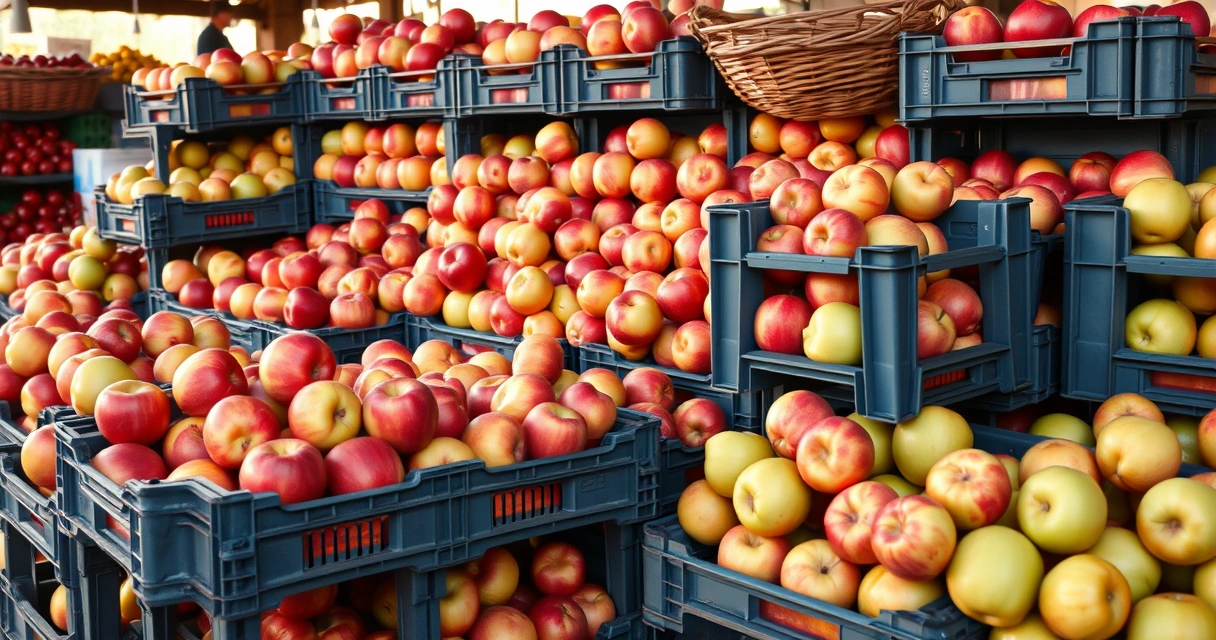
Apple season in Pakistan runs from July to November, at peak in September and October. Apple (سیب) comes from Balochistan, Swat, and Gilgit-Baltistan, and cold storage carries supply through winter.
Apple holds the longest selling season of any fruit grown in the country. Within the yearly cycle of seasonal fruits in Pakistan, the apple harvest lasts about five months while the apple selling year lasts twelve, because storage moves the autumn crop into the following spring.
This page gives the apple harvest months, a month by month availability table, the apple varieties grown in Pakistan, the growing regions with their harvest windows, the method for choosing and storing apple, and the reason apple stays on sale in every month of the year.
When Is Apple Season in Pakistan?
Apple season in Pakistan starts in July, peaks in September and October, and ends in November. Early varieties open the season in the second half of July, the main harvest runs from late August, and the last orchard lots come off the trees in November before the crop moves into cold storage.
The apple peak sits inside the autumn fruit window, so apple shares the stall with grapes (انگور), pomegranate (انار), and custard apple (شریفہ). The full list of September fruits in Pakistan shows which fruits arrive and which leave during the first peak month of the apple season.
The table below shows apple status in every month of the Pakistani market year.
| Month | Apple status | Supply source |
|---|---|---|
| January | In storage | Cold and controlled atmosphere storage |
| February | In storage | Cold and controlled atmosphere storage |
| March | In storage | Cold and controlled atmosphere storage |
| April | Storage stock thinning | Controlled atmosphere storage, imports |
| May | Lowest supply of the year | Controlled atmosphere storage, imports |
| June | Pre harvest gap | Controlled atmosphere storage, imports |
| July | Season starts | New crop, Balochistan and Swat |
| August | Supply rising | New crop, all regions |
| September | At peak | New crop, all regions |
| October | At peak | New crop, all regions |
| November | Season ends | Last orchard lots, then storage |
| December | In storage | Cold and controlled atmosphere storage |
Two features of that calendar matter at the stall. July and August fruit is early variety fruit picked at lower sugar, so eating quality improves through the season and reaches its best in September and October. April to June fruit is the oldest fruit in the system, held for eight months or more, so firmness rather than skin colour is the reliable test in those three months.
Which Apple Varieties Grow in Pakistan?
Eleven apple varieties reach Pakistani markets in commercial quantity: Kala Kulu, Tor Kulu, Shin Kulu, Amri, Mashadi, Kaja, Gacha, Kashmiri, Royal Gala, Sky Spur, and Summer Red. Tor Kulu and Shin Kulu are the Pashto trade names for Red Delicious and Golden Delicious.
The table below lists each apple variety with its trade name, its season class, and its main source region.
| Variety | Also called | Season class | Main source |
|---|---|---|---|
| Kala Kulu | Black Kulu, sold as red apple | Main season | Balochistan, Swat |
| Tor Kulu | Red Delicious | Main season | Balochistan, Khyber Pakhtunkhwa |
| Shin Kulu | Golden Delicious | Main season | Balochistan, Khyber Pakhtunkhwa |
| Amri | Amri Kulu | Main season | Balochistan |
| Mashadi | Mashhadi | Main season | Balochistan |
| Kaja | Katja | Main season | Pishin, Balochistan |
| Gacha | Gacha Kulu | Main season | Balochistan |
| Kashmiri | Kashmiri apple | Main season | Balochistan, northern valleys |
| Royal Gala | Gala | Early | Khyber Pakhtunkhwa, Balochistan |
| Summer Red | Early red | Early | Khyber Pakhtunkhwa, Balochistan |
| Sky Spur | Skyspur, a Delicious sport | Main season | Balochistan |
Season class follows the national July to November window. Early varieties carry the July and August stalls, and the main season group carries the September and October peak.
Published orchard surveys of Pishin district record Tor Kulu, Shin Kulu, Amri, Mashadi, and Kashmiri on about 75 percent of the district’s apple area, with the newer Kaja variety on about 8 percent. Red Delicious dominates planting decisions because market demand for red skinned fruit is the highest, which is why Mashadi and Amri now cover less ground than they once did. Kala Kulu is the deep red premium variety, and Kala Kulu sells at a higher rate than the Delicious types in Islamabad and Rawalpindi markets.
Where Are Apples Grown in Pakistan?
Apples grow in three regions of Pakistan: the Balochistan highlands, the valleys of Khyber Pakhtunkhwa, and Gilgit-Baltistan. Each region reaches its harvest at a slightly different time, which is what stretches the national season across five months.
| Region | Main districts | Harvest window | Share of the national crop |
|---|---|---|---|
| Balochistan | Quetta, Mastung, Pishin, Killa Abdullah, Killa Saifullah, Kalat | August to October | Published estimates range from 64 percent to over 80 percent |
| Khyber Pakhtunkhwa | Swat and the surrounding northern valleys | August to October | About 25 percent |
| Gilgit-Baltistan | Northern valleys | September to October | Smaller volume, late harvest |
Mastung district is the centre of Pakistani apple production, and the five largest apple districts of Balochistan are Quetta, Killa Saifullah, Killa Abdullah, Pishin, and Kalat. Cool evening temperatures around Quetta and Mastung in late summer deepen skin colour, which is the quality advantage Balochistan holds over the plains.
Swat is the second centre, and Khyber Pakhtunkhwa contributes about a quarter of national apple output. Swat also grows Kala Kulu, so the same variety name appears in both the Quetta and the Swat trade.
Gilgit-Baltistan harvests last. Altitude sets that stagger: the Balochistan orchards sit above 1,600 metres around Quetta and Mastung, the Swat valleys sit lower and warmer, and the northern valleys are colder again, so the same variety colours and ripens weeks apart across the three regions. Three staggered harvests are what turn a variety window of a few weeks into a national season of five months.
FAO data recorded Pakistani apple production at about 758,000 tonnes in 2022, against about 732,000 tonnes in 2021, which places Pakistan inside the world’s twenty five largest apple producers. Pakistani apple is also exported, with Hong Kong, Dubai, Brunei, Bahrain, Sri Lanka, Saudi Arabia, Malaysia, Bangladesh, and Japan among the buying markets, and export grade fruit is drawn from the same September and October peak lots that fill the domestic stalls.
Why Is Apple Available All Year in Pakistan?
Apple is available all year because storage covers the eight months the orchards do not. Conventional cold storage holds apple for 2 to 4 months, and controlled atmosphere storage, which lowers oxygen to roughly 2 to 5 percent and controls carbon dioxide, humidity, and temperature, extends that to 8 to 12 months. Apple entering storage in October therefore reaches the market in March, April, and May.
Storage capacity is the limit on this system rather than the technology. A study of Balochistan apple handling published in the Asian Journal of Plant Sciences in 2002 recorded only two cold stores with a combined 700 tonne capacity in the province and found 17 percent damaged fruit in an average crate, caused by uneven grading and tight packing in wooden crates. Winrock International estimates that 35 to 40 percent of all crops in Pakistan are lost after harvest.
Imports fill the remaining gap in the low supply months. Apple, pear (ناشپاتی), and quince (بہی) imports into Pakistan were worth 10.4 million US dollars in 2023, and growers in Balochistan have reported Iranian apple entering through the Afghanistan border outside the tax system. Imported fruit dominates other shelves in the same months, and the kiwi season in Pakistan (کیوی) runs entirely on imports from November to April.
How to Choose and Store Apple in Pakistan
Choosing and storing apple correctly extends home shelf life by several weeks. The five steps below follow the order a buyer uses at the stall.
- Press the shoulder near the stem. Firm flesh with no give indicates a fresh apple, because softening starts at the stem end.
- Check the skin for punctures and bruises. Wooden crate packing bruises fruit in transit, and a bruised apple rots from that point within days.
- Weigh the fruit in the hand. An apple that feels heavy for its size holds more juice and has lost less moisture in storage.
- Refrigerate the fruit at home. Apple keeps several times longer near 0 to 4 degrees Celsius than at Pakistani room temperature.
- Separate apple from banana (کیلا) and leafy vegetables. Apple releases ethylene gas, which ripens and spoils neighbouring produce faster.
FAQs About Apple Season in Pakistan
In which month is apple season in Pakistan?
Apple season runs from July to November. September and October are the peak months, and cold storage supplies apple from December into the following spring.
Which city is famous for apples in Pakistan?
Quetta is the city most associated with Pakistani apple. Mastung, Pishin, Killa Saifullah, and Kalat surround Quetta, and Swat in Khyber Pakhtunkhwa is the second centre.
Which apple variety is grown most in Pakistan?
Tor Kulu, the local Red Delicious, and Shin Kulu, the local Golden Delicious, cover the largest area, together with Amri, Mashadi, and Kashmiri. Kala Kulu is the premium deep red variety.
Is apple sold in Pakistan imported?
Most apple sold in Pakistan is local. Imported apple appears mainly from April to June, when storage stock thins, and Balochistan growers report untaxed Iranian apple entering through the Afghanistan border.
How long does Pakistani apple keep in storage?
Conventional cold storage holds apple for 2 to 4 months. Controlled atmosphere storage extends that to 8 to 12 months, which is how the autumn crop reaches the market in spring.
Last Thoughts on Apple Season in Pakistan
Apple season in Pakistan is a five month harvest that supplies a twelve month market. The orchards of Quetta, Mastung, Pishin, Swat, and the northern valleys deliver from July, hold the peak through September and October, and finish in November, after which cold storage and controlled atmosphere storage carry the same crop into spring. Buyers who want the widest choice of variety and the lowest price shop in September and October, when Kala Kulu, Tor Kulu, Shin Kulu, Amri, and Mashadi are all on the stall at once. Buyers shopping between April and June are choosing between stored fruit and imported fruit, and the firmness test at the stem end is the fastest way to tell how long that fruit has been held.
