
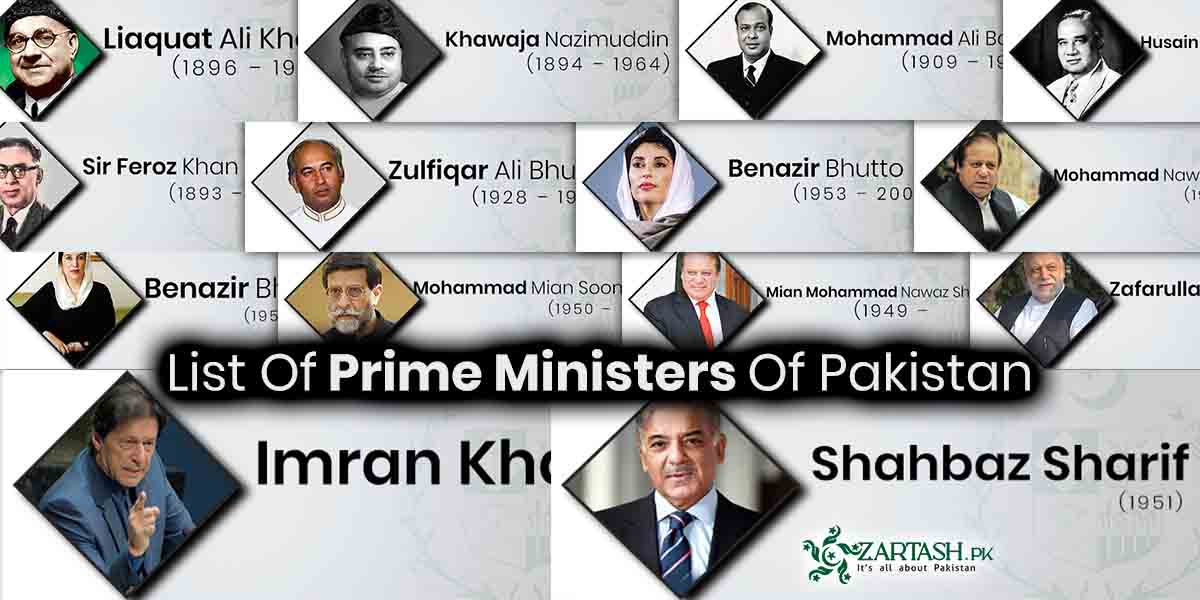
The Prime Minister of Pakistan is the head of government of the Islamic Republic of Pakistan, elected by the National Assembly and sworn in by the President. Since independence on 14 August 1947, 28 people have held the office. The total includes 20 elected prime ministers who served across 24 separate terms and 8 caretaker prime ministers who ran the government between elections. Shehbaz Sharif is the current prime minister of Pakistan. He took oath for his second term on 4 March 2024 and remains in office as of August 2026.
This article lists every prime minister of Pakistan from 1947 to the present. The list gives each leader’s tenure, political party, and the way each term ended. A summary table appears first, followed by detailed entries for all 33 changes of office, a section on the last four prime ministers, key facts, and corrected answers to common questions.
List of Prime Ministers of Pakistan (Summary Table)
The table below lists all 33 changes in the office of Prime Minister of Pakistan from 1947 to the present, with each entry’s tenure and party. Caretaker prime ministers are flagged in the name column. A downloadable PDF version of the complete list of Prime Ministers of Pakistan will be added to this page soon.
| No. | Prime Minister | Tenure | Party |
|---|---|---|---|
| 1 | Liaquat Ali Khan | 1947 to 1951 | Muslim League |
| 2 | Khawaja Nazimuddin | 1951 to 1953 | Muslim League |
| 3 | Mohammad Ali Bogra | 1953 to 1955 | Muslim League |
| 4 | Chaudhry Mohammad Ali | 1955 to 1956 | Muslim League |
| 5 | Husain Shaheed Suhrawardy | 1956 to 1957 | Awami League |
| 6 | Ibraheem Ismaeel Chundrigar | 1957 | Muslim League |
| 7 | Sir Feroz Khan Noon | 1957 to 1958 | Republican Party |
| 8 | Noor ul Ameen | 1971 | Pakistan Muslim League |
| 9 | Zulfiqar Ali Bhutto | 1973 to 1977 | Pakistan Peoples Party |
| 10 | Mohammad Khan Junejo | 1985 to 1988 | Pakistan Muslim League |
| 11 | Benazir Bhutto | 1988 to 1990 | Pakistan Peoples Party |
| 12 | Ghulam Mustafa Jatoi (Caretaker) | 1990 | None (caretaker) |
| 13 | Mohammad Nawaz Sharif | 1990 to 1993 | PML-N (IJI alliance) |
| 14 | Balakh Sher Mazari (Caretaker) | 1993 | None (caretaker) |
| 15 | Mian Muhammad Nawaz Sharif (restored) | 1993 | PML-N |
| 16 | Moin Qureshi (Caretaker) | 1993 | None (caretaker) |
| 17 | Benazir Bhutto | 1993 to 1996 | Pakistan Peoples Party |
| 18 | Malik Meraj Khalid (Caretaker) | 1996 to 1997 | None (caretaker) |
| 19 | Mian Muhammad Nawaz Sharif | 1997 to 1999 | PML-N |
| 20 | Zafarullah Khan Jamali | 2002 to 2004 | PML-Q |
| 21 | Chaudhry Shujaat Hussain | 2004 | PML-Q |
| 22 | Shaukat Aziz | 2004 to 2007 | PML-Q |
| 23 | Muhammad Mian Soomro (Caretaker) | 2007 to 2008 | PML-Q (caretaker) |
| 24 | Yousaf Raza Gilani | 2008 to 2012 | Pakistan Peoples Party |
| 25 | Raja Pervaiz Ashraf | 2012 to 2013 | Pakistan Peoples Party |
| 26 | Meer Hazar Khan Khoso (Caretaker) | 2013 | None (caretaker) |
| 27 | Mohammad Nawaz Sharif | 2013 to 2017 | PML-N |
| 28 | Shahid Khaqan Abbasi | 2017 to 2018 | PML-N |
| 29 | Nasir-ul-Mulk (Caretaker) | 2018 | None (caretaker) |
| 30 | Imran Khan | 2018 to 2022 | Pakistan Tehreek-e-Insaf |
| 31 | Mian Shahbaz Sharif | 2022 to 2023 | PML-N |
| 32 | Anwaar-ul-Haq Kakar (Caretaker) | 2023 to 2024 | None (caretaker) |
| 33 | Mian Shahbaz Sharif | 2024 to present | PML-N |
Download the List of Prime Ministers of Pakistan (PDF)
The complete list above is available as a one page PDF covering 1947 to 2026, including every caretaker prime minister. Download the list of prime ministers of Pakistan PDF for offline use, printing, or study notes.
Responsibilities of a Prime Minister:
The Prime Minister of Pakistan runs the federal administration through an appointed cabinet under the 1973 Constitution. The responsibilities of the prime minister include forming national policy, chairing the Council of Common Interests, advising the President on the dissolution of the National Assembly, and calling general elections for the bicameral Parliament of Pakistan. In Pakistan’s parliamentary system, the President administers the oath to the prime minister, who is normally the leader of the party or coalition holding a majority in the National Assembly, the lower house of Parliament.
Creating the Post of Prime Minister
Pakistan created the post of prime minister at independence after the Partition of British India on 14 August 1947, following the British parliamentary model. Governor-General Muhammad Ali Jinnah appointed Liaquat Ali Khan as the first Prime Minister of Pakistan. Counting each term separately, the country has had 24 elected prime ministers as of August 2026, along with 8 caretaker prime ministers who were mandated only to oversee the government until elections were completed.
Checkout List of Prime Ministers of Pakistan
The detailed list below covers every change in the office of Prime Minister of Pakistan from 1947 to the present. The list uses two numbering systems. The serial number in each heading counts all 33 entries in order, including 8 caretakers. The elected ordinal, stated inside each entry, counts only elected terms, which is why Shehbaz Sharif is the 24th prime minister while the list contains 33 entries.
1. Liaquat Ali Khan (1947 – 1951)

Liaquat Ali Khan was the first Prime Minister of Pakistan. He took office on 14 August 1947 and served until 16 October 1951, when he was assassinated at Liaquat Bagh in Rawalpindi. Liaquat Ali Khan belonged to the Muslim League, and his tenure of 4 years and 2 months stood as the longest until 2012.
2. Sir Khawaja Nazimuddin (1951 – 1953)

Khawaja Nazimuddin of the Muslim League became the second prime minister on 17 October 1951 after the assassination of Liaquat Ali Khan. Governor-General Ghulam Muhammad dismissed the Nazimuddin government on 17 April 1953, exactly 2 years into the term.
3. Mohammad Ali Bogra (1953 – 1955)

Mohammad Ali Bogra of the Muslim League served as the third prime minister from 17 April 1953 to 12 August 1955. Governor-General Ghulam Muhammad dissolved the first Constituent Assembly during the Bogra tenure, and Bogra left office when a new government was formed in August 1955.
4. Chaudhry Mohammad Ali (1955 – 1956)
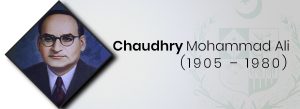
Chaudhry Mohammad Ali of the Muslim League became the fourth prime minister on 12 August 1955. His government adopted the first Constitution of Pakistan in 1956, which declared the country an Islamic republic. Chaudhry Mohammad Ali resigned on 12 September 1956 after losing the support of his party.
5. Husain Shaheed Suhrawardy (1956 – 1957)
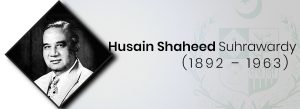
Husain Shaheed Suhrawardy of the Awami League served as the fifth prime minister from 12 September 1956 to 17 October 1957, a tenure of 1 year and 1 month. Suhrawardy resigned after a dispute with President Iskander Mirza.
6. Ibraheem Ismaeel Chundrigar (1957)

Ibrahim Ismail Chundrigar of the Muslim League took office as the sixth prime minister on 17 October 1957 and left in December 1957, after roughly two months. According to a fact check published by Dawn in 2022, Chundrigar resigned after coalition partners withdrew support over the separate electorates question, and the resignation was accepted on 16 December 1957. Chundrigar was not removed by a no-confidence vote.
7. Sir Feroz Khan Noon (1957 – 1958)

Feroz Khan Noon of the Republican Party served as the seventh prime minister from 16 December 1957 to 7 October 1958. President Iskander Mirza abrogated the constitution and imposed martial law, which abolished the office. General Ayub Khan then merged executive power into the presidency, and the post of prime minister stayed vacant for more than 13 years.
8. Noor ul Ameen (1971)
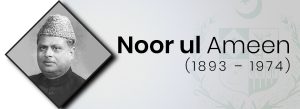
Nurul Amin of the Pakistan Muslim League held office for 13 days, from 7 December 1971 to 20 December 1971, during the 1971 war. Nurul Amin is the shortest-serving prime minister in the history of Pakistan. The post was abolished again after his exit and was restored on 14 August 1973 under the new Constitution.
9. Zulfiqar Ali Bhutto (1973 – 1977)
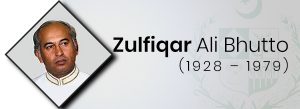
Zulfikar Ali Bhutto of the Pakistan Peoples Party became the first prime minister under the 1973 Constitution on 14 August 1973. The Bhutto government stayed in power until 5 July 1977, when General Zia-ul-Haq staged a coup and imposed martial law. The office remained abolished from 1977 to 1985, the longest such gap after the Ayub era.
10. Mohammad Khan Junejo (1985 – 1988)

Mohammad Khan Junejo became the tenth prime minister in March 1985 after the partyless elections. Junejo contested as an independent and afterward led the Pakistan Muslim League. President Zia-ul-Haq dismissed the Junejo government on 29 May 1988, and the office stayed vacant until December 1988.
11. Benazir Bhutto (1988 – 1990)

Benazir Bhutto of the Pakistan Peoples Party became the 11th elected prime minister on 2 December 1988. Benazir Bhutto was the first woman to head the government of a Muslim-majority country. President Ghulam Ishaq Khan dismissed her first government on 6 August 1990, after 1 year and 8 months.
12. Ghulam Mustafa Jatoi (1990)(Caretaker)

Ghulam Mustafa Jatoi served as the first caretaker prime minister of Pakistan, from 6 August 1990 to 6 November 1990. Jatoi supervised the 1990 general election and handed power to the elected government after 3 months.
13. Mohammad Nawaz Shareef (1990-1993)

Nawaz Sharif became the 12th prime minister on 6 November 1990, backed by the Islami Jamhoori Ittehad alliance, which included his Pakistan Muslim League faction, later known as PML-N. President Ghulam Ishaq Khan dismissed the government on 18 April 1993, after 2 years and 5 months.
14. Balakh Sher Mazari ( 1993)(Caretaker)
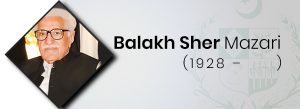
Balakh Sher Mazari served as caretaker prime minister from 18 April 1993 to 26 May 1993, a period of 1 month and 8 days. Mazari held no party membership during the caretaker assignment.
15. Mian Mohammad Nawaz Sharif (1993)
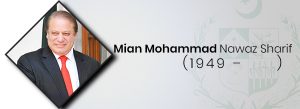
The Supreme Court of Pakistan ruled the April 1993 dissolution unconstitutional and restored Nawaz Sharif on 26 May 1993. This entry continues the 12th premiership rather than starting a new elected term. Nawaz Sharif and President Ghulam Ishaq Khan both resigned on 18 July 1993 under a settlement brokered by the army leadership.
16. Mr. Moin Qureshi (1993) (Caretaker)

Moin Qureshi, a former World Bank economist, served as caretaker prime minister from 18 July 1993 to 19 October 1993. Qureshi supervised the October 1993 general election and then transferred power to the elected government.
17. Benazir Bhutto (1993 – 1996)

Benazir Bhutto returned as the 13th prime minister on 19 October 1993. President Farooq Leghari dismissed her second government on 5 November 1996. The second Bhutto tenure lasted 3 years and 17 days.
18. Malik Meraj Khalid (1996 – 1997)(Caretaker)
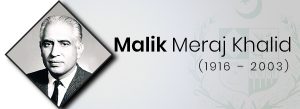
Malik Meraj Khalid served as caretaker prime minister from 5 November 1996 to 17 February 1997, a period of 3 months and 12 days, and supervised the February 1997 general election.
19. Mohammad Nawaz Shareef (1997-1999)
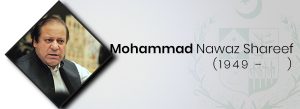
Nawaz Sharif began a new term as the 14th prime minister on 17 February 1997 with a PML-N majority. General Pervez Musharraf deposed the Sharif government in the coup of 12 October 1999. The office then stayed abolished for about 3 years, until November 2002.
20. Zafarullah Khan Jamali (2002-2004)

Zafarullah Khan Jamali of the Pakistan Muslim League (Q) became the 15th prime minister in November 2002, the first after the Musharraf coup. Jamali resigned on 26 June 2004 after about 1 year and 7 months in office.
21. Chaudhry Shujaat Husain (2004)
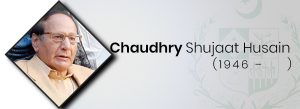
Chaudhry Shujaat Hussain of PML-Q served as the 16th prime minister from 30 June 2004 to August 2004. The Shujaat term was a transitional arrangement that lasted under two months, until Shaukat Aziz entered the National Assembly.
22. Shaukat Aziz (2004-2007)
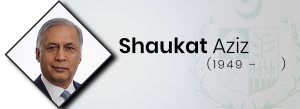
Shaukat Aziz of PML-Q served as the 17th prime minister from August 2004 to November 2007. Aziz was the first prime minister of Pakistan to leave office because the National Assembly completed its parliamentary term rather than through dismissal, coup, or resignation under pressure.
23. Mohammad Mian Soomro (2007-2008)(Caretaker)
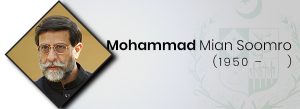
Muhammad Mian Soomro headed the caretaker government from 16 November 2007 to 25 March 2008, a period of 4 months and 9 days, and supervised the February 2008 general election.
24. Yousaf Raza Geelani (2008-2012)

Yousaf Raza Gilani of the Pakistan Peoples Party became the 18th prime minister on 25 March 2008. The Supreme Court disqualified Gilani in June 2012 on contempt of court charges. His tenure of 4 years, 2 months, and 25 days is the longest single continuous term of any prime minister of Pakistan.
25. Raja Pervaiz Ashraf (2012-2013)

Raja Pervaiz Ashraf of the Pakistan Peoples Party served as the 19th prime minister from 22 June 2012 to 24 March 2013, replacing the disqualified Yousaf Raza Gilani. The Ashraf tenure of about 9 months ended when the National Assembly completed its term.
26. Meer Hazaar Khan Khoso (2013)(Caretaker)
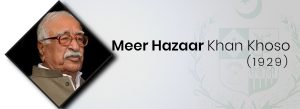
Mir Hazar Khan Khoso served as caretaker prime minister from 25 March 2013 to 5 June 2013 and supervised the May 2013 general election. Khoso held no party affiliation.
27. Mohammad Nawaz Shareef (2013-2017)

Nawaz Sharif became the 20th prime minister on 5 June 2013, leading a PML-N majority government in his third term. The Supreme Court disqualified Nawaz Sharif on 28 July 2017 in the Panama Papers case, after 4 years and 1 month in office.
28. Shahid Khaqan Abbasi (2017-2018)

Shahid Khaqan Abbasi of PML-N served as the 21st prime minister from 1 August 2017 to 31 May 2018. Abbasi completed the remaining parliamentary term for the PML-N government after the disqualification of Nawaz Sharif.
29. Nasirul Mulk (2018)(Caretaker)
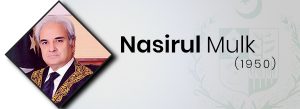
Retired Chief Justice Nasirul Mulk served as caretaker prime minister from 1 June 2018 to 18 August 2018 and supervised the July 2018 general election.
30. Imran Khan (2018-2022)
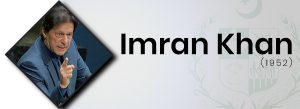
Imran Khan of Pakistan Tehreek-e-Insaf became the 22nd prime minister on 18 August 2018 after the 2018 general election. The Khan government lost the support of coalition allies, and Imran Khan lost a no-confidence vote on 10 April 2022. Imran Khan is the first prime minister of Pakistan removed through a no-confidence vote.
31. Mian Mohammad Shahbaz Sharif (2022-2023)
Shehbaz Sharif of PML-N was elected the 23rd prime minister by parliament on 11 April 2022, following the removal of Imran Khan. Shehbaz Sharif led a coalition government until the National Assembly was dissolved in August 2023, and he left office on 14 August 2023 when the caretaker setup took charge.
32. Anwaar-ul-Haq Kakar (2023-2024)(Caretaker)
Anwaar-ul-Haq Kakar took oath as caretaker prime minister on 14 August 2023 and served until 4 March 2024. Kakar supervised the February 2024 general election. His tenure of 6 months and 19 days makes Kakar the longest-serving caretaker prime minister of Pakistan.
33. Mian Mohammad Shahbaz Sharif (2024 to date)

Shehbaz Sharif returned as the 24th prime minister on 4 March 2024 after the February 2024 general election, leading a PML-N coalition government formed with the support of the Pakistan Peoples Party. According to the Prime Minister’s Office, Shehbaz Sharif is the serving Prime Minister of Pakistan as of August 2026.
Last Four Prime Ministers of Pakistan
The last four prime ministers of Pakistan, counted by term and listed from most recent to earliest, are given below.
- Shehbaz Sharif (2024 to present): the 24th prime minister, PML-N, sworn in on 4 March 2024 and in office as of August 2026.
- Anwaar-ul-Haq Kakar (2023 to 2024): caretaker prime minister from 14 August 2023 to 4 March 2024, the longest caretaker tenure.
- Shehbaz Sharif (2022 to 2023): the 23rd prime minister, PML-N, from 11 April 2022 to 14 August 2023.
- Imran Khan (2018 to 2022): the 22nd prime minister, Pakistan Tehreek-e-Insaf, from 18 August 2018 to 10 April 2022.
Interesting Facts about Prime Ministers
The record of the office of Prime Minister of Pakistan produces 7 verifiable facts, listed below.
- No prime minister of Pakistan has completed a full five-year parliamentary term. Every tenure has ended through dismissal, resignation, coup, disqualification, assembly expiry, or a no-confidence vote.
- Yousaf Raza Gilani holds the longest single continuous tenure at 4 years, 2 months, and 25 days, from 2008 to 2012.
- Nurul Amin holds the shortest tenure at 13 days, in December 1971.
- Nawaz Sharif has the longest combined time in office, roughly 9 years across three terms between 1990 and 2017.
- The office was abolished or vacant during four extended periods: 1958 to 1971, 1971 to 1973, 1977 to 1985, and 1999 to 2002.
- Pakistan has had 8 caretaker prime ministers, from Ghulam Mustafa Jatoi in 1990 to Anwaar-ul-Haq Kakar in 2023 to 2024.
- The Pakistan Muslim League and its factions have produced the most prime ministers, from Liaquat Ali Khan in 1947 to Shehbaz Sharif as of 2026.
Frequently Asked Questions (FAQs)
Who is the current Prime Minister of Pakistan?
Shehbaz Sharif is the current Prime Minister of Pakistan as of August 2026. He took oath for his second term on 4 March 2024 after the February 2024 general election.
How many prime ministers has Pakistan had?
Pakistan has had 28 prime ministers since 1947: 20 elected leaders across 24 terms plus 8 caretakers. Counting each term, Shehbaz Sharif is the 24th prime minister as of 2026.
Who is the 20th prime minister of Pakistan?
Nawaz Sharif was the 20th prime minister of Pakistan. His third term ran from 5 June 2013 to 28 July 2017, when the Supreme Court disqualified him in the Panama Papers case.
Who is the 21st prime minister of Pakistan?
Shahid Khaqan Abbasi was the 21st prime minister of Pakistan. He served from 1 August 2017 to 31 May 2018 and completed the parliamentary term for the PML-N government.
Who is the first female prime minister of Pakistan?
Benazir Bhutto was the first female prime minister of Pakistan and the first woman to lead a Muslim-majority country. She served two terms, 1988 to 1990 and 1993 to 1996.
Who was the caretaker prime minister before the 2024 election?
Anwaar-ul-Haq Kakar served as caretaker prime minister from 14 August 2023 to 4 March 2024. Kakar is the longest-serving caretaker prime minister of Pakistan.
When did I.I. Chundrigar leave office?
I.I. Chundrigar resigned in December 1957 after about two months in office. His resignation was accepted on 16 December 1957, and Feroz Khan Noon succeeded him.
Last Thoughts on the List of Prime Ministers of Pakistan
The list of prime ministers of Pakistan records 28 officeholders across 33 changes of office between 1947 and 2026. The record shows repeated interruptions: dismissals by governors-general and presidents, two long stretches of military rule, court disqualifications, and one removal by a no-confidence vote. No prime minister has completed a full five-year term, and caretaker prime ministers have bridged eight transitions between governments. Shehbaz Sharif continues in office as of August 2026. Readers studying the country’s leadership can also review the richest men in Pakistan for the business figures who shaped its economy, and the geographical importance of Pakistan for the strategic setting in which these governments operated.
